
We went around the world, and the people we most wanted to look after were at home
Espandi's first brace was shipped to the United States.
The US market is big, and we had a business partner in Europe, so our braces first went to the US, Germany and France. Those customers knew they had received a brace they were happy with. They didn't know it came from a small company in Taiwan.
One day a friend of my dad's came over. As they talked, she mentioned that her back had never felt quite right: she couldn't sit for long without getting up to walk around, and for a few years she had been going to the gym, where a coach helped her with her posture and core.
My dad said, "My daughter makes braces, but right now she only sells them on Amazon in the US. There are some samples here, and they're really well made. Have a look, and see if you can find something like it."
She picked up a sample, looked it over, and asked straight away: "Can I buy this in Taiwan?"
That one question made me think for the first time: we were selling braces in Europe and America, yet the people around me, my dad's friends, couldn't buy them.
So we came home. The same quality and the same standards, at a price people in Taiwan can afford.
The summers I remember
The summers I remember taste of pears and sweat, with insects humming all around.
I grew up in Houli, Taichung. From my earliest memories until I finished high school, I spent every summer harvest in my grandparents' or relatives' pear orchards. The adults were in the orchard before sunrise. The rest of us started at seven in the small shed beside the orchard and worked until five. Pears don't wait. Once they're ripe they have to be picked, sorted and sent out fast, and apart from a drink of water and a quick lunch, nobody stopped.
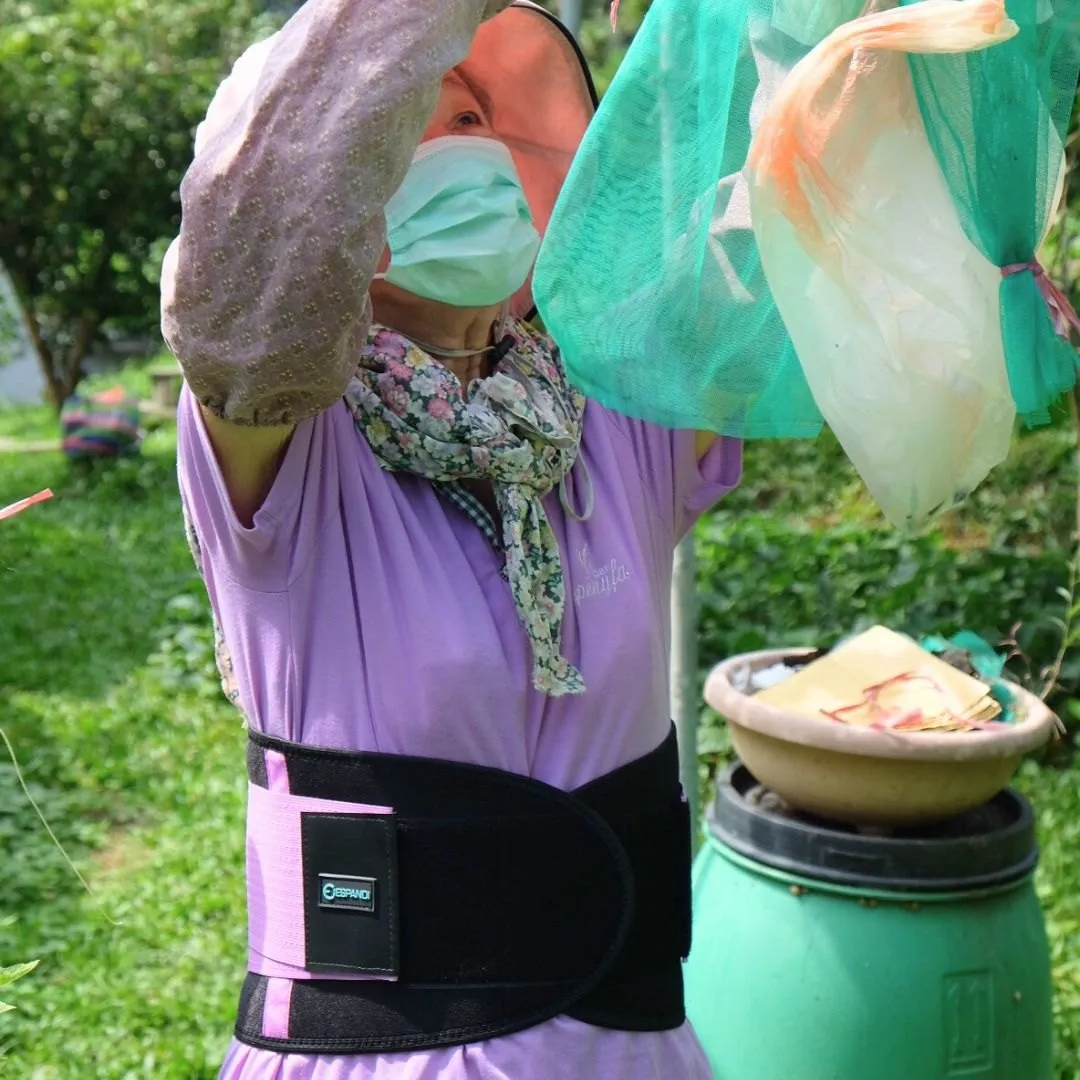
Grandma bagging fruit in the garden.
My job was sizing the pears. I picked them up one by one, checked the size and weight, and put each into the right basket. By evening, after a whole day of the same movement, my wrists were so tired I could barely lift them, so I wore wrist supports and carried on the next day.
After three weeks I felt I could hardly keep going.
My grandparents did it their whole lives.
I used to watch their hands: dark from the sun, thick-knuckled, covered in cracks. They never complained. I remember my grandfather often getting heatstroke, and my dad giving him cupping so he could keep going. Farming is not work most people can take, especially in the days before machines did much of it, when everything depended on your hands and shoulders.
Then my grandfather fell ill with liver cancer. Back then, nobody told farmers how dangerous pesticides were, and by the time it was found, it was too late. He gave his whole life to that orchard, and in the end he gave it his health too.
After he passed away, the orchard went quiet. My grandmother couldn't look after it alone, so she turned it into a vegetable garden. She is in her eighties now and still goes to the garden at first light every day. When we tell her to rest, she says, "If I stop working, I'll fall apart."
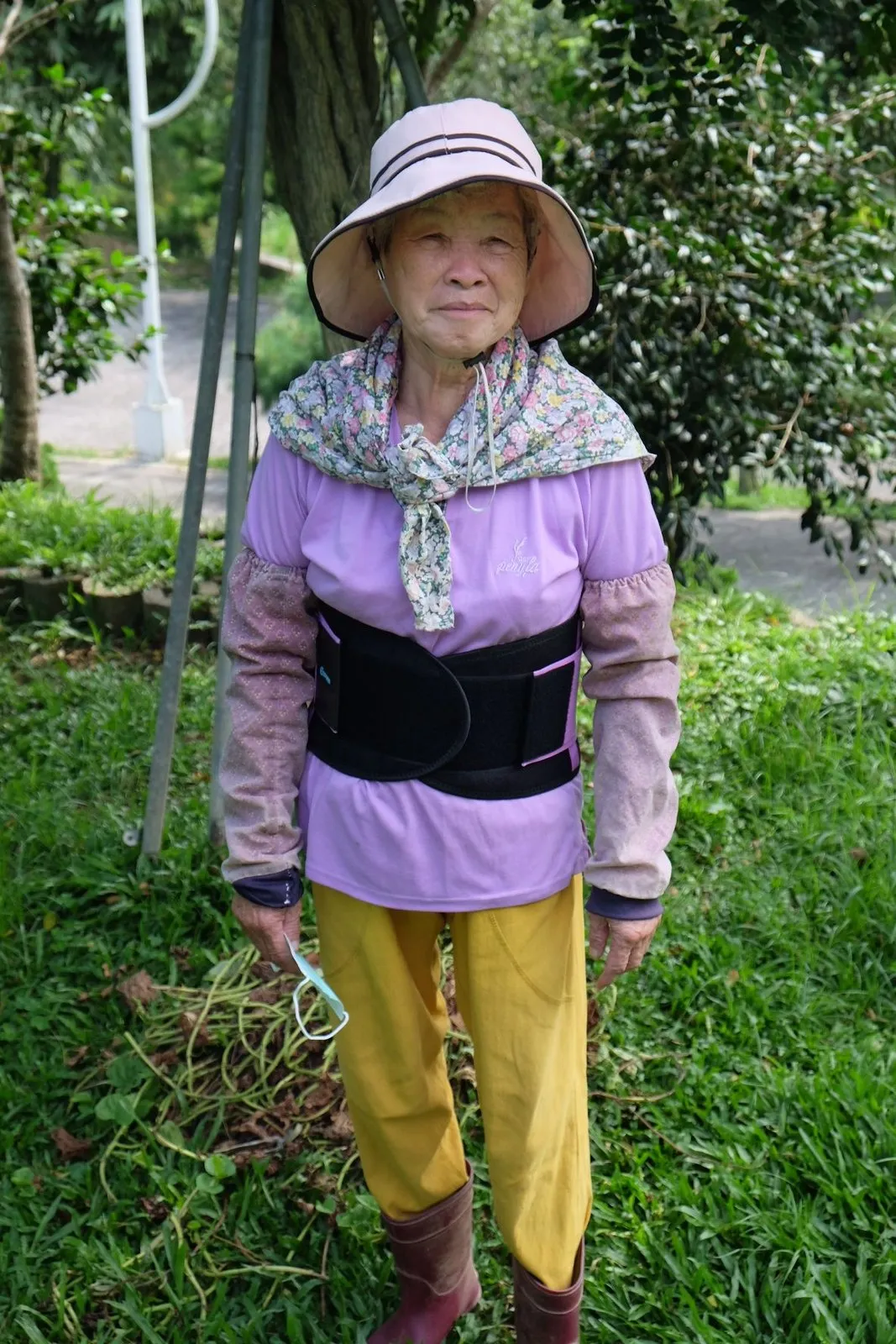
In her eighties, Grandma still goes to the garden every day.
Her memory is slowly fading, but there is one thing she remembers clearly and is proudest of: she can still bend down and put her palms on the ground. She tells everyone, "The doctor says my knees are great and I'm still flexible, because I grow vegetables every day!"
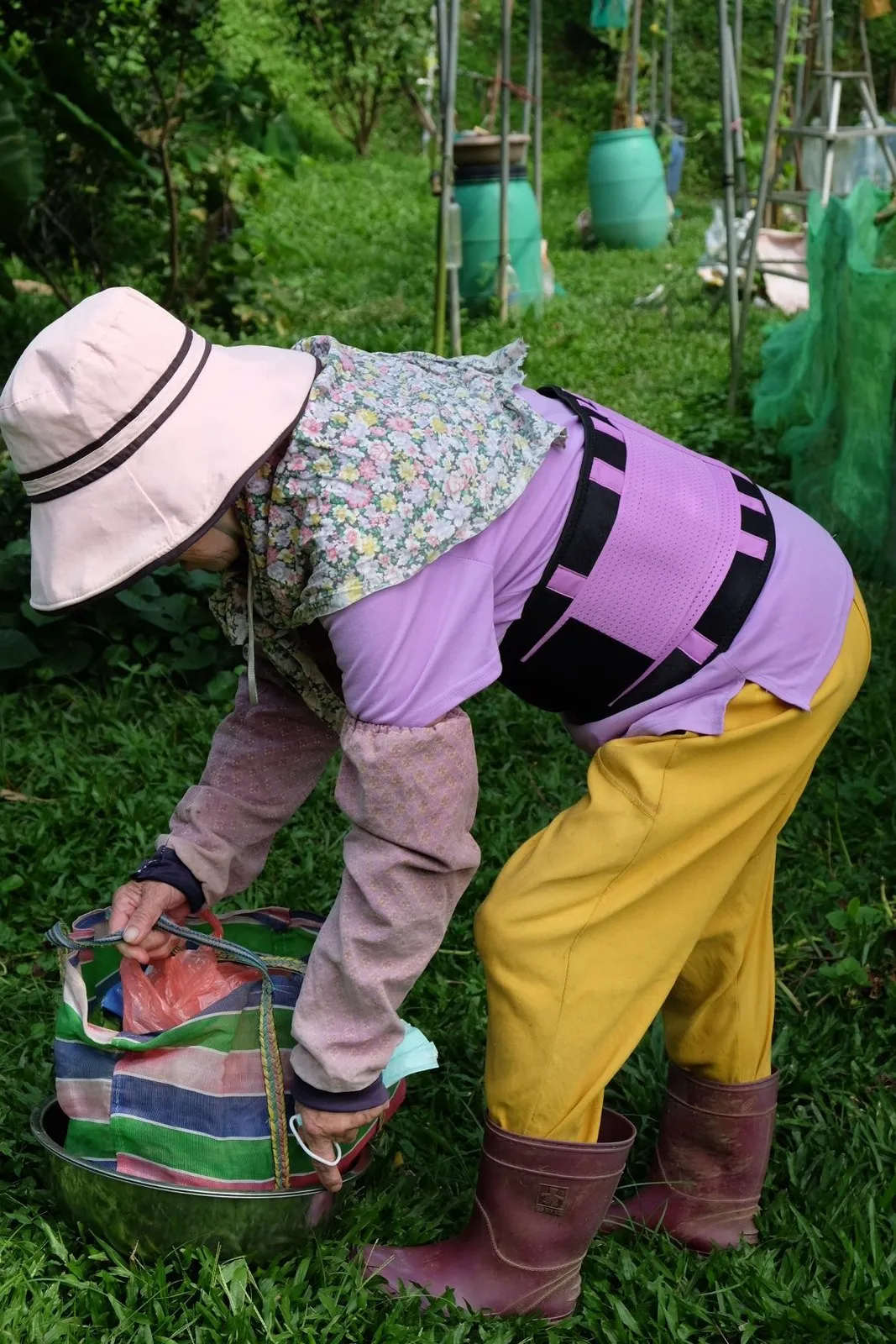
“If I stop working, I’ll fall apart.”
Taiwan has many elders like my grandmother
Every time I go back to Houli, I wonder how many elders like her there are in Taiwan.
In orchards, in fields and in kitchens, they held their families up for a lifetime. Then the children grow up and move away, and they eat alone and watch TV alone. The less fortunate have to make even daily necessities last, let alone have someone to talk to.
The dogs who guarded our home
Our house in the countryside always had dogs, little black ones and tabby ones.
Almost all of them were strays we took in: found by the road, in the fields, or following us home on a rainy night. They guarded the house, walked the vegetable garden with Grandma, and kept watch at the door every night, rain or wind. To us they weren't pets. They were family.
So whenever I see a stray dog by the road, I think of our dogs, and of all the dogs that once looked after our home. Strays just haven't found a home yet. They need a roof and some love too.
Letting love go beyond our own home
What Grandma and those dogs taught me is how warm a home can be. I want that warmth to reach further.
When I was little, my mum often took my brother and me to volunteer, helping children from struggling families with their schoolwork. She taught us early that being able to help others is a kind of happiness.
So since founding Espandi, giving back has been one of our biggest motivations. Ever since the company first made a profit, we have regularly set aside part of it to:
- donate to groups that care for stray dogs, so more dogs like ours have food and a place to sleep, and
- buy daily supplies for elders in need, in the hope that every elder in Taiwan is loved and not alone.
Every donation and every delivery of supplies is listed on our giving page, so you can see what your order became.
This is Espandi
We don't want to be the biggest brand. We want to be a brand you trust enough to give to your family.
Before every brace ships, we ask the same question: if this were for Grandma, would it be good enough? Would the price make her hesitate?
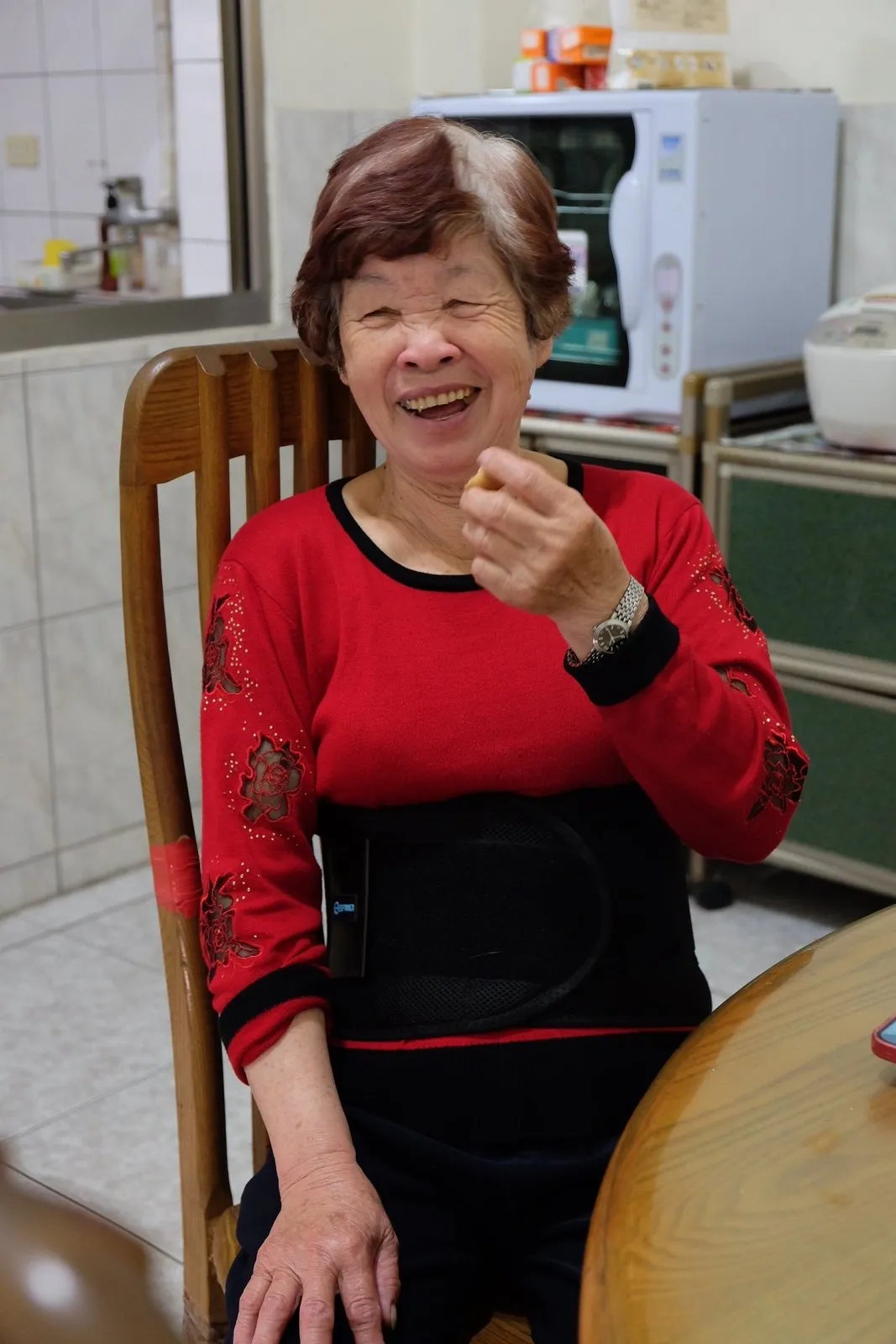
Thank you for helping bring a smile like this to more elders.
Thank you for choosing Espandi. You're not just buying a brace. You're also sending some warmth to an elder, or to a dog.