Can't Raise Your Arm, and Shoulder Pain Keeps You Up at Night? Frozen Shoulder Symptoms, Causes and Rehab Exercises Explained
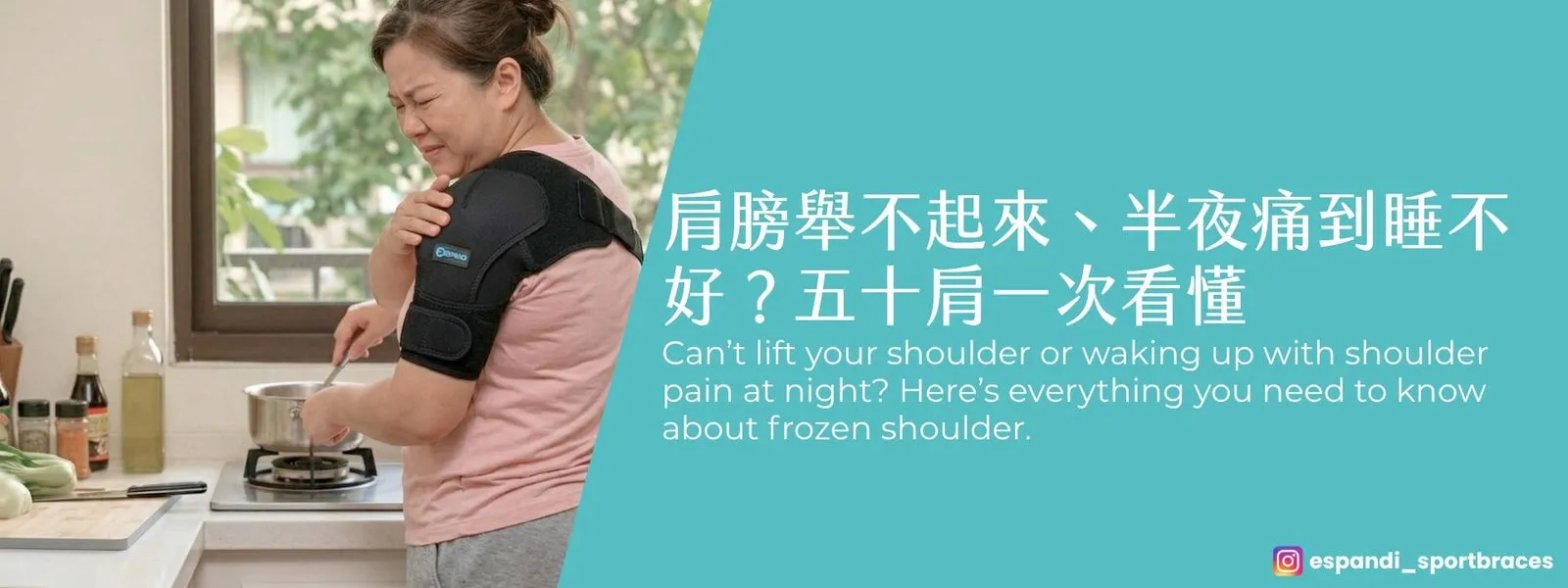
The short answer: the typical sign of frozen shoulder (adhesive capsulitis) is a shoulder whose range of movement keeps shrinking - for example you can't lift your arm high or reach behind your back - with noticeable pain at night. It usually passes through a painful phase, a stiff phase and a thawing phase. The key is to avoid keeping it completely still, and to do stretches and rehab exercises and use cold or heat to suit the stage. If the pain hasn't improved after 4 weeks, or your arm feels numb or weak, see a doctor.
This article is general health information. Braces give support and a posture reminder and do not treat any condition. See a doctor if you have symptoms.
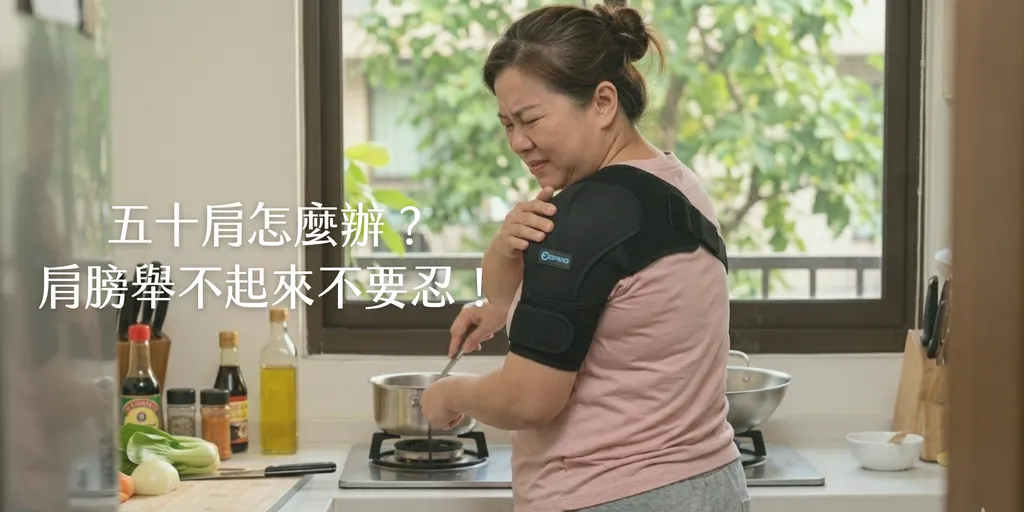
Has your shoulder been feeling stiff and catching lately?
It started as a bit of an ache, but then:
- you can't reach behind you to fasten your bra
- hanging out washing or reaching for something high up hurts
- turning over in bed wakes you with shoulder pain
- washing and drying your hair has become hard work
Many women assume at first that they're just "too tired" or "slept awkwardly". But if the shoulder pain lasts several weeks and the range of movement keeps getting smaller, it may be an early sign of frozen shoulder.
Frozen shoulder doesn't always come on suddenly - it's more of a problem that builds up gradually. Without early attention, the pain and stiffness can last more than six months and even affect daily life and sleep.

What is frozen shoulder?
The medical name for frozen shoulder is adhesive capsulitis.
Put simply, the tissue around the shoulder joint becomes inflamed and gradually tightens and sticks together, making the shoulder harder and harder to move.
In Chinese it's called "fifty shoulder", but that doesn't mean it only happens at 50. In practice it's most common between 40 and 60, it affects women more often than men, and people around the menopause, under long-term stress or short of sleep are especially prone to it.
What are the common symptoms of frozen shoulder?
The most obvious feature of frozen shoulder isn't just pain, but this:
The shoulder moves less and less
Common symptoms include:
- you can't lift your arm high
- you can't reach behind your back
- getting dressed is difficult
- brushing or tying your hair hurts
- pain is especially noticeable at night
- lying on your side wakes you with pain
- the shoulder feels stuck and stiff
Many people notice that:
they haven't knocked it or injured it, yet the shoulder moves a little less each day.
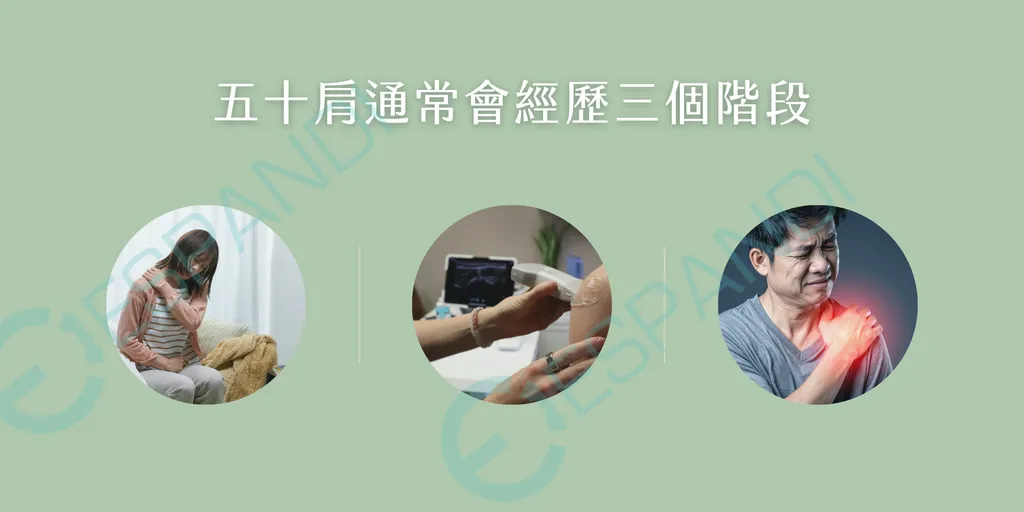
The three stages of frozen shoulder - which one are you in?
Frozen shoulder usually passes through three stages.
Stage one: the painful phase (freezing phase)
Lasts roughly 2–9 months.
At this point the main thing is pain.
It's especially painful at night: many people are woken by pain when they turn over, and some can't lie on their side at all.
Although movement is starting to decrease, most people assume it's just neck and shoulder ache and don't realise the problem is already getting worse.
Stage two: the stiff phase (frozen phase)
Lasts roughly 4–12 months.
The pain may ease a little, but the shoulder becomes very stiff.
For example:
- you can't raise your arm
- you can't reach your back
- putting on a bra becomes difficult
- hanging out washing gets stuck halfway
At this stage the biggest problem usually isn't pain but the effect on everyday life.
Stage three: the thawing phase
Lasts roughly 5–26 months.
Shoulder movement slowly starts to return, and the pain gradually eases.
With regular rehab and stretching, recovery is usually quicker.
Why do people get frozen shoulder?
Medicine hasn't yet pinned down a single cause of frozen shoulder, but the following factors are closely linked to it:
Long-term poor posture
Sitting for long periods, looking down and long hours at a computer keep the neck and shoulder muscles tense, which can affect how the shoulder joint moves.
Avoiding moving the shoulder for a long time
Some people are afraid to move the shoulder after an injury because it hurts, which actually makes the joint more likely to stiffen and stick.
The menopause and hormonal changes
Around the menopause, women's muscles and joint tissues may recover less well, which is one reason frozen shoulder is common at this time.
Diabetes and thyroid problems
People with diabetes are noticeably more likely to develop frozen shoulder, and thyroid disorders are also linked to it.
Long-term stress and lack of sleep
Under stress, the neck and shoulder muscles tend to stay tense for long periods, which over time may also raise the risk of shoulder problems.
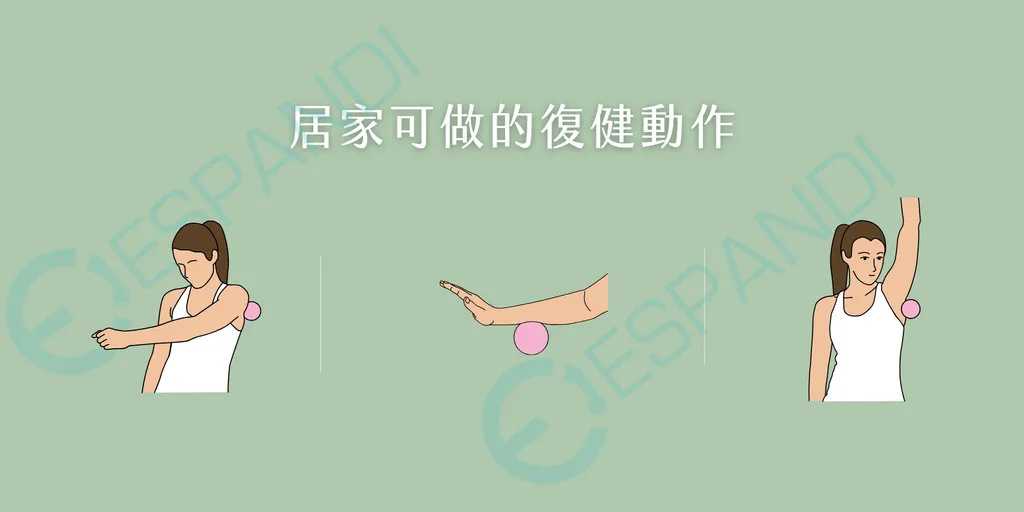
4 frozen shoulder rehab exercises to do at home
The worst thing for frozen shoulder is not moving it at all.
Suitable stretching and rehab can help the shoulder joint gradually regain its range of movement.
The exercises below are best suited to stage two (the stiff phase) and stage three (the thawing phase). If you're in the intensely painful phase, focus first on rest and cold or heat.
Exercise one: pendulum exercise
Purpose
Uses gravity to relax the shoulder joint - one of the starter exercises physiotherapists most often suggest.
How to do it
Lean forward about 45 degrees and let the affected arm hang down naturally, then gently draw small circles with the shoulder as the centre.
10 times clockwise and 10 anticlockwise, 2–3 rounds a day.
The key is a relaxed swing - don't fling the arm with force.
Exercise two: towel-assisted stretch
Purpose
Eases the stuck feeling when reaching behind your back.
How to do it
Hold one end of a towel in each hand, and slowly pull upward with the healthy arm to stretch the affected shoulder.
Hold for 15 seconds, 5 sets each time.
Exercise three: wall walk
Purpose
Helps restore how high you can raise your arm.
How to do it
Face a wall and slowly walk your fingers up it. Once you reach a height that feels acceptable for now, hold for 5 seconds, then slowly lower.
10 times a day.
Exercise four: doorway stretch
Purpose
Relaxes tight chest muscles and helps with shoulders that roll forward.
How to do it
Bend your elbow to 90 degrees, rest it against the door frame, and slowly lean your body forward.
A stretch across the chest and front of the shoulder is enough.
Hold for 20 seconds, 3 times a day.
Frozen shoulder: ice or heat?
Many people reach for heat as soon as the shoulder hurts, but the right approach actually differs by stage.
Acute painful phase → cold
If the shoulder:
- feels hot and swollen
- feels clearly inflamed
- has only just started hurting
use cold.
About 15–20 minutes each time, and remember to wrap the ice pack in a towel to avoid frostbite.
Chronic stiff phase → heat
If you've moved on to:
- a shoulder that catches
- limited movement
- less pain but a lot of stiffness
heat is more suitable.
In particular, 10–15 minutes of heat before your rehab exercises usually makes it easier to move.
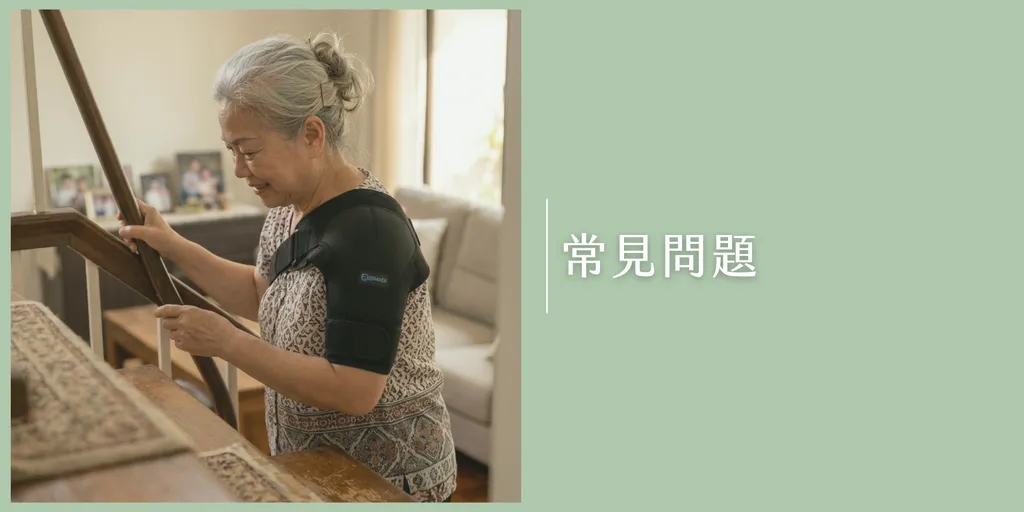
For home rehab, many people use a shoulder support that holds a hot/cold pack in place, so the ice pack doesn't keep slipping, and it also gives the shoulder some support during everyday activities.
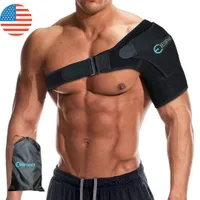
A design like the Espandi™ sports shoulder support, which takes a hot/cold pack, is handy for using cold or heat at home.
When should you see a doctor?
See a doctor as soon as possible if:
- shoulder pain hasn't improved after more than 4 weeks
- your arm feels numb or weak
- you've fallen on or knocked the shoulder
- night pain is seriously affecting your sleep
- you can't lift your arm at all
Some of these symptoms may not be frozen shoulder at all, but a rotator cuff tear or a problem in the neck.
Espandi™ sports shoulder support | shoulder support for everyday activities
Recovering from frozen shoulder often takes many months.
Alongside regular rehab, support and protection in everyday life matter too.
The Espandi™ sports shoulder support has a shaped, wraparound design for the shoulder joint that gives stable support while you move.
It also comes with a reusable hot/cold pack, so you can switch between ice and heat at different stages.
Suitable for:
- when you need to use cold or heat
- active people who want shoulder support
- people who work at a computer for long hours
- everyday wear
Frequently asked questions
Q1: Will frozen shoulder get better on its own?
Some people recover gradually, but if it's left completely untreated it can drag on for 1–3 years.
The earlier you start rehab and stretching, the quicker recovery usually is.
Q2: How is frozen shoulder different from ordinary neck and shoulder ache?
Ordinary neck and shoulder ache is mostly muscle fatigue, but the defining feature of frozen shoulder is:
"a clear loss of shoulder movement".
For example, you can't raise your arm or reach behind you.
Q3: Can frozen shoulder be massaged?
Yes, but not too hard.
During the acute painful phase, heavy massage may actually aggravate the inflammation.
Q4: What can I do if the pain stops me sleeping at night?
Avoid lying on the affected shoulder.
When lying on your side, hug a pillow to take pressure off the shoulder; when lying on your back, put a small pillow under the arm for support.
Q5: Does a shoulder support actually help?
A shoulder support can't treat frozen shoulder directly, but it can give the shoulder support while you move.
If it also holds a hot/cold pack, using cold or heat at home is more convenient.
Shoulder problems don't go away by putting up with them; ignoring them only makes them drag on longer. Frozen shoulder can recover, and with a proper understanding of it and patient rehab, most people regain normal shoulder movement within 1–2 years.
Braces mentioned in this article
This article is general health information. Braces give support and a posture reminder and do not treat any condition. See a doctor if you have symptoms.
What customers say about the Sports Shoulder Brace | Adjustable Compression Shoulder Support · Hot/Cold Pack Pocket · Fits Either Shoulder
Reviews are customers' personal experiences and do not represent product performance.
- ★★★★★
第二次回購,品質真的很棒,出貨速度也超快速的,所以再次回購
a*****m · 2026-06-01 - ★★★★★
第一次購買,品質還不錯,出貨速度還可以,值得再回購,真的還不錯
a*****m · 2026-05-26
- 30-day trial, returns accepted
- Ships from Taiwan in 1–3 days
- Sizing help on LINE
Keep reading

What Exercises Can You Do for a Bunion at Home? 6 Gentle Stretches, a Daily Routine and When to Stop
Big toe drifting further out of line, and wondering what you can do at home? Here are 6 bunion stretches that need no special equipment, each with reps and cautions,...
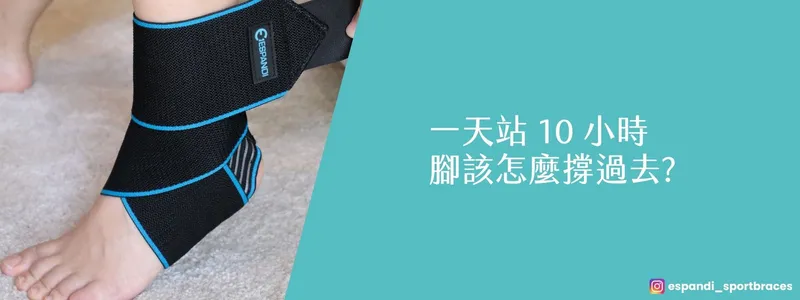
For Shop Staff, Nurses and Hospitality Workers: How to Get Your Feet Through a 10-Hour Day Standing
Sore feet from standing, aching soles after a full day on your feet, ankles so swollen by evening that your shoes feel tight - yet most advice only works once...
Stiff, Creaky Knees That Hurt on the Stairs - Is It "Wear and Tear"? Knee Osteoarthritis Explained
Knees that feel stiff and creaky, hurt on the stairs, or complain when you stand up from a squat - does that mean they're wearing out? Learn the common symptoms...