A Finger That Locks, or Pain at the Wrist? Trigger Finger vs De Quervain's in One Table
The short answer: trigger finger and De Quervain's tenosynovitis both come down to a tendon not gliding smoothly through its sheath, but they happen in different places. Trigger finger is felt in the palm near the base of a finger: the finger catches after bending and clicks as it straightens, often worst in the morning. De Quervain's is felt on the thumb side of the wrist, with a sharp pain when you wring a towel, turn a door handle or lift a child. The one people most often mix up is "trigger thumb": the key is whether the sore spot is on the palm side at the base of the thumb, or at the edge of the wrist. For both, you can start by cutting down on the movements that set them off. But if the finger won't straighten, the joint is red, swollen and warm, or it still hasn't got better after several weeks, see a rehabilitation, orthopaedic or hand specialist.
This article is general health information. Braces give support and a posture reminder and do not treat any condition. See a doctor if you have symptoms.
You wake up, bend your middle finger, and it gets stuck. You need your other hand to snap it straight.
After lifting your baby or wringing out a towel, there's a stab of pain just below the thumb, near the wrist.
Many people lump these together as "using my hands too much".
That's not wrong, but they are actually two different problems: they happen in different places, feel different, and call for different braces.
This article puts them side by side, so you have a rough idea of what you're dealing with, what to watch for, and when to see a doctor.
Trigger finger vs De Quervain's at a glance
| Trigger finger | De Quervain's | |
|---|---|---|
| Medical name | Stenosing tenosynovitis of the finger flexor tendon | De Quervain's tenosynovitis |
| Where | The palm near the base of the finger (palm side of the knuckle) | The thumb side of the wrist, extending towards the base of the thumb |
| Typical feeling | The finger catches after bending, then snaps or clicks straight | Sharp pain when the thumb or wrist moves; locking is less common |
| Fingers involved | Thumb, middle and ring fingers are more common; can be several | Only the thumb side |
| When it's most noticeable | First thing in the morning, or after the hand has rested | When twisting, turning, pinching or lifting |
| Common triggers | Repeated forceful gripping, pinching, holding tools for long periods | The thumb working hard while the wrist bends sideways, e.g. lifting a baby, wringing a towel |
| Simple self-check | Make a fist and open it; see if a finger catches or needs help | The Finkelstein test (explained below) |
| Type of brace | A single-finger splint that rests the finger straight | A wrist brace that also wraps the thumb |
This table is to help you get a first idea, not to diagnose. Which one you have, or whether you have both, is for a doctor to examine and decide.
What is trigger finger, and why does the finger lock?
Your fingers bend thanks to the flexor tendons on the palm side. Each tendon is wrapped in a sheath, and along the way there are several ring-like bands (called pulleys) that hold the tendon close to the bone.
At the base of the finger, where it meets the palm, is a pulley called A1. When the sheath here thickens and narrows from repeated friction, the tendon can't pass through smoothly, and a small nodule can even form on the tendon.
The result:
- After bending, the finger catches and then suddenly snaps straight
- A click or snapping sensation
- A small lump in the palm near the base of the finger that may be tender to press
- Worst first thing in the morning, or after the hand has been resting
- In more severe cases, the finger stays stuck in a bent position and needs the other hand to straighten it
According to the American Academy of Orthopaedic Surgeons (AAOS), trigger finger is more common in women aged 40 to 60 and in people with diabetes or rheumatoid arthritis. Work or activities that involve repeated forceful gripping also make it more likely.
For home care and the different grades of trigger finger, see: Trigger finger self-care: 5 home exercises and when to wear a splint.
What is De Quervain's, and why does it hurt on the thumb side of the wrist?
The full name is De Quervain's tenosynovitis. In Taiwan it's widely known as "mummy thumb" (媽媽手).
On the thumb side of the wrist, two tendons that move the thumb outwards and lift it (abductor pollicis longus and extensor pollicis brevis) run together through a tunnel at the edge of the wrist. When the sheath here becomes irritated and thickened from repeated use, the tendons rub as they glide, and it hurts.
Common signs include:
- Pain on the thumb side of the wrist, sometimes spreading up the forearm
- Some swelling in that area
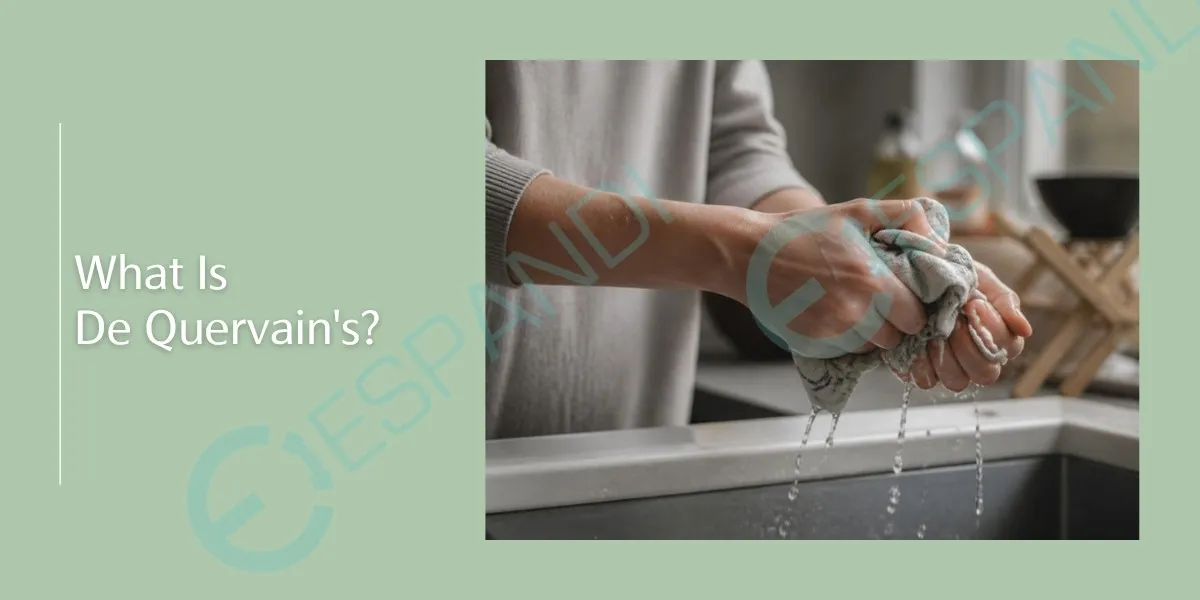
- More pain when wringing a towel, turning a door handle, opening a jar, lifting a child or holding a phone
- Particularly noticeable when the thumb and wrist move together
AAOS information also notes that De Quervain's is more common in women than men, most often in their 40s and 50s, and frequently appears during pregnancy and after giving birth, which is where the nickname "mummy thumb" comes from. But it doesn't only affect mums: long hours scrolling a phone one-handed, housework and jobs that make the thumb work repeatedly can all bring it on.
How do you do the Finkelstein test?
This is a common way to get a first indication of De Quervain's:
- Tuck your thumb into your palm and wrap your other fingers lightly around it
- Slowly bend your wrist towards your little finger
- If you feel clear pain on the thumb side of the wrist, it may be related to De Quervain's
Caution: move slowly and gently, and stop as soon as it hurts. Don't keep repeating it to "make sure". This is only a self-check and can't replace an examination by a doctor.
For everyday adjustments and choosing a wrist brace for De Quervain's, see: Pain at the base of the thumb: is it De Quervain's? Self-test and choosing a wrist brace.
The easiest mix-up: trigger thumb vs De Quervain's
Both can cause discomfort "around the thumb", which is why they're so easy to confuse. To tell them apart, pay attention to three things:
1. Where is the sore spot?
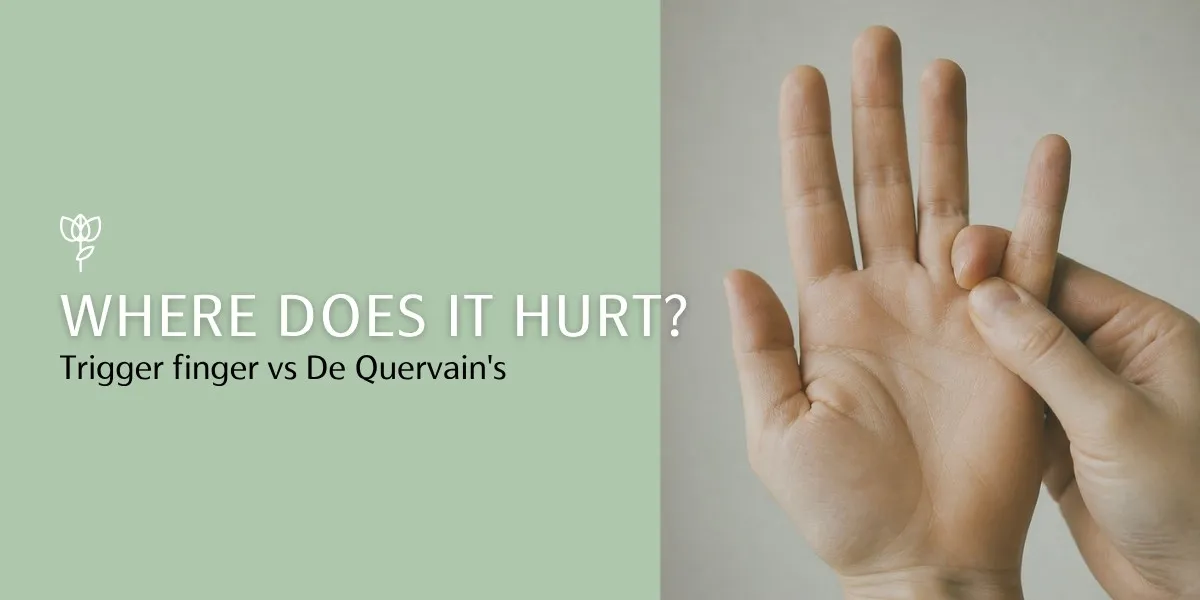
- Trigger thumb: on the palm side, where the base of the thumb meets the palm (the palm side of the thumb knuckle)
- De Quervain's: at the edge of the wrist, near the bony bump on the thumb side, closer to the wrist than the base of the thumb
2. Does it catch or snap?
- Trigger thumb: after bending, the thumb catches or clicks as it straightens
- De Quervain's: locking is less common; it mainly hurts when you move
3. Which movement hurts most?
- Trigger thumb: bending and straightening the thumb, and it's especially stiff in the morning
- De Quervain's: using the thumb while bending the wrist sideways, or twisting
If you feel both, that's not unusual: they can happen together. In that case it's even more worth having a doctor examine it.
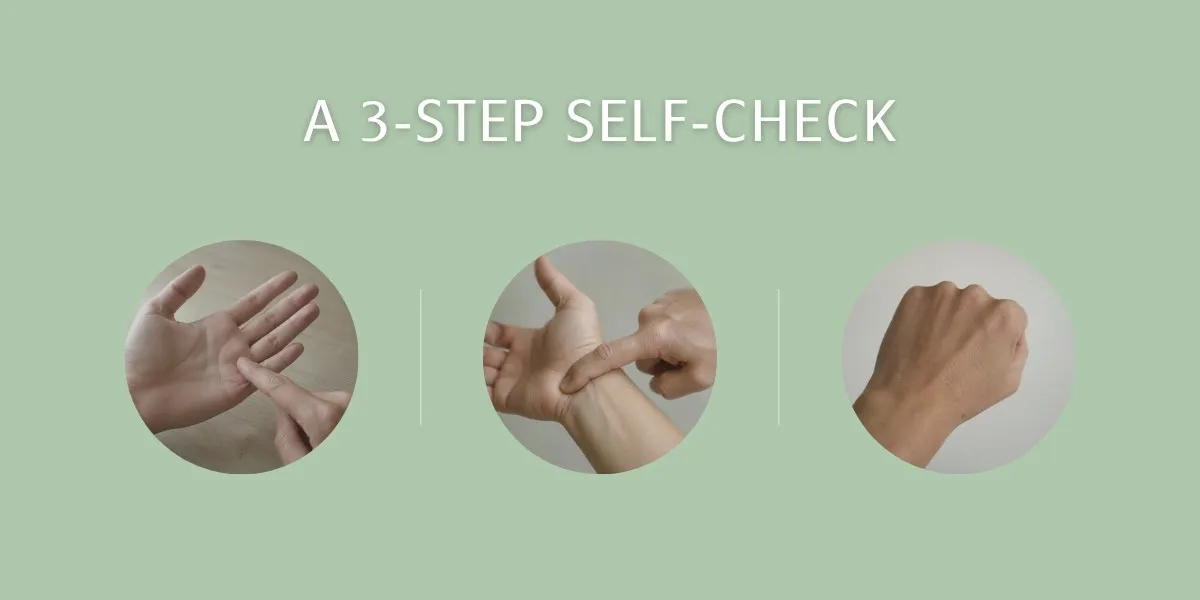
Three steps to tell them apart (as a rough guide)
Here's a simple routine to organise what's going on before you see a doctor:
- Find the sore spot: with the fingers of your other hand, press gently on the palm near the base of each finger, and on the thumb side of the wrist. Note where it hurts most.
- Check for catching: slowly make a fist and slowly open it. Watch whether any finger catches, pauses or needs help from the other hand.
- Identify the trigger: think back to which movements hurt most. Is it gripping and pinching, or twisting, turning and lifting?
Write these three things down (or take photos in your phone's notes). Telling your doctor at the appointment helps you explain things quickly and clearly.
It could also be something else
Hand discomfort isn't always one of these two. The following are often confused with them and need a doctor to tell apart:
- Carpal tunnel syndrome: mainly numbness and tingling in the thumb, index and middle fingers, often worse at night or early in the morning. The key feature is numbness, not locking.
- Wear in the joint at the base of the thumb: the pain is deeper, in the joint where the thumb meets the wrist, and hurts when pinching or turning a key. It's more common from middle age onwards.
- Rheumatoid arthritis and other inflammatory joint conditions: several finger joints swollen and painful at once, often on both hands, with morning stiffness that takes more than half an hour to ease. These should be assessed by a rheumatologist.
- Ganglion cysts or problems after an injury: a clear lump you can feel, or a recent fall onto the hand or a sprain.
Everyday care: principles that apply to both
Although they happen in different places, what you can do day to day, before seeing a doctor or when your doctor suggests conservative care, is very similar:
- Find the movements that set it off, and cut down: for example, gripping tools hard for long periods, scrolling your phone one-handed, or repeatedly wringing towels.
- Take regular breaks: after doing the same movement for a while, stop and relax your fingers, and give your hands a shake.
- Change how you do things, or what you use: press towels instead of wringing them, use a jar opener, support a baby with your whole palm and forearm, and use a phone stand or both hands.
- Don't keep "testing" it: some people keep forcing a locked finger straight, or repeat the Finkelstein test to see if it still hurts. That just irritates it more.
- Keep stretching and movement gentle: stop at "tight", never push into pain. When it's acutely red, swollen and warm, rest it and get it checked.
Choosing a brace: one holds the finger, the other holds the thumb and wrist
Because they happen in different places, they need different braces. Choose the wrong one and it often "doesn't hold what needs holding".
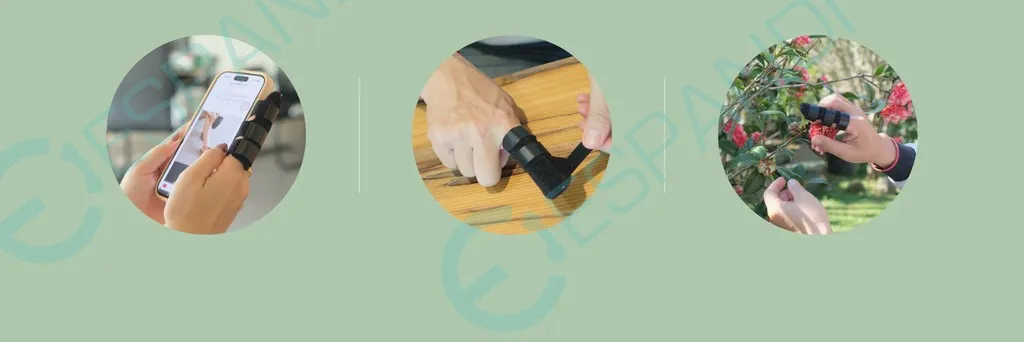
Trigger finger: a single-finger splint so the finger rests straight
A common approach to trigger finger is to use a finger splint while resting or sleeping, keeping the finger straight and cutting down on curling it into a fist at night without realising.
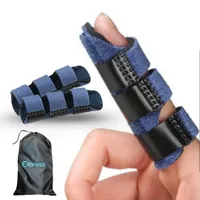
- For a single finger: the Espandi finger splint with aluminium stay uses a removable aluminium stay and three hook-and-loop straps to hold one finger in a straight position. The stay can be reshaped as needed.
- For the ring or little finger, or when you need the palm held too: the ring finger aluminium splint in the same range extends its support across the palm and wrist for a larger area of support. You can compare them in the finger splint range.
During the day while you're awake, it's not a good idea to keep it on without moving; gentle finger movement still matters.
De Quervain's: the thumb needs to be included
The problem in De Quervain's lies between the thumb and the wrist, so an ordinary brace that only wraps the wrist often doesn't hold the thumb. AAOS also notes that the brace commonly used for De Quervain's keeps the wrist straight and the thumb still.
The Espandi thumb stabilising wrist brace has a thumb loop and a built-in support structure that wraps both the thumb and the wrist. The hook-and-loop straps adjust to your hand, and it can be worn for housework, childcare or computer work.
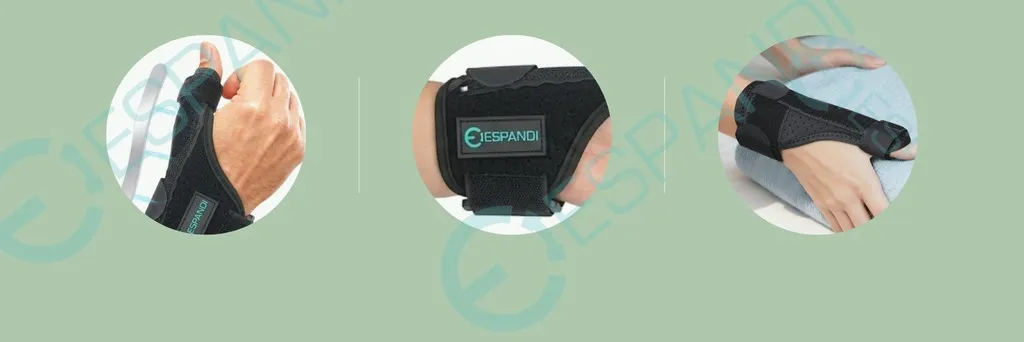
Whichever you use, keep these in mind
- Start with short periods so your hand gets used to being held still
- Don't fasten it too tight. If your fingers go numb, cold or change colour, or the skin is marked red, loosen it or take it off
- A brace provides stability and support so your hand repeats the same movements a little less while you get on with life. It doesn't replace seeing a doctor or resting
- For how to put it on, see the fitting instructions
✅ See the Espandi finger splint range, with a 30-day trial
When should you see a doctor?
If any of the following apply, we suggest seeing a rehabilitation, orthopaedic or hand specialist:
- A finger is stuck in a bent position and won't straighten on its own, or needs the other hand to straighten it
- The joint or palm is clearly red, swollen and warm. This could be an infection or another inflammatory problem, so please see a doctor promptly
- The pain is affecting your work, sleep or daily life (e.g. holding a cup or doing up buttons is difficult)
- It hasn't got better, or is getting worse, after a few weeks of cutting down on the triggering movements and resting
- Your fingers are numb or weak, or you often drop things
- Several joints are swollen and painful at once, or morning stiffness takes a long time to ease
- You have diabetes or rheumatoid arthritis and develop a locking finger or wrist pain
What might a doctor suggest?
Depending on how severe it is and your individual situation, a doctor may suggest changing activities, using a brace, oral medication, an injection, or physiotherapy. Surgery is usually only discussed when conservative care hasn't helped after a period of time. Each option has its own considerations, so discuss them with your doctor rather than deciding on your own.
Braces mentioned in this article
This article is general health information. Braces give support and a posture reminder and do not treat any condition. See a doctor if you have symptoms.
What customers say about the Finger Splint with Aluminium Stay | Keeps the Finger Straight, Adjustable Finger Brace
Reviews are customers' personal experiences and do not represent product performance.
- ★★★★★
使用方便,黏貼式的蠻好調整的,而且出貨速度非常的快,效率很好,值得推薦!
毅實紙業 · 2026-04-16
- 30-day trial, returns accepted
- Ships from Taiwan in 1–3 days
- Sizing help on LINE
FAQ
Q: Can you have trigger finger and De Quervain's at the same time?
A: Yes. Both are linked to repeated use of the tendons in the hand, and some people get both at once, or one settles while the other flares up. If you have both kinds of symptom, it's best to have a doctor examine you directly.
Q: The base of my thumb hurts. How do I know if it's trigger thumb or De Quervain's?
A: Start by finding the sore spot. If it's on the palm side where the thumb meets the palm, and the thumb catches as it bends and straightens, it leans towards trigger thumb. If it's at the edge of the wrist on the thumb side, with sharp pain when twisting, turning or lifting, it leans towards De Quervain's. This is only a rough guide; a doctor's examination is needed to confirm.
Q: Does "mummy thumb" only affect mums?
A: No. It is more common during pregnancy and after giving birth, but long hours on a phone, housework and jobs that make the thumb work repeatedly can affect anyone, whatever their sex.
Q: Can I use the same brace for both?
A: Usually not. Trigger finger needs the finger held; De Quervain's needs the thumb and wrist held. If you have both, have a doctor confirm first and choose based on their advice.
Q: When my finger locks, can I force it straight?
A: Forcing it repeatedly isn't recommended. If it catches now and then, you can use your other hand to help it straighten gently. But if you often need to force it, or it hurts when you do, the problem is more established and you should get it checked by a doctor.
Q: Will trigger finger or De Quervain's go away on its own?
A: It varies. For some people, the discomfort gradually eases after cutting down on the movements that set it off and letting the hand rest properly. For others, nothing changes for weeks, or it keeps coming back. Rather than waiting, change how you use your hands day to day and watch how it goes; if it doesn't get better, get it checked by a doctor.
Q: Can using a phone cause trigger finger or De Quervain's?
A: It's hard to pin on a single cause, but holding a phone in one hand and swiping with your thumb for long periods does keep the thumb and wrist working constantly. If you already have symptoms of either, try using both hands, swiping with your index finger, or putting the phone on a stand to take the load off your thumb.
Q: Which kind of doctor should I see?
A: In Taiwan you can start with rehabilitation medicine or orthopaedics; if further treatment is needed, you may be referred to a hand surgeon. If several joints are swollen and painful and rheumatoid arthritis is a possibility, a rheumatologist is the right place to start.
※ This article is general health information for reference only and is not a substitute for professional diagnosis. If a finger won't straighten, a joint is red, swollen and warm, or pain persists, please see a doctor promptly.
Keep reading
Trigger Finger Self-Care: 5 Home Exercises and When to Wear a Finger Splint
Does a finger lock up in the morning and then snap straight with a "click"? That may be trigger finger. This article explains the causes from a physiotherapy perspective, what...
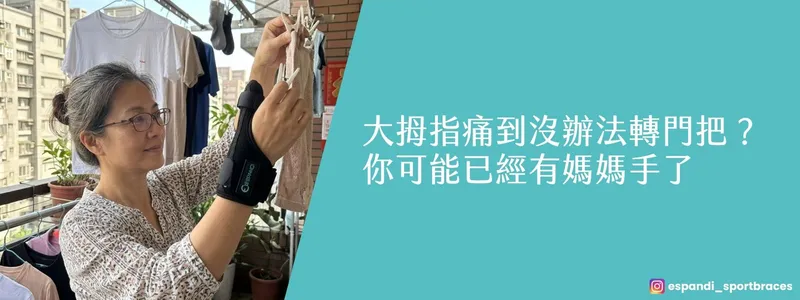
Pain at the Base of Your Thumb So Bad You Can't Turn a Door Handle? You May Already Have De Quervain's
Does the base of your thumb hurt when you turn a door handle or wring out a towel? You may already have De Quervain's tenosynovitis, often called "mummy thumb". This...

What Exercises Can You Do for a Bunion at Home? 6 Gentle Stretches, a Daily Routine and When to Stop
Big toe drifting further out of line, and wondering what you can do at home? Here are 6 bunion stretches that need no special equipment, each with reps and cautions,...