Trigger Finger Self-Care: 5 Home Exercises and When to Wear a Finger Splint
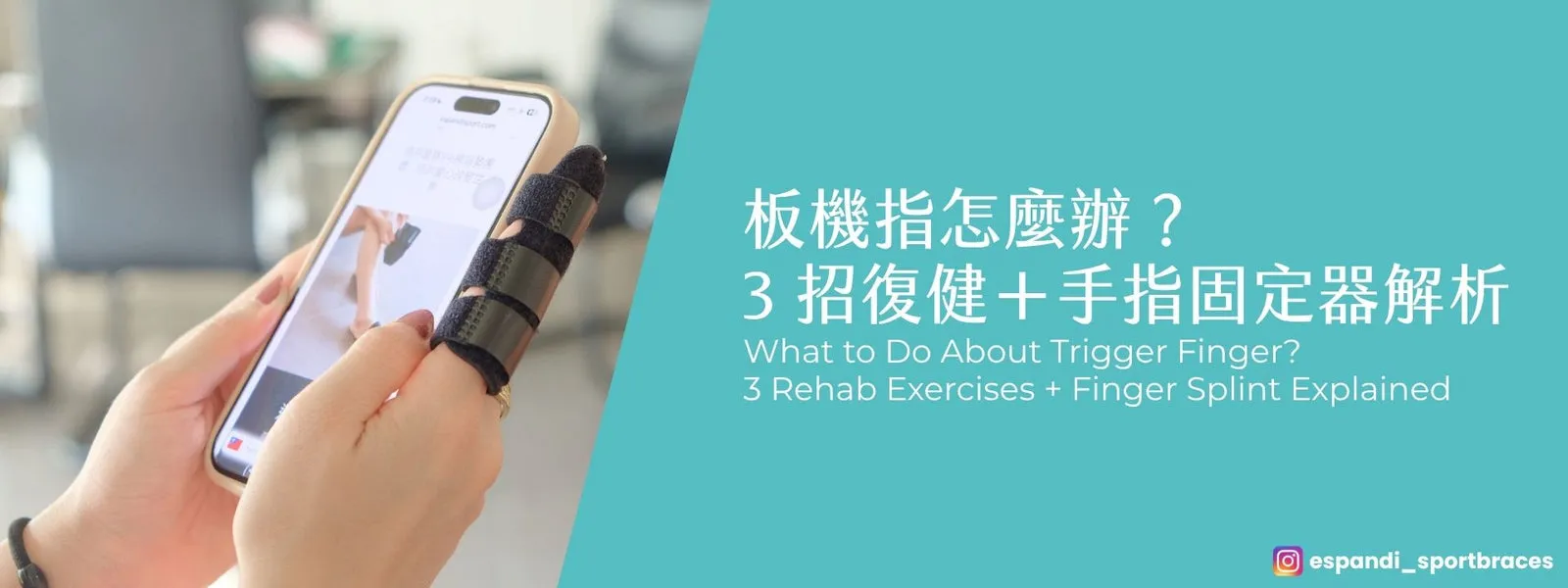
The short answer: with mild trigger finger (the finger catches but still straightens on its own), you can start at home: cut down on repetitive gripping, soak the hand in warm water and then do gentle tendon gliding exercises, and let the finger rest straight at night. Movements should feel "tight", not "painful". If you already need the other hand to straighten the finger, the joint is red, swollen and warm, or 4 to 6 weeks of self-care hasn't helped, see a rehabilitation or orthopaedic doctor.
This article is general health information. Braces give support and a posture reminder and do not treat any condition. See a doctor if you have symptoms.
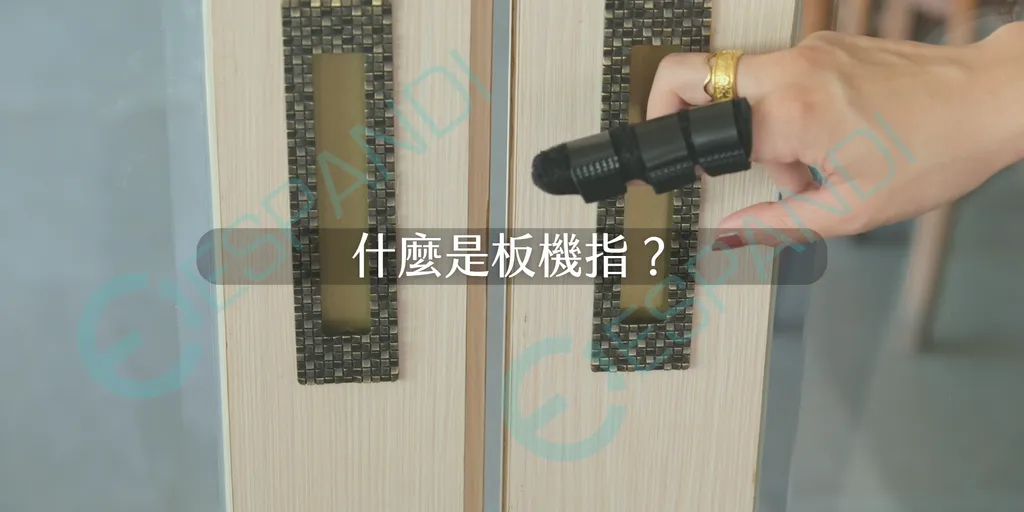
Does this sound familiar? You wake up, bend a finger and try to straighten it, but it gets stuck - until you push hard and it snaps open with a "click". This alarming and painful symptom is commonly known as trigger finger, and its medical name is stenosing tenosynovitis.
This article takes a physiotherapy perspective on what causes trigger finger, the role a finger splint plays during rest, 5 self-care exercises you can do at home, how to fit them into your day, and when to stop managing it yourself and see a doctor.
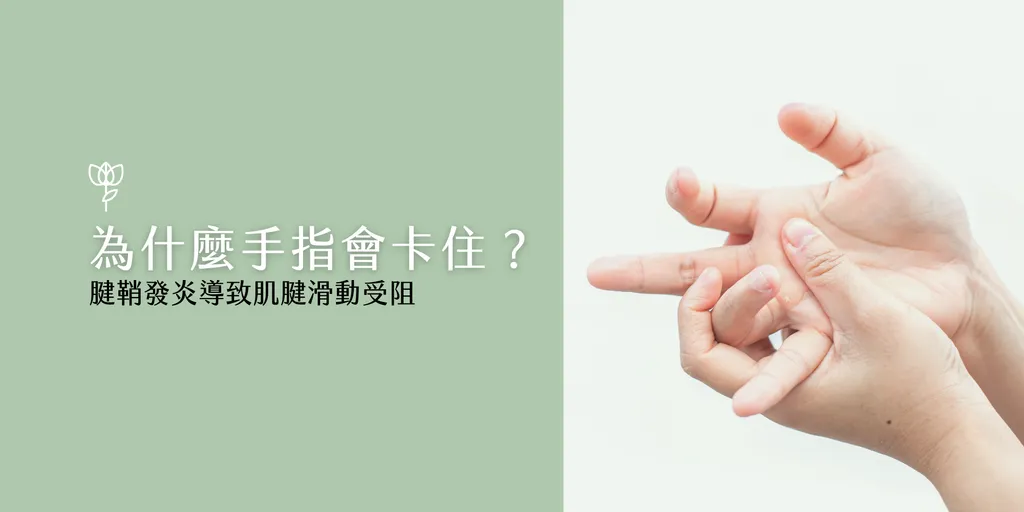
What is trigger finger? Why does the finger "lock"?
Your fingers bend because tendons slide through a tunnel-like structure called the tendon sheath. When that sheath thickens and narrows through long-term friction and inflammation, the tendon catches at the entrance, causing:
- difficulty straightening the finger after bending it
- a "click" or snapping feeling as it straightens
- noticeable stiffness in the morning
- in severe cases, a finger that stays bent and won't straighten on its own
Trigger finger most often affects the thumb, middle finger and ring finger. Common groups include office workers who use a mouse for long hours, homemakers, farm and manual workers, people with diabetes, and anyone whose hands grip repeatedly.
Which grade are you? A 10-second self-check
Make a fist, then open it. If your middle or ring finger can't straighten fully, pauses on the way, or needs the other hand's help, it's quite likely trigger finger.
Clinicians often grade trigger finger in four levels, and what home exercises can do differs at each:
- Grade 1: the finger moves unevenly and catches, but still moves - this is when home exercises are most worthwhile
- Grade 2: the tendon sheath and pulley are swollen and it hurts to move - exercises are fine, but go more gently
- Grade 3: the finger won't straighten without the other hand - see a doctor first, and treat exercises as a supplement
- Grade 4: the finger won't straighten at all - see a doctor directly rather than managing it yourself
It's also worth knowing that mild trigger finger can settle on its own, but if symptoms keep recurring for more than three months, further medical treatment is usually advised. So "doing the exercises" and "whether to see a doctor" aren't an either/or - you need to weigh both.
Treatment options for trigger finger: from conservative care to surgery
Many people worry as soon as they hear the word "surgery", but trigger finger actually has a ladder of treatments depending on severity:
| Severity | Suggested approach |
|---|---|
| Mild (occasional catching) | Rest, less gripping, a splint at night |
| Moderate (daily episodes, painful) | Physiotherapy + finger splint + heat |
| Severe (won't straighten on its own) | Steroid injection / consider surgery |
Most mild to moderate cases start with conservative care and don't necessarily go as far as surgery; a finger splint can be used as an aid during rest.
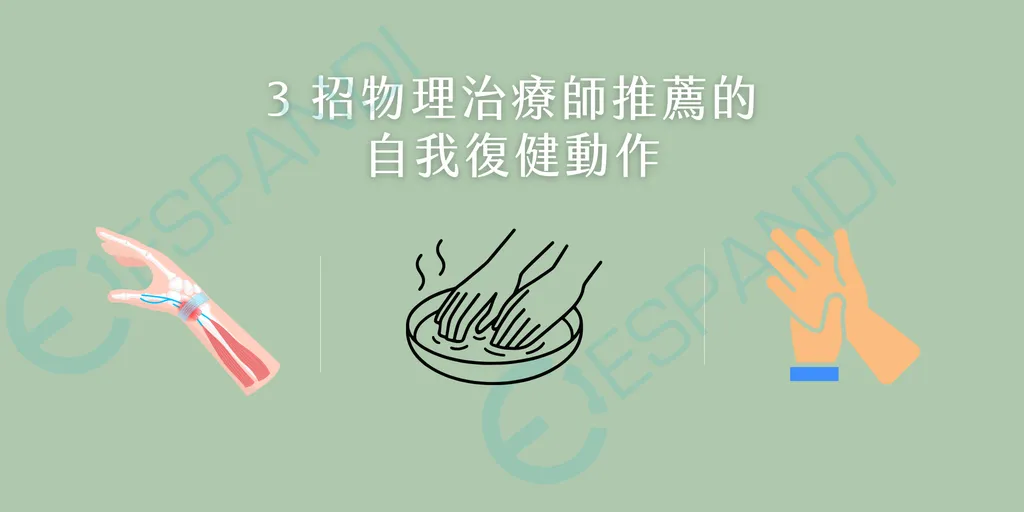
5 self-care exercises to do at home
Before you start, remember one rule: these movements should feel "tight", not "painful". If it hurts, you're overdoing it. You can also wear a splint as an aid while resting.
Exercise 1: gentle finger bending and straightening (tendon gliding exercise)
👉 Purpose: keep the tendon gliding within its sheath and help prevent it sticking
- Relax your fingers and straighten them
- Slowly bend at the first joint (the knuckle) to about 90°, keeping the other joints straight (a "hook" position)
- Then gently make a full fist
- Slowly return to straight
10 repetitions per set, 2 to 3 sets a day. Note: never force a locked finger open!
Exercise 2: warm water soak + passive stretch
👉 Purpose: soften the thickened sheath tissue and reduce friction
- Prepare warm water at 38 to 40°C (warm, not hot to the touch)
- Soak the affected hand for 5 to 10 minutes
- Afterwards, use the other hand to gently help the affected finger straighten, and hold for 15 seconds
- Repeat 5 times
Best time: when stiff in the morning, and before bed. Once or twice a day.
Exercise 3: forearm release massage
👉 Purpose: ease tight forearm muscles and reduce the pull on the finger tendons
- Using your thumb, press slowly along the palm side of the forearm (the muscles on the same side as your palm) from the wrist towards the elbow
- When you find a tight spot, hold for 10 to 15 seconds until it eases, then carry on
- 3 to 5 minutes each time
Exercise 4: pressure release at the base of the finger
👉 Purpose: relax the soft tissue around the spot where the finger catches
Trigger finger usually catches in the palm, just below the base of the finger (below the knuckle). With the thumb of your other hand, press gently there and make small circles, holding each spot for a few seconds before moving on, for about 2 to 3 minutes in total. An ache is fine; pain means you're pressing too hard. Don't massage when it's acutely red, swollen and warm.
Exercise 5: rubber band resistance (later stage only)
👉 Purpose: work the finger extensors to balance the overused flexors
⚠️ Don't do this during the acute painful phase - add it once the catching and pain have eased noticeably. Loop a rubber band or hair tie around all five fingers, spread them against the resistance, then slowly bring them back. 12 to 15 repetitions make one set.
How to fit it into your day
The exercises aren't hard; keeping them up is. Here's a realistic routine:
- When you get up: warm water soak or warm compress → finger bending and straightening 10 times (about 15 minutes)
- At lunch or during a work break: one set of finger bending and straightening (about 3 minutes)
- After your evening shower: palm pressure release → passive stretch → forearm release → (add the rubber band once things improve; about 10 minutes)
Three short sessions a day beat one long one. Tendons need regular movement, not one session until they ache.
There's one thing that matters even more than the exercises: adjusting your activities. If you still grip repetitively for hours, pinch hard, or scroll on your phone for hours every day, you're working against your own routine no matter how many exercises you do. Switch tools where you can, and break tasks up with rests.
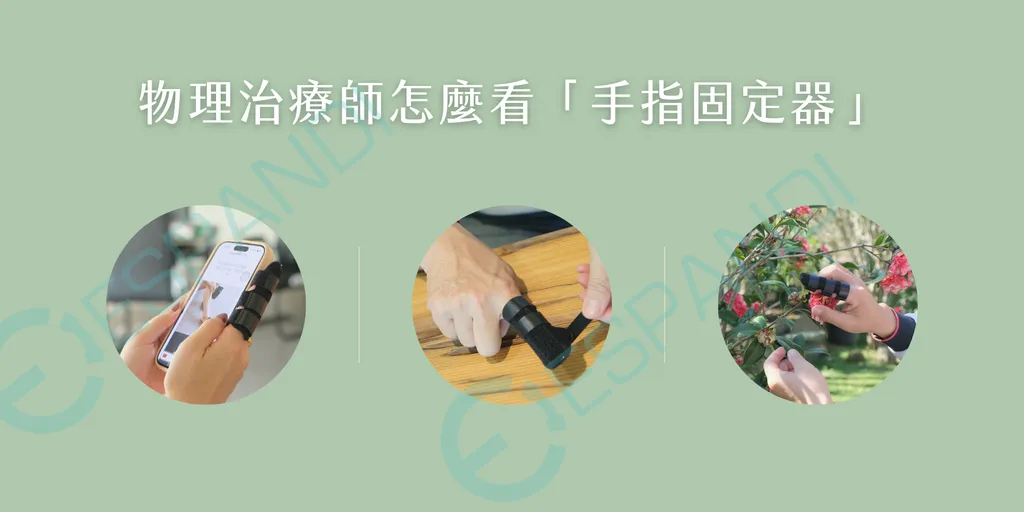
When should you wear a finger splint?
The main job of a finger splint is to hold the finger in a resting or slightly extended position, cutting down on repeated bending while you rest. The exercises take care of "movement"; the splint takes care of "rest" - the two complement each other.
- All night: fingers curl into a fist without you noticing while you sleep, and a splint at night keeps the finger straight
- During higher-risk times of the day: for example cycling or riding a scooter, doing housework, or typing for long periods
- Angle: keep the middle finger joint (PIP joint) slightly straight at 0° to 10° - there's no need to over-extend it
⚠️ Note: a splint isn't a case of "the longer the better". While you're awake during the day you still need suitable movement and stretching to avoid joint stiffness.
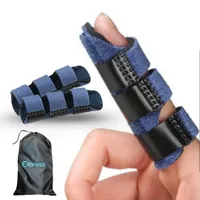
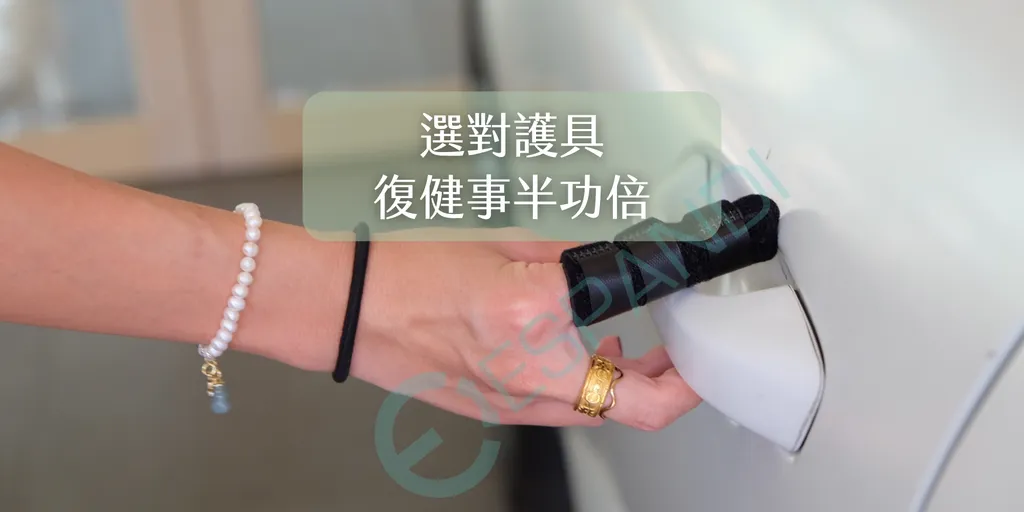
You'll see products sold under names such as finger splint, trigger finger sleeve, finger cover or finger straightening strap, and they're mostly the same kind of thing. The difference is the structure: a splint with a support bar limits the joint angle and suits night-time use, while a simple sleeve or cover only gives light compression and warmth and gets in the way less during the day. In the acute phase the focus is on holding the finger still; once things improve you can switch to a light sleeve.
If you're looking for a finger splint to use for trigger finger, you can take a look at Espandi Sport's finger splint, which has an adjustable angle and breathable material suitable for wearing for long periods.
If the discomfort isn't just in the finger but also involves the wrist, see our guide to choosing a wrist brace for wrist pain and mouse wrist; if the pain is at the base of the thumb, it may be De Quervain's ("mummy thumb"), which is handled differently.
When should you see a doctor?
Don't manage the following yourself - see a doctor as soon as possible:
- the finger hasn't straightened at all for more than 2 weeks
- the joint is clearly swollen, warm or red (possibly infection or rheumatoid arthritis)
- pain gets worse at night, or there's numbness
- no clear improvement after 4 to 6 weeks of self-care
Which department should an adult with trigger finger see? Either rehabilitation medicine or orthopaedics - both can diagnose it and offer conservative care. If surgery is already being considered, or you want to look at minimally invasive options, you'll usually be referred to orthopaedics or hand surgery. In Taiwan, most of these clinics are covered by National Health Insurance, and steroid injections are generally covered too; the main self-paid items are things like shockwave therapy and specialised aids. The details depend on each hospital or clinic.
The right support, worn more comfortably
Rehabilitating trigger finger is a long game of "less irritation + supporting recovery", and a finger splint can be used as an aid during rest.
Espandi Sport's finger support has an adjustable angle and breathable material suitable for wearing for long periods, and it can be used alongside the advice your therapist gives you.
What holds most people back is "what if I wear it and it doesn't suit me?" Espandi offers a 30-day trial: if it isn't right for you within 30 days of receiving it, you can apply for a full refund.
👉 View Espandi Sport finger supports
Frequently asked questions
Q1: Can trigger finger get better on its own? Mild trigger finger can settle with proper rest and by avoiding aggravating movements, and a finger splint can be used as an aid while resting. If symptoms haven't improved after 4 to 6 weeks, see a doctor.
Q2: How long should I wear a finger splint? It's generally suggested to wear it consistently for 6 to 8 weeks, especially without breaks at night. A physiotherapist will adjust the plan as you recover, and it's best not to stop early on your own.
Q3: Can I wear a finger splint while I sleep? Yes, and it's strongly recommended. Fingers tend to curl into a fist without you noticing while you sleep, which is the main reason symptoms are worse in the morning.
Q4: Will a steroid injection make trigger finger better faster? Steroid injections do reduce inflammation quickly in the short term for moderate to severe trigger finger, but it can come back. Whether to choose injection, splinting or exercises depends on your situation, so talk it over with your doctor.
Q5: Can I massage trigger finger? Yes, but in the right place and gently. Press the part of the palm just below the base of the finger rather than rubbing the locked joint itself. An ache is fine; pain means you're pressing too hard. Don't massage when it's acutely red, swollen and warm.
Q6: Is it normal to be especially stiff in the morning? It's very typical of trigger finger. The finger stays bent and still for hours while you sleep, so the tendon catches most in the morning - which is why the morning round of warmth and bending exercises is especially important. Don't skip it.
Q7: If the exercises hurt, should I carry on? No. Stretching should feel "tight", not "painful". Pain means the range is too big or you're still in the acute inflammatory phase, so make the movement smaller, do fewer repetitions, or stop for a few days.
Q8: Can children get trigger finger? Paediatric (congenital) trigger finger does exist. It usually affects the thumb and has different causes from the adult form. It should be assessed by a paediatric orthopaedic or hand surgeon, and adult self-care exercises aren't suitable to apply directly.
Braces mentioned in this article
This article is general health information. Braces give support and a posture reminder and do not treat any condition. See a doctor if you have symptoms.
What customers say about the Finger Splint with Aluminium Stay | Keeps the Finger Straight, Adjustable Finger Brace
Reviews are customers' personal experiences and do not represent product performance.
- ★★★★★
使用方便,黏貼式的蠻好調整的,而且出貨速度非常的快,效率很好,值得推薦!
毅實紙業 · 2026-04-16
- 30-day trial, returns accepted
- Ships from Taiwan in 1–3 days
- Sizing help on LINE
Keep reading
What Exercises Can You Do for a Bunion at Home? 6 Gentle Stretches, a Daily Routine and When to Stop
Big toe drifting further out of line, and wondering what you can do at home? Here are 6 bunion stretches that need no special equipment, each with reps and cautions,...
For Shop Staff, Nurses and Hospitality Workers: How to Get Your Feet Through a 10-Hour Day Standing
Sore feet from standing, aching soles after a full day on your feet, ankles so swollen by evening that your shoes feel tight - yet most advice only works once...
Stiff, Creaky Knees That Hurt on the Stairs - Is It "Wear and Tear"? Knee Osteoarthritis Explained
Knees that feel stiff and creaky, hurt on the stairs, or complain when you stand up from a squat - does that mean they're wearing out? Learn the common symptoms...