Sore Back on Long Flights? A Guide to Travel Lumbar Pillows for 10-Hour Journeys
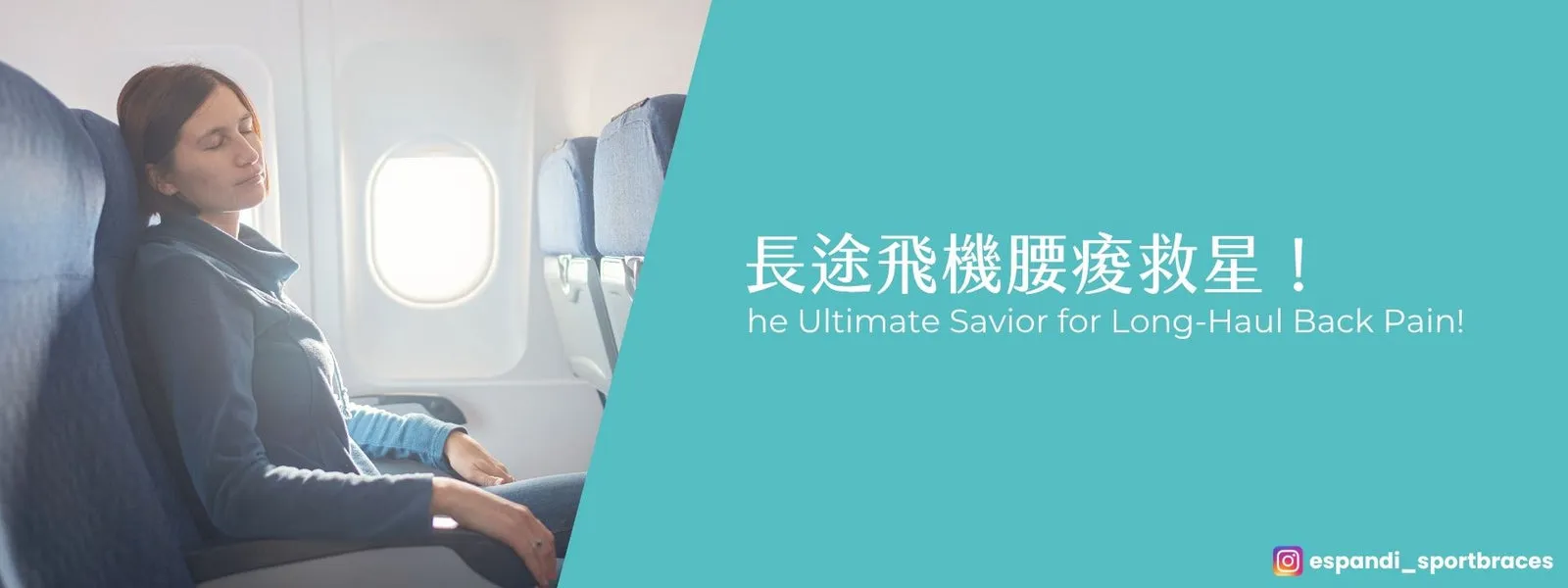
The short answer: backs often ache on long flights because hours of sitting, combined with the shape of the seat, tilt the pelvis backward and flatten the natural curve of the lower back. A lumbar cushion or inflatable lumbar pillow can be used as an aid: place it at the height directly behind your navel, inflate it to about 80% full so it fills the gap between the seat and your back, and don't make it too firm. If the pain carries on or gets worse after you land, see a doctor.
This article is general health information. Braces give support and a posture reminder and do not treat any condition. See a doctor if you have symptoms.
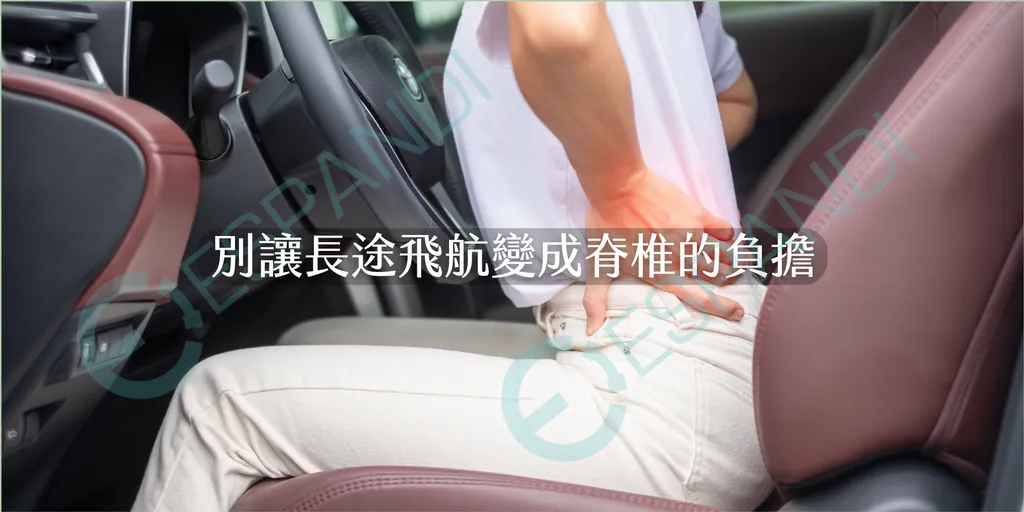
Travelling abroad should be a pleasure, but for many people a flight of 10 hours or more is simply hell on the lower back. What greets you when the plane lands often isn't a foreign city but a stiff lower back and a dull ache through the lumbar spine.
Why do flights in particular leave your back sore?
Beyond the cramped seat, the main reason is that aircraft seats often don't give the lumbar spine enough support.
This article takes a physiotherapy perspective on how the right lumbar pillow can help make a long flight more comfortable to sit through.
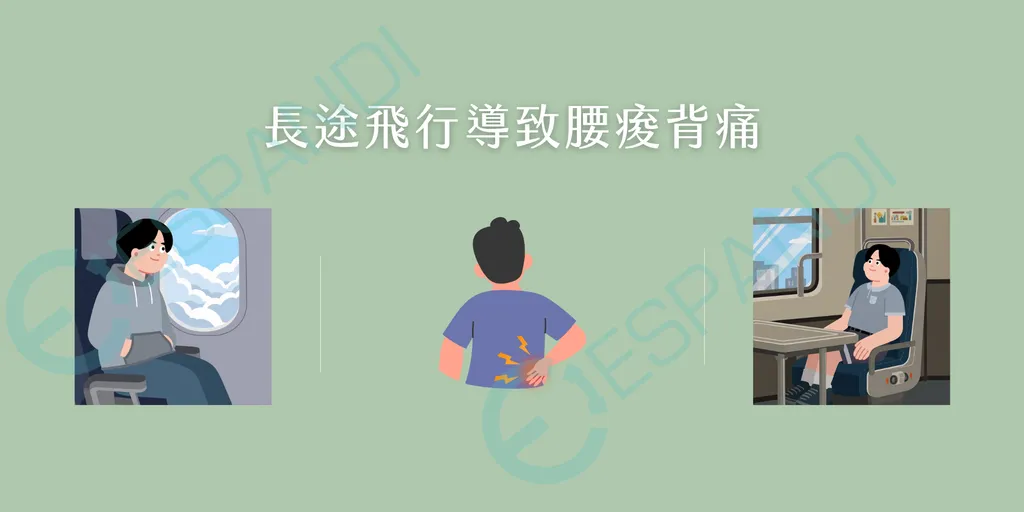
Why does long-haul flying lead to such bad back ache?
In physiotherapy practice, prolonged sitting - particularly beyond 4 hours - places considerably more pressure on the lumbar spine than standing does.
1. The reclining trap of an aircraft seat
To save space, most economy seats have a slightly concave back. That tilts the pelvis backward, so the natural inward curve the lumbar spine should hold disappears and it stays under pressure for hours.
2. The gap behind an unsupported neck
Aircraft pillows - disposable ones or the headrest - rarely match the curve of any individual neck. As you fall asleep your head tips to one side, over-stretching the neck muscles on that side, which is why people so often land with a cricked neck.
3. The adaptability of inflatable designs
At altitude and lower pressure, a fixed-volume cotton or memory foam pillow can't change its firmness. An inflatable cushion lets you add or release air at any time to suit how you feel, so you can set the level of support that suits you.
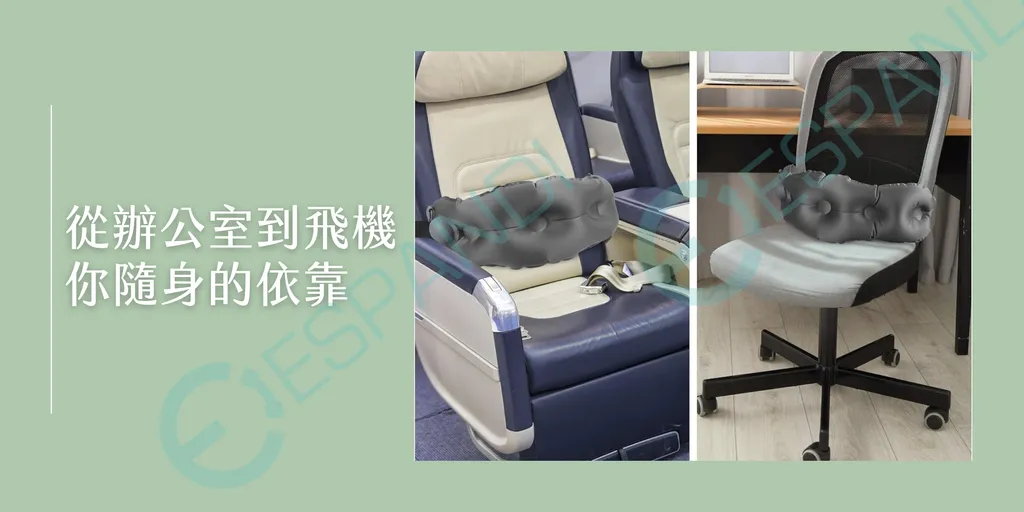
Three practical advantages of the Espandi 2-in-1 inflatable lumbar and neck pillow
To look after yourself in a cramped economy cabin, versatility and how small it packs down are the key measures.
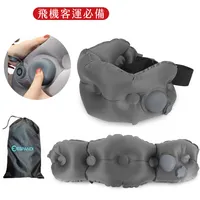
A. Lumbar or neck - switch whenever you feel tired
The defining feature of this product is its ergonomic curve.
- As a neck pillow: placed behind the neck, it supports the neck so your head is less likely to tip too far back or to the side.
- As a lumbar pillow: placed at the level of the third and fourth lumbar vertebrae, it fills the gap between your lower back and the seat back and gives the lower back some support.
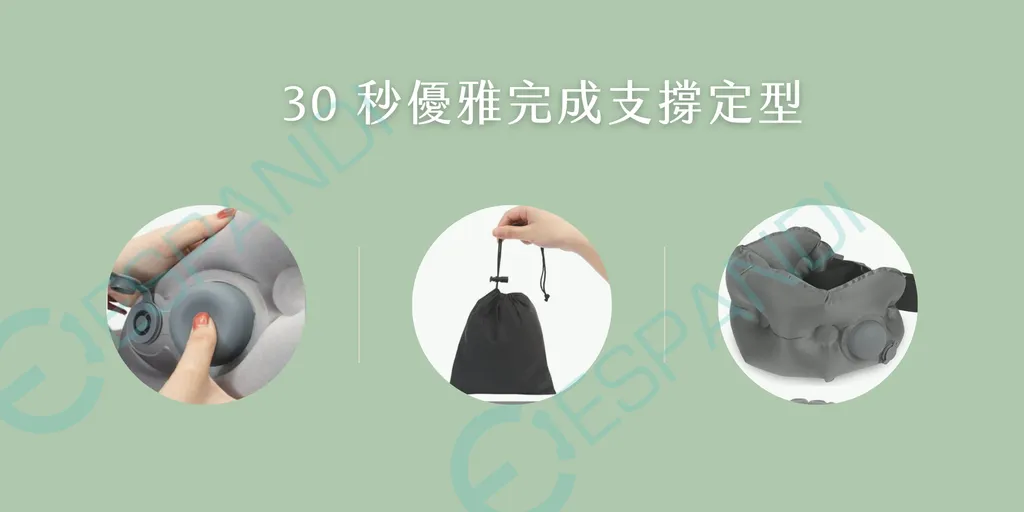
B. Press to inflate - discreet and hygienic
Blowing up a traditional inflatable pillow on a plane is awkward, and it means drawing in dry cabin air. Espandi uses a press-to-inflate design:
- The advantage: no blowing, just pressing - fully inflated within 30 seconds.
- Hygiene: no saliva residue or odour build-up, which matters on a long journey.
C. Packs down small - no cabin bag space wasted
Long-haul travel means carrying a lot, and a bulky memory foam neck pillow is a headache in itself. Deflated, this pillow is roughly the size of an apple and slips easily into a backpack pocket.
View product: Espandi press-to-inflate 2-in-1 lumbar and neck pillow
A guide to sitting comfortably through a 10-hour flight
Beyond choosing the right product, using it correctly matters too:
- How much to inflate: on a plane, inflating it to about 80% full is enough. Cabin pressure is lower, so the pillow expands slightly, and at 80% it has a more comfortable give.
- Where to place it for the lower back: as a lumbar pillow, position it at the height directly behind your navel. That fills the gap between the seat and your lower back and gives it some support.
- The key to neck support: as a neck pillow, make sure the curve cradles the base of the skull, so even when your muscles relax in sleep your head doesn't swing about.
Braces mentioned in this article
This article is general health information. Braces give support and a posture reminder and do not treat any condition. See a doctor if you have symptoms.
What customers say about the Inflatable Lumbar Pillow | Two-in-One Lumbar and Neck Support Pillow for Flights, Travel and Desk Work
Reviews are customers' personal experiences and do not represent product performance.
- ★★★★★
適合搭配:很好稍作 適合場合:長途飛行 賣家服務很好,商品質量很好,價格也合理,非常推薦👍 很滿意這次購物體驗,下次有需要一定會再來光顧 商品包裝得很仔細,看得出賣家很用心,超…
s*****5 · 2026-09-19
- 30-day trial, returns accepted
- Ships from Taiwan in 1–3 days
- Sizing help on LINE
FAQ: travel lumbar cushions and back ache on flights
Q1: Will an inflatable pillow burst from cabin pressure?
A1: No. Quality TPU material stretches well. For comfort, though, we suggest not inflating it rock hard - leave a little room for the air to adjust as the pressure changes.
Q2: Can the cover be removed and washed?
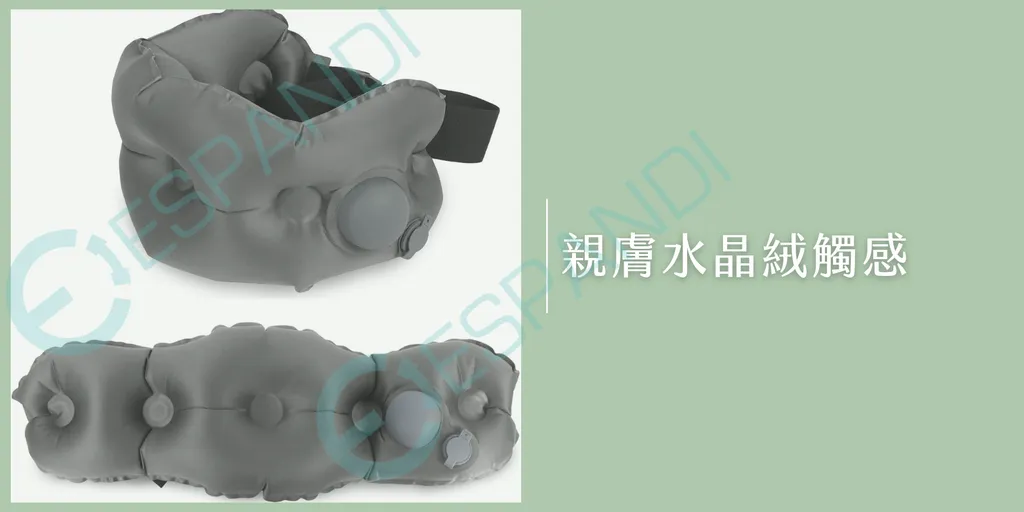
A2: Yes. The Espandi lumbar and neck pillow has a soft crystal velvet cover. After a long trip, it's worth taking it off and washing it to keep the skin on your face and neck clean.
Q3: Where else is it useful, besides flights?
A3: It also works very well as back support in an office chair, on long coach journeys or as a pillow when camping. One pillow, many uses - very good value.
Q4: How big is it packed down? Is it heavy?
A4: Packed down it's about the size of one and a half fists, and extremely light - it adds nothing noticeable to your luggage.
A good cushion for a more comfortable journey
A good trip shouldn't end in a sore back. With the Espandi inflatable lumbar and neck pillow as an aid, you can pay more attention to the sea of clouds outside the window and the adventure ahead.
Keep reading

What Exercises Can You Do for a Bunion at Home? 6 Gentle Stretches, a Daily Routine and When to Stop
Big toe drifting further out of line, and wondering what you can do at home? Here are 6 bunion stretches that need no special equipment, each with reps and cautions,...
For Shop Staff, Nurses and Hospitality Workers: How to Get Your Feet Through a 10-Hour Day Standing
Sore feet from standing, aching soles after a full day on your feet, ankles so swollen by evening that your shoes feel tight - yet most advice only works once...

Stiff, Creaky Knees That Hurt on the Stairs - Is It "Wear and Tear"? Knee Osteoarthritis Explained
Knees that feel stiff and creaky, hurt on the stairs, or complain when you stand up from a squat - does that mean they're wearing out? Learn the common symptoms...