For Shop Staff, Nurses and Hospitality Workers: How to Get Your Feet Through a 10-Hour Day Standing
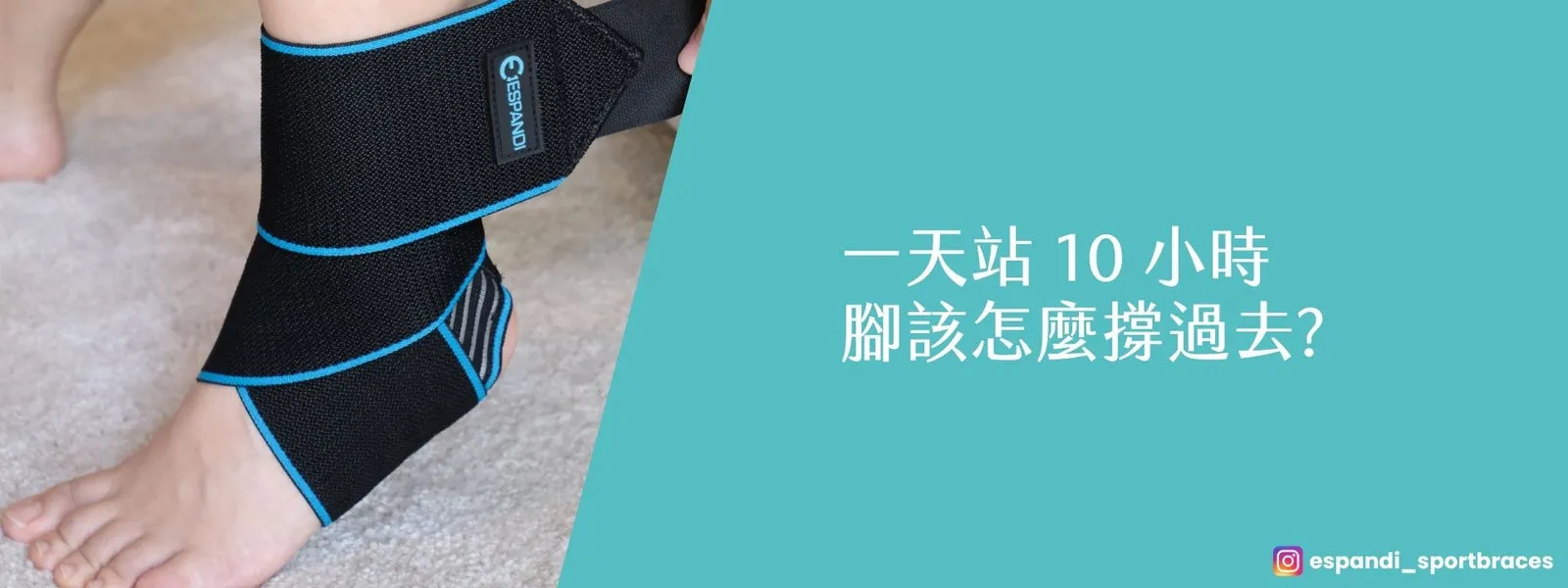
The short answer: if you stand for 10 hours a day, the key is to keep moving during your shift: toe grips, small heel raises, shifting your weight every 20 minutes, calf stretches against a wall and ankle circles - one round every two hours, taking under three minutes. After work, raise your legs and stretch, and choose shoes that fit. If your first step in the morning is very painful, one calf suddenly becomes swollen and warm, or the pain lasts more than two or three weeks, see a doctor.
This article is general health information. Braces give support and a posture reminder and do not treat any condition. See a doctor if you have symptoms.
By the eighth hour on your feet, you're probably quietly shifting your weight onto the other foot, or lifting your heels for a moment when no one's looking.
You feel it most the moment you get home and take your shoes off - your soles feel battered, your calves are so puffy that pressing leaves a dent, and your ankles are noticeably thicker than they were in the morning.
There's plenty of advice online for people who stand all day, but click through and you'll find foam rolling, foot soaks and ten minutes with your legs up the wall. All of that happens after work.
The problem is the hardest eight hours, when you're standing at a counter, on a ward or in a kitchen.
This article is about what you can do during your shift - standing, with no equipment, without customers or managers noticing. The after-work part comes later, but it isn't the main point.
Why is "standing all day" more tiring than "walking all day"?
Many people have this the wrong way round. When you walk, your muscles contract and relax, pumping blood back to the heart. But when you stand still for long periods, that pump switches off.
Long hours of standing mainly take their toll in three places:
Arch collapse. If the arch isn't supported while you stand, the plantar fascia is pulled continuously. Its job is to hold the shape of the arch and absorb shock as you walk, and hours of pulling build up tiny injuries. That's why sole pain in people who stand all day often starts on the inside of the heel.
Poorer blood return. When the calf muscles don't contract, blood pools in the veins of the lower legs. Swollen ankles and calves, shoes that feel tight by evening and, over the long term, varicose veins all start here.
Compensation that travels upwards. To keep you stable while standing, the body keeps calling on the muscles of the feet, legs and core. When your stance is off, your weight sits on one side for long periods and pressure under the feet is uneven, the effects travel all the way up to the pelvis and spine - which is why many people who stand all day have sore feet and a sore lower back at the same time.
So the problem with standing all day isn't just in your feet. Dealing only with the soles while ignoring your calves and stance usually doesn't hold up for long.
How your feet actually get through the day
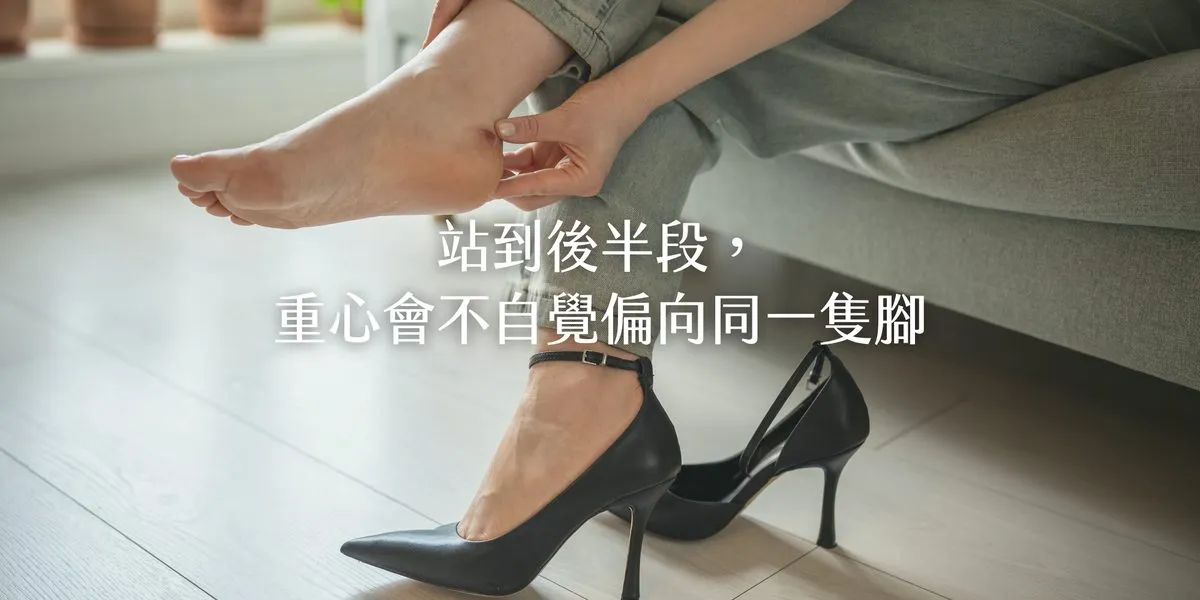
Fatigue from standing doesn't appear out of nowhere - it follows a set rhythm. Once you can recognise it, you'll know what to do and when. Everyone's stamina, shoes and type of work differ, so the timing varies a lot, but the order is usually the same:
| Stage | What you'll notice | What to do now |
|---|---|---|
| Start of the shift | You don't feel tired yet, but your weight has already drifted to your dominant foot | Consciously swap feet; check how tight your laces are |
| Starting to feel it | A dull feeling in the soles, wanting to change position | Movements 1 and 2 (toe grips, heel raises) |
| Clearly tired | Pressure concentrated on the forefoot, tight calves | Movements 3 and 4 (weight shifting, calf stretch) |
| Swelling appears | Shoes feel tighter, ankles look thicker | Movement 5, and sit down whenever you get the chance |
| After work | Swelling and aching peak | Raise your legs, stretch, use cold or heat |
The stage most often overlooked is the first. Most people only do something once it hurts, but the weight shift happens before you even feel tired. Going by "signals" is more accurate than watching the clock - when you feel like changing position, that's the time to do the movements.
5 movements you can do during your shift
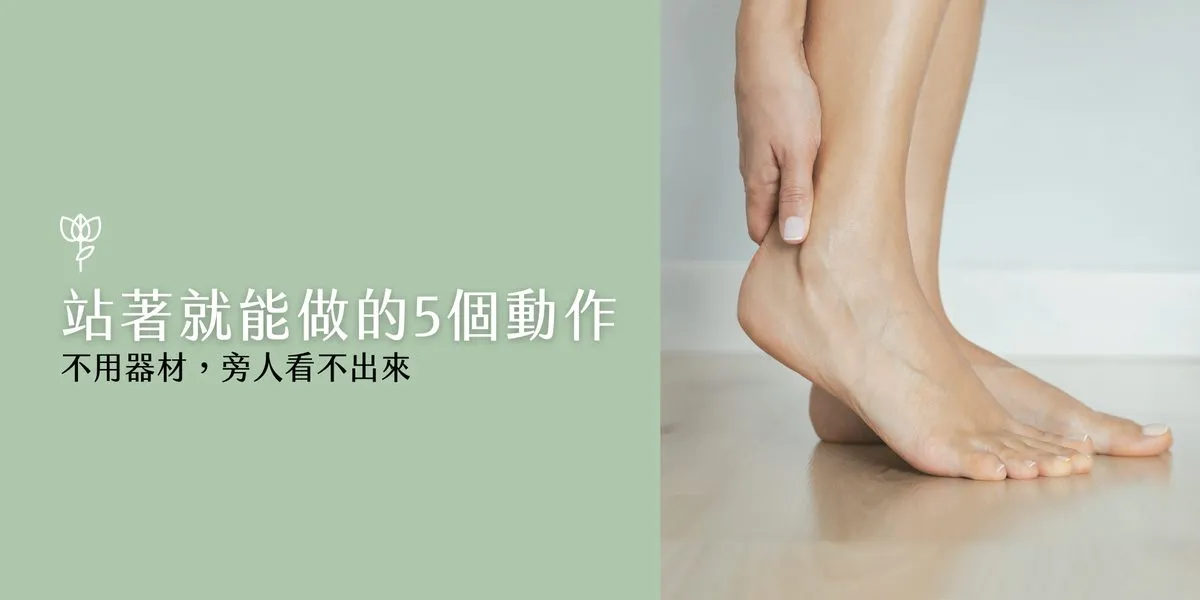
What they all have in common: done standing, with no equipment at all, and so small that no one will notice.
Movement 1: toe grips
Inside your shoes, grip your toes down hard and hold for 3 seconds, then relax and spread them for 3 seconds. 10 times on each foot.
It's completely invisible from outside, so you can do it waiting for the lift, for a customer or for your number to be called. It activates the small muscles of the sole so they share a little of the plantar fascia's work.
Movement 2: small heel raises
Lift your heels gently 2 to 3 cm off the floor, hold for 2 seconds, then lower slowly. 15 times in a row.
This is the most important of the five, because it directly switches on the calf muscle pump and pushes blood pooled in the lower legs back up. Small and slow, it just looks like you're adjusting your stance.
Movement 3: deliberate weight shifting
Most people who stand for long periods keep their weight on the same foot, so the knee, hip and lower back on that side take a disproportionate load.
Set a reminder: swap your weight-bearing foot every 20 minutes. If your setting allows, rest one foot on a small step or box and alternate - standard practice for many standing workers abroad, and it noticeably eases pressure on the lower back.
Movement 4: calf stretch against a wall
Find a wall, put the ball of your front foot against its base with the heel on the floor, and lean forward until you feel the back of the calf stretch. Hold for 20 seconds, twice on each leg.
Calf muscles that stay contracted and shortened for long periods pull on the plantar fascia in turn. It's an indirect source of sole pain, and it's why many people find that massaging only the soles doesn't help - they're missing this part.
Movement 5: ankle circles
Lift one foot slightly off the floor and circle the ankle, 10 times clockwise and 10 times anticlockwise, on both feet.
This is aimed squarely at evening ankle swelling. You can hold on to a wall or counter while you do it - it just looks like you're stretching.
How often matters more than how hard. All five movements together take under three minutes, and the aim is one round every two hours, rather than one long session once it hurts.
A 20-minute wind-down after work
The movements during your shift stop things getting worse; this part after work is for recovery. If you're short of time, do the first two.
1. Legs up the wall for 10 minutes. Put a pillow under your lower back so it isn't unsupported, and rest your legs against the wall with the knees slightly bent. Add ankle circles and toe grips at the same time to help blood flow back.
2. Calf and sole stretch. Sitting on the bed, loop a towel around the ball of your foot and pull it towards you, holding for 10 seconds and resting for 10 seconds, 10 to 20 times a day.
3. Rolling a ball under the sole (if you can). Put a massage ball or bouncy ball under your arch and, standing with a little pressure, roll it back and forth about 30 times; you can repeat a few sets. Note: don't do this if the sole is inflamed or there's a clear stabbing pain. In the acute phase, rest and use cold, and wait until it has passed before massaging. Stop if you feel a stabbing pain.
4. Cold or heat? Soles hot and clearly swollen just after work → cold. Chronic tightness and aching, or stiffness in cold weather → heat, at about 38 to 40 degrees. Both for 15 to 20 minutes at a time.
Foot soaks are fine, but they're mainly for comfort and circulation - they can't replace stretching.

Different jobs, different priorities
Not all standing is the same.
Shop and department store counter staff: the biggest variable is shoes. High heels shift your weight forward, greatly increase pressure on the forefoot and keep the calves shortened for long periods. If your job doesn't let you change shoes, the calf stretch in movement 4 is a must, not an option. Take extra care in the two weeks around high-intensity sale periods such as anniversary sales.
Nurses and healthcare staff: your situation is "standing + lots of walking + sudden lifting". Foot problems often come together with lower back problems. As well as your feet, watch your posture when lifting. For more on this, see everyday habits for lower back discomfort after 45, and choosing a back support.
Catering and kitchens: hard floors, often with oil and water, and non-slip shoes required. Non-slip soles are usually on the hard side with little cushioning, which directly increases the impact on the soles. For people in catering, the choice of shoes and insoles usually needs more attention than in other jobs.
Hairdressers and nail technicians: standing plus arms held up for long periods means your feet and your neck and shoulders both get tired. For your feet, follow the advice above; for your neck and shoulders, see 5 ways to ease neck and shoulder ache.
Cabin crew: standing plus walking, pushing trolleys, low cabin pressure and long shifts usually mean more obvious swelling than for other standing workers. Blood return is already poorer in flight than on the ground, so raising your legs and stretching your calves after landing is especially important for you.
Teachers and reception staff: long hours standing with little movement - the classic "pump switched off" type. The heel raises in movement 2 are the most worthwhile for you, and no one will notice you doing them behind a lectern.
Shoes and arch support: change what you can first
There's only so much the movements can do - if what you stand on every day is wrong, you're just patching holes.
First, the sole shouldn't be too hard or too soft. Too hard and there's no cushioning, so impact goes straight to the soles; too soft and it can't hold up the arch, which is more tiring over time. When you fold the shoe it should bend at the forefoot, not in the middle.
Second, there should be enough room at the front. Feet swell over a day of standing, and shoes that fit in the morning will pinch by evening. It's best to try shoes on in the late afternoon or evening.
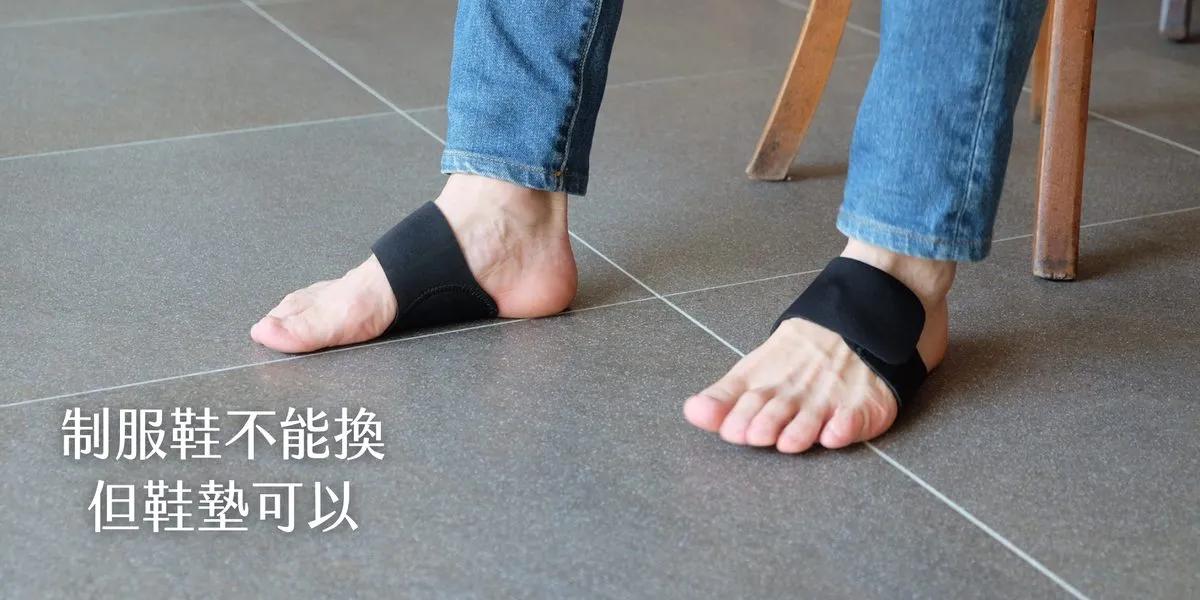
Third, arch support. If the arch isn't supported while you stand, the plantar fascia is pulled all the time. Adding a pair of arch supports is the lowest-cost option, and you don't have to give up your uniform shoes.
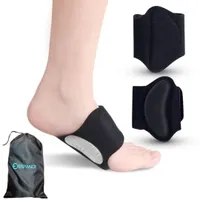
Espandi arch support sleeves come as a pair, follow the curve of the arch, and are breathable and soft, so they can go in everyday shoes, trainers or work shoes. When you first use them, wear them for 1 to 2 hours, then gradually extend to a full day as they feel comfortable. For the full range of products for people who stand all day, see the standing support collection.
With something like insoles, no amount of description beats trying them yourself. Espandi offers a 30-day trial: if they aren't right for you within 30 days of receiving them, you can apply for a full refund.
If you also have bunions, the details of choosing shoes are a bit different, and we've written a separate article on that: the complete guide to shoes for bunions.
When to stop putting up with it and see a doctor
- your first step out of bed in the morning is very painful, eases after a few minutes of walking, then starts hurting again after standing for a while
- there's a clear tender spot on the inside of the heel
- the pain lasts more than two or three weeks and doesn't improve with rest
- one calf suddenly becomes swollen, warm and painful to press
- numbness or tingling appears, or pain spreads from the lower back into the leg
The first is a very typical sign of plantar fasciitis; the fourth needs something more urgent ruled out.
Which department should you see? For sole pain, mainly rehabilitation medicine or orthopaedics - both can diagnose it and arrange conservative care. If a blood vessel problem is suspected (sudden swelling and warmth in one calf), see a cardiovascular surgeon. In Taiwan most of these clinics are covered by National Health Insurance, while items such as shockwave therapy and special insoles are usually self-paid; the details depend on each hospital or clinic. Don't keep relying on insoles to push through. To learn about other possible causes of sole pain first, see sore soles when walking? How to tell flat feet from plantar fasciitis.
Frequently asked questions
Q1: Is foot pain from standing always plantar fasciitis? Not necessarily. Sole pain can also be referred pain from tight calves, or from nerve compression in the lumbar spine or sacrum. Nerve compression usually shows up as numb, tingling pain, which is quite different from the tearing feeling of plantar fasciitis. If you can't tell, leave it to a doctor rather than diagnosing yourself.
Q2: Is there really time to do these movements during a shift? All five together take under three minutes, and they can all be done standing, without equipment, and without anyone seeing. The aim is one round every two hours, and the odd moments waiting for the lift, a number to be called or a customer are enough.
Q3: Do compression socks help? They help with calf swelling and blood return, and are a common choice for people who stand all day. But compression socks deal with circulation, not arch support - they target different problems, so you can use both.
Q4: Can I massage my soles every day? Yes, if there's no inflammation. But if you're in the acute phase, with a clear stabbing pain, redness, swelling or heat, don't massage - rest and use cold first. If you feel a stabbing pain while massaging, stop straight away.
Q5: Should I wear insoles all day from the start? It isn't recommended. When you first use them, wear them for 1 to 2 hours so your feet get used to the position and height of the support, then gradually extend as they feel comfortable. Going straight to a full day can make them feel unfamiliar enough that you give up.
Q6: Does a foot soak after work help? A foot soak encourages circulation and helps you relax, so it's a nice way to wind down, but it can't replace stretching. Tight calves need to be stretched out, and a foot soak can't do that.
Q7: Does raising one foot while standing really help? Yes. Resting one foot on a small step or box and alternating reduces the constant pressure on the lower back and pelvis, and it's common practice in standing workplaces. The key is to "alternate" - always raising the same foot creates a new imbalance.
Q8: Can standing all day cause varicose veins? When you stand for long periods, blood doesn't return easily and pools in the veins of the lower legs, which is indeed one of the common factors associated with varicose veins. Moving your calves regularly and raising your legs after work both help. If you already have clearly bulging veins or persistent swelling, see a doctor.
Summary
Fatigue from standing builds up; it doesn't arrive all at once.
Three minutes every two hours during your shift does more than an hour of catching up after work. Toe grips, small heel raises, weight shifting, calf stretches and ankle circles - none of the five needs equipment, and none of them will be noticed.
After work, spend another 20 minutes raising your legs and stretching to settle the day's account rather than leaving it for tomorrow.
Change what you can in your shoes and arch support first - it's what you stand on for eight to ten hours a day, so it's where effort pays off most.
Braces mentioned in this article
This article is general health information. Braces give support and a posture reminder and do not treat any condition. See a doctor if you have symptoms.
What customers say about the Arch Support Sleeves | Everyday Arch Support
Reviews are customers' personal experiences and do not represent product performance.
- ★★★★★
質地:良 緩衝:良 平衡:良 出貨速度快,價格優惠,商品品質好,物超所值,很滿意的一次購物,cp值高
q*****8 · 2026-08-26 - ★★★★★
平衡:這款足弓護腳墊可提供支撐。 質地:質地舒適,穿起來不會不舒服。 緩衝:可提供支撐。 商品包裝完整,附有小袋子可裝護具。
p*****. · 2026-03-17
- 30-day trial, returns accepted
- Ships from Taiwan in 1–3 days
- Sizing help on LINE
Keep reading
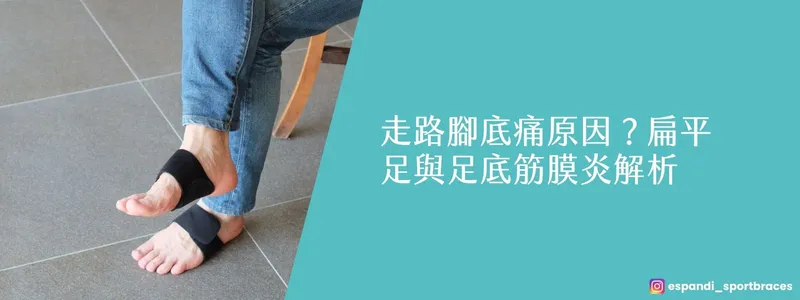
Why Do Your Soles Hurt When You Walk? Flat Feet, Plantar Fasciitis and How to Choose an Arch Support
Do the soles of your feet ache when you walk, or does the first step out of bed sting? It may be flat feet or plantar fasciitis. This article explains...
Back Feeling It After 45? 5 Everyday Habits and a Back Support Buying Guide for Moving More Easily, Even When You Sit a Lot
Is sitting and poor posture leaving your back achier and achier? Here are 5 everyday habits to adjust, plus tips for choosing a back support.

Lower Back Ache? A Problem for 8 in 10 People in Taiwan, and 6 Everyday Ways to Look After Your Back
More than 8 in 10 people in Taiwan deal with lower back ache, and long hours of sitting, poor posture and weak core muscles are the main causes. This article...