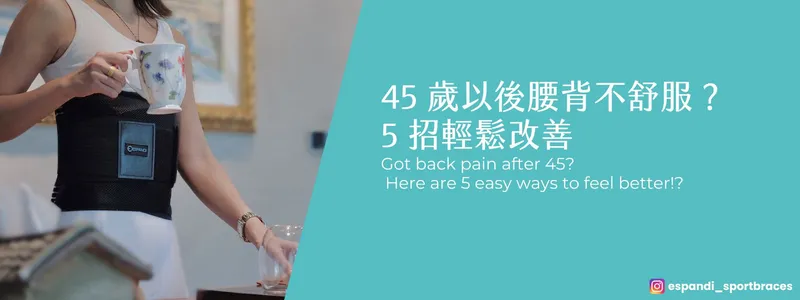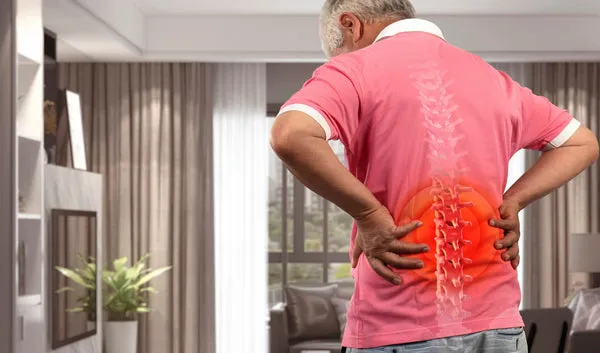
What can you do about lower back ache? How can you ease it? Which exercises and stretches help?
Lower back ache is a feeling almost every office worker in Taiwan knows well.
The moment you stand up after work, your back feels stuck, and you have to hold on to the desk to straighten up. You haven't done any heavy lifting, yet your whole lower back feels tight and achy. It's not your fault; it's your body telling you it has been holding on for too long.
Figures suggest that more than 8 in 10 people in Taiwan experience lower back ache at some point in their lives, with office workers, people who sit a lot and heavy computer users most at risk. This article sets out 6 things you can do day to day, and explains the supporting role a brace can play.
What causes lower back ache?
Before looking for solutions, it helps to understand why it hurts, so you can tackle the right thing.
The most common causes of lower back ache nearly all come down to the same thing: the spine being under the wrong kind of load for too long.
Sitting for long periods is the number one culprit
Office workers in Taiwan sit for more than 8 hours a day on average, and some for over 10. Sitting may feel easy, but for your spine, the load on the lower back while seated is actually higher than when standing. Poor sitting posture in particular, such as leaning forwards, slouching or crossing your legs, keeps the lower back muscles tense, and over time the muscles and ligaments start to complain.
Poor posture adds up
It isn't just about sitting. Bending over to pick things up without bending your knees, lifting with your back rather than your legs, or sleeping in a twisted position all put the wrong kind of strain on the muscles and ligaments of the back, which can slowly build up into long-term pain.
A weak core
For many people, the underlying reason for back pain is a core that isn't strong enough. The muscles of the abdomen and back are the spine's natural support system; when they are weak, the spine loses that support, the lower back has to take the strain, and that is how the pain starts.
6 everyday ways to look after your back
1: Fix your sitting posture and tackle the root cause
Prevention is better than cure, and the most direct way to avoid lower back ache is to sit well.
Good sitting posture means:
- Feet flat on the floor, with your knees bent at about 90 degrees
- Your back against the backrest, with your lower back supported
- Your screen at eye level, so you're neither looking down nor up
- Getting up to walk around or stretch every 30 minutes
Plenty of people know these rules, yet within 10 minutes of sitting down they've slumped again. This isn't about willpower; it's about how your body is used to sitting. That's also why many people start using a back support belt or a posture support: a physical cue that reminds your body to mind its posture.
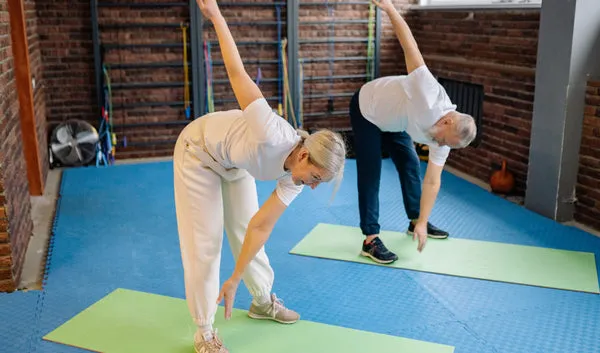
2: Stretch for 10 minutes a day
Stretching isn't only for athletes. If you sit a lot, 10 minutes of back stretches a day is the simplest and most effective way to look after yourself.
Cat-Cow On all fours on a yoga mat, breathe in as you let your back dip and lift your head (cow), then breathe out as you round your back and drop your head (cat). Repeat 10 times to get your spine moving.
Knee to chest Lie flat and hug your knee towards your chest with both hands. Hold for 20 seconds on each side to ease tightness in the lower back.
Seated side bend Sitting on a chair, hold the backrest with one hand and reach the other arm up and over to the side, feeling the side of your waist lengthen. Hold for 15 seconds on each side.
3: Use cold and heat at the right time
Many people with back pain just keep sticking on pain patches, but the timing of cold and heat really matters:
- Within 48 hours of an injury (the acute phase) → use cold: ice narrows the blood vessels and reduces inflammation and swelling. Apply for 15–20 minutes at a time, and don't put it directly on your skin.
- After 48 hours (the chronic phase) → use heat: heat widens the blood vessels and boosts circulation so tight muscles can relax; a hot shower has a similar effect.
For long-term back ache, heat is usually the main option. You could keep a heat pad at the office and use it while you work at your desk, which works well.
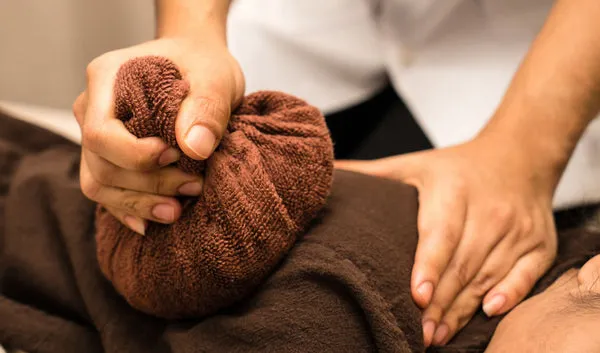 4: Massage to loosen deeper muscles
Back ache is often caused by tight muscles and fascia, and massage can work directly on that tightness.
You don't have to see a massage therapist; a few things you can do at home work just as well:
- A tennis ball or massage ball: place it between the wall and your back and use your body weight to roll over tight spots, pausing on the achy area for 30 seconds.
- A foam roller: lie on it and roll your upper and lower back to loosen large areas of muscle and fascia.
- A massage tool: if you sit at a desk all day, keep a massage stick or massage gun handy for particularly tight spots.
5: Strengthen your core
This is the most fundamental step, and also the one most people skip.
With a stronger core, your spine has natural support, and the chance of back pain drops considerably. You don't need a gym; here are a few moves you can do at home:
Plank Start with 20 seconds and build up every day. This move works the core muscles of the abdomen, back and glutes all at once.
Glute bridge Lie flat with your knees bent and push your hips up, hold for 2 seconds and lower. Do sets of 15 to work the lower back and glutes.
Dead bug This is one of the most spine-friendly moves. It trains the deep core stabilisers and is especially suitable for people with an old back injury.
6: Use a back support belt for support in the moment
The five steps above all take time and consistency to pay off, but many people have no energy left for exercise or stretching after work. This is where a well-designed back support belt can give your lower back some support as you go about your day.
A back support isn't there to replace your core muscles. Instead, it:
- Gives the lower back extra stability and support during long hours of sitting or when lifting heavy loads
- Uses gentle compression as a reminder to keep a good posture
- Makes your waist feel more secure as you move
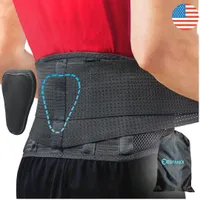
The Espandi back support has an ergonomic design with a removable triangular lumbar pad that follows the curve of your lower back, and breathable material that stays cool even when worn for a while. It suits long hours at the office, lifting heavy loads, exercise and the gym. We currently offer a 30-day trial with a full refund if you're not happy, so you can try it with peace of mind.

Beyond this, keeping to a healthy weight also matters when it comes to avoiding and easing lower back ache. Extra weight adds to the load on your spine and joints and can make back discomfort more likely.
Braces mentioned in this article
This article is general health information. Braces give support and a posture reminder and do not treat any condition. See a doctor if you have symptoms.
What customers say about the Lumbar Support Belt | Back Support Belt for Long Periods of Standing and Lifting (Reinforced with Triangle Pad)
Reviews are customers' personal experiences and do not represent product performance.
- 30-day trial, returns accepted
- Ships from Taiwan in 1–3 days
- Sizing help on LINE
FAQ
Q: Which specialist should I see for lower back ache? We suggest seeing an orthopaedic or rehabilitation specialist first to rule out structural problems, then looking after your back day to day with exercise and, if you like, a brace.
Q: How long can I wear a back support each day? We suggest wearing it during long spells of sitting, lifting or standing, ideally for no more than 2 hours at a time. Wearing it all day can make your lower back muscles depend on it and weaken your core.
Q: Can I exercise with lower back ache? During acute pain (the first 48 hours after an injury), rest first. For long-term back ache, low-intensity exercise such as swimming, yoga and brisk walking is strongly encouraged, as it helps strengthen the back muscles.
Q: Is cold or heat better for back pain? Use cold in the acute phase (within 48 hours of an injury), then switch to heat. For long-term back ache, heat is generally the main option and tends to work better.
Q: Is slouching linked to lower back ache? Yes, directly. A rounded upper back makes the lower spine compensate by curving forwards, which over time leaves the lower back muscles chronically tight. When your posture gets better, back ache often eases too. If you'd like to look at aids that remind you of your posture, see: the shoulder and back support range
Lower back ache isn't something that only comes with age, nor a minor niggle that will go away if you grit your teeth. It's your body reminding you that it needs looking after.
Starting today, try just one thing: adjusting how you sit, doing 5 minutes of stretching or trying a back support belt. Small changes add up to a big difference.