How to Choose a Back Support Belt: 5 Tips for Finding the Right One for You
The short answer: when choosing a back support, start with what you need it for: a thin, breathable style for long hours of sitting, a firmer style with support stays for lifting heavy loads, a leather or thick nylon belt for weight training, and for lower back problems, follow your doctor's advice. Then check that it covers the whole lumbar area, is made of breathable material and can be adjusted; for size, measure your waist about 3 cm above your belly button and compare it with the size chart. A back support is only an aid; we suggest wearing it for no more than 2 hours at a time, and if aches persist or get worse, please see a doctor.
This article is general health information. Braces give support and a posture reminder and do not treat any condition. See a doctor if you have symptoms.
Lower back aches are something almost everyone deals with these days. Figures suggest that as many as 84% of people have had lower back discomfort, and many of them choose a back support belt for some extra support around the waist.
But walk into a shop or open a shopping site and the choice is dizzying: soft or rigid, with or without a triangular pad, with or without support stays… so which one is right for you?
This article sets it all out clearly: who uses a back support, how to choose one and how to use it, so you can pick the right one first time and not regret your purchase.
Who is most likely to use a back support belt?
A back support isn't only for after an injury. For the groups below, it can also be a handy source of extra support in everyday life:
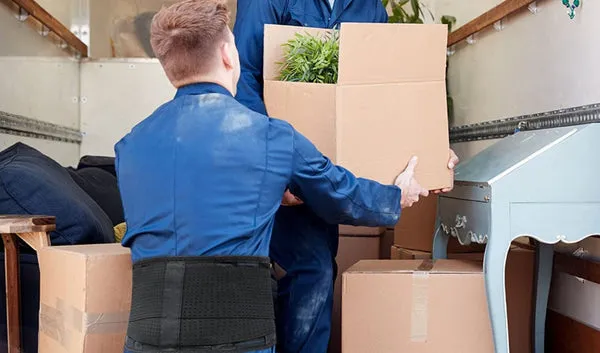
Manual workers who lift heavy loads for long periods
Construction workers, warehouse staff and delivery drivers put heavy demands on their lower back every day. Putting on a back support before lifting gives the waist extra support and a sense of stability, but you should still bend your knees and lift with your legs.
Office workers who sit for long hours
Holding the same sitting position for hours actually puts more load on the lower spine than standing. People who sit badly, with a hunched chest and rounded back, often have constantly tight lower back muscles and can easily "put their back out" when they suddenly stand up or bend over. A slim office back support can keep the lower back supported without getting in the way of movement.
Gym-goers who lift weights
During deadlifts, squats and other lifts that load the lower back, the core needs extra help. A weightlifting belt gives you something to brace against during heavy sets, helping to keep your torso stable.
Long-distance drivers
When driving, your body stays in the same position for a long time, and with the vibration of the vehicle, the lower back tires easily. Coach drivers, delivery riders and sales staff who drive a lot are high-risk groups. Putting on a back support before driving gives your lower back some support while seated, and remember to get out and move around regularly.
People with lower back conditions
Conditions such as a herniated disc, spondylolisthesis or lower back muscle strain should be assessed by a doctor first; whether to use a back support during daily activities, and how to wear it, should follow your doctor's advice.
Mums-to-be
In the middle and later stages of pregnancy, the weight of the bump puts a lot of pressure on the spine and pelvis, and many mums feel an aching, heavy lower back. A maternity back support is wider and softer, and supports the bump and lower back; we suggest checking with your doctor before using one during pregnancy.
How to choose a back support belt: 5 key tips
Tip 1: Be clear about what you need it for
The stiffest or most expensive back support isn't automatically the best. Different uses call for different styles:
- Everyday support for long hours of sitting → a thin, breathable style that doesn't show under your clothes
- Lifting heavy loads → a firmer style with support stays and compression straps
- Weight training → a leather or thick nylon lifting belt
- Lower back problems and rehabilitation → follow your doctor's advice; a style with steel or aluminium stays may be suggested
Tip 2: Make sure it fully covers and supports the lower back
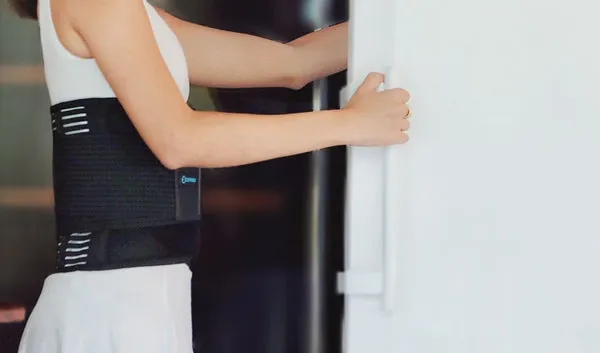
A good back support should cover the whole lumbar area, rather than being a thin strap cinched around you. Once it's on, you should clearly feel supported around the waist, without it restricting your breathing or stopping you from bending.
When trying one on, do a few simple movements (bend forwards, sit down, stand up) to check that it doesn't slip or shift as you move.
Tip 3: Choose a breathable material so you can wear it for longer
Taiwan's climate is hot and humid. If the material doesn't breathe, it soon feels damp and sticky and you simply won't keep it on.
Check the material label when buying: breathable mesh and moisture-wicking fabrics are the better choices. If you need to wear it all day or in summer, breathability matters more than stiffness.
Tip 4: Choose a style with a triangular pad and adjustable straps
This is a detail many people overlook, but it makes a big difference to how well it works for you.
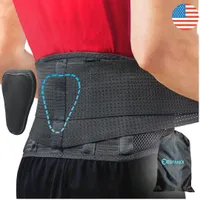
An adjustable triangular pad can be moved to suit the curve of your lower back and the spot where you feel the most discomfort. Everyone's back is different, and styles with a fixed pad often can't support exactly where you need it.
Elastic compression straps on both sides let you adjust the tightness to suit the day: a little tighter when lifting, a little looser for long hours at a desk, so one back support covers lots of situations.
The Espandi back support has both features: a removable triangular pad whose position you can adjust, and elastic compression straps on both sides that you can tighten or loosen as needed, for more targeted support and a secure fit that stays in place.
Tip 5: Comfort is what counts in the end
However many features a back support has, if it isn't comfortable you won't want to wear it, and then it won't do anything for you.
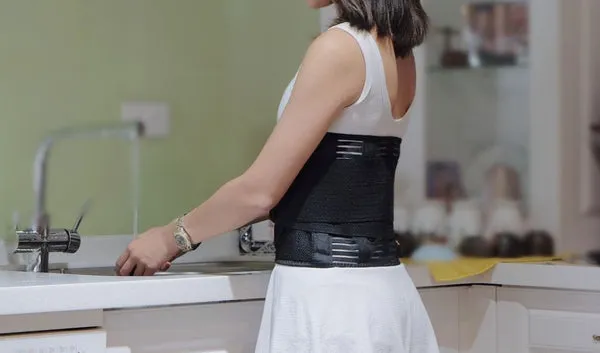
How to use a back support belt properly
Many people buy a back support and then use it the wrong way, so they get much less out of it or even come to depend on it.
We suggest using it like this:
- Wear it for activities where your lower back needs extra support, such as long hours at a desk, lifting heavy loads or long drives
- Wear it for no more than 2 hours at a time, so your lower back muscles keep their ability to support you on their own
- Pair it with daily core training and stretching; a back support is an aid, not a replacement
- If you have an acute back injury, follow your doctor's advice on whether to wear it for longer
The Espandi back support, designed for people in Taiwan
The Espandi back support brings together all of the points above:
- Ergonomic design that follows the natural curve of the lower back
- Removable triangular pad that you can position where you want support
- Elastic compression straps on both sides for adjustable tightness
- Breathable mesh fabric that stays cool even when worn for a while
We currently offer a 30-day trial: if you're not happy with it or it doesn't suit you, you'll get a full refund, so you can find the back support that suits you best without any risk.
Braces mentioned in this article
This article is general health information. Braces give support and a posture reminder and do not treat any condition. See a doctor if you have symptoms.
What customers say about the Lumbar Support Belt | Back Support Belt for Long Periods of Standing and Lifting (Reinforced with Triangle Pad)
Reviews are customers' personal experiences and do not represent product performance.
- ★★★★★
品質:佳 和圖片相符:讚讚讚👍 大推~商品包裝很用心還有收納袋 跟之前買的1-200塊的相較之下這裡賣的cp值超高 戴起來不會沒什麼感覺或要一直重黏貼 客服回覆快也細心回答…
p*****6 · 2023-11-12
- 30-day trial, returns accepted
- Ships from Taiwan in 1–3 days
- Sizing help on LINE
FAQ
Q: How long can I wear a back support each day? We generally suggest no more than 2 hours at a time, so your lower back muscles don't come to depend on it. If you have an acute injury, follow your doctor's advice on whether to wear it for longer.
Q: How do I choose the right size? Go by your waist: measure around your body about 3 cm above your belly button and compare it with the product's size chart. A fairly snug size is best, as one that is too loose won't support you as well.
Q: Can I wear a back support to sleep? It's not recommended. Your lower back should be able to relax naturally while you sleep, and wearing a back support in bed can disturb your sleep and stop your back muscles from resting.
Q: How do I wash a back support? Hand wash it with a mild detergent; don't machine wash or tumble dry it, as this can deform the elastic. Take out the support stays and triangular pad before washing.
Q: Can I wear a back support while exercising? You can wear it for everyday cardio, brisk walking and yoga. For weight training, use it as the situation requires. For intense ball sports, we suggest putting it on afterwards, so it doesn't interfere with how your core naturally engages.
Keep reading
For Shop Staff, Nurses and Hospitality Workers: How to Get Your Feet Through a 10-Hour Day Standing
Sore feet from standing, aching soles after a full day on your feet, ankles so swollen by evening that your shoes feel tight - yet most advice only works once...
Back Feeling It After 45? 5 Everyday Habits and a Back Support Buying Guide for Moving More Easily, Even When You Sit a Lot
Is sitting and poor posture leaving your back achier and achier? Here are 5 everyday habits to adjust, plus tips for choosing a back support.
Lower Back Ache? A Problem for 8 in 10 People in Taiwan, and 6 Everyday Ways to Look After Your Back
More than 8 in 10 people in Taiwan deal with lower back ache, and long hours of sitting, poor posture and weak core muscles are the main causes. This article...