Why Do Your Soles Hurt When You Walk? Flat Feet, Plantar Fasciitis and How to Choose an Arch Support
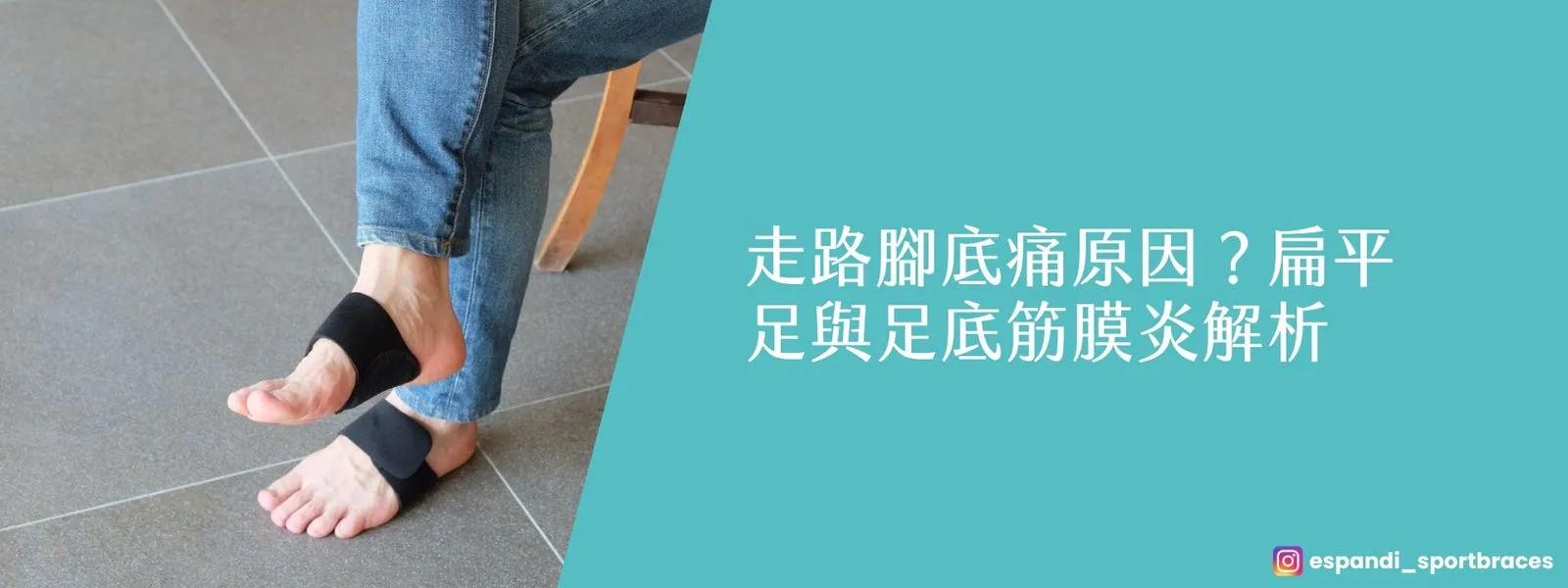
The short answer: soles that ache after a long walk are often linked to a lack of arch support. Common causes include flat feet, plantar fasciitis and high arches, and a sharp heel pain on your first step out of bed in the morning is the classic sign of plantar fasciitis. Day to day, you can stretch your arches, avoid wearing completely flat shoes for long periods and manage your weight, and an arch support can be used as an aid. If the pain seriously affects daily life, see a doctor.
This article is general health information. Braces give support and a posture reminder and do not treat any condition. See a doctor if you have symptoms.
Your soles ache after a long walk and you put it down to standing too long - but that may not be the reason
Many people know the feeling: after an afternoon of shopping the soles of your feet start to ache; the first step onto the floor in the morning feels like treading on a stone; a short way into a run, the inside of the arch starts to twinge again and again.
Most people's first thought is: "I've probably just been on my feet too long - a rest will sort it."
But if the pain keeps coming back, or comes more and more often, the issue usually isn't "how long you stood" but "whether your arches are getting enough support".
What is the arch, and why does it matter when your soles hurt?
The arch is the natural curve along the inside of the sole, made up of bones, tendons and ligaments working together. It works a bit like a spring - with every step, the arch absorbs impact, spreads the pressure and returns energy, so each step is efficient and stable.
A healthy arch quietly takes thousands of impacts of your body weight every day without you noticing it at all. But once something goes wrong with its structure, the body tells you with pain.
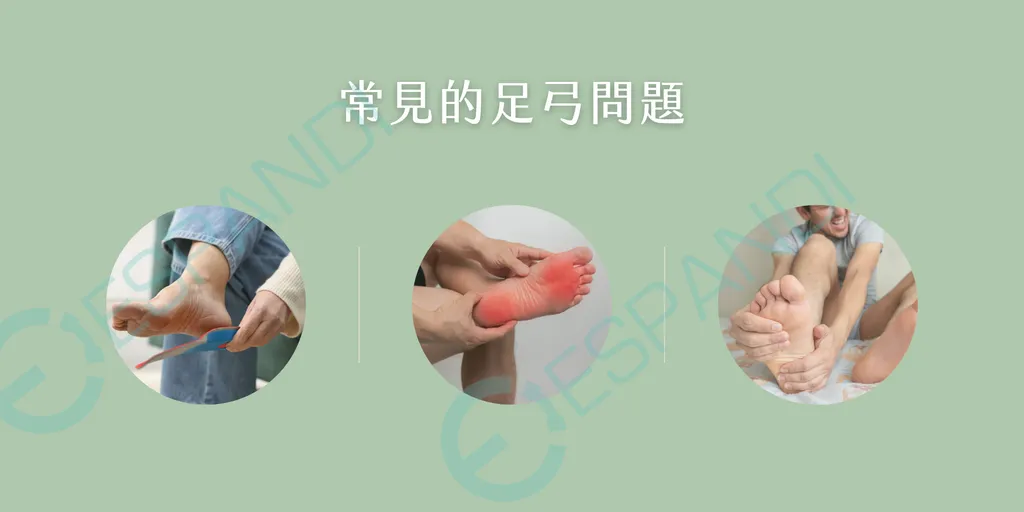
The three most common arch problems
① Flat feet (low arches)
The arch has almost disappeared and nearly the whole sole touches the ground. When you walk or stand, the plantar fascia has to take far more stretching force than normal, and over time it can become chronically inflamed.
Around 20–30% of adults in Taiwan have flat feet, and many only develop symptoms in their 30s or 40s: when you're young the muscles can compensate, but as you age that ability declines and the pain surfaces.
② Plantar fasciitis
The plantar fascia is a thick band of tissue running from the heel to the toes. When it's over-stretched for long periods, tiny tears develop near the heel, causing inflammation and pain.
The classic symptom: sharp pain on the first step out of bed in the morning, which eases a little after a few steps but gets worse again after standing for a long time or exercising. If that's what you have, it's very likely plantar fasciitis.
③ High arches
The arch curves too high, so too little of the sole touches the ground and the pressure concentrates on the heel and the ball of the foot. The ankle tends to feel unstable when walking, and over the long term the knees and lower back can be affected too.
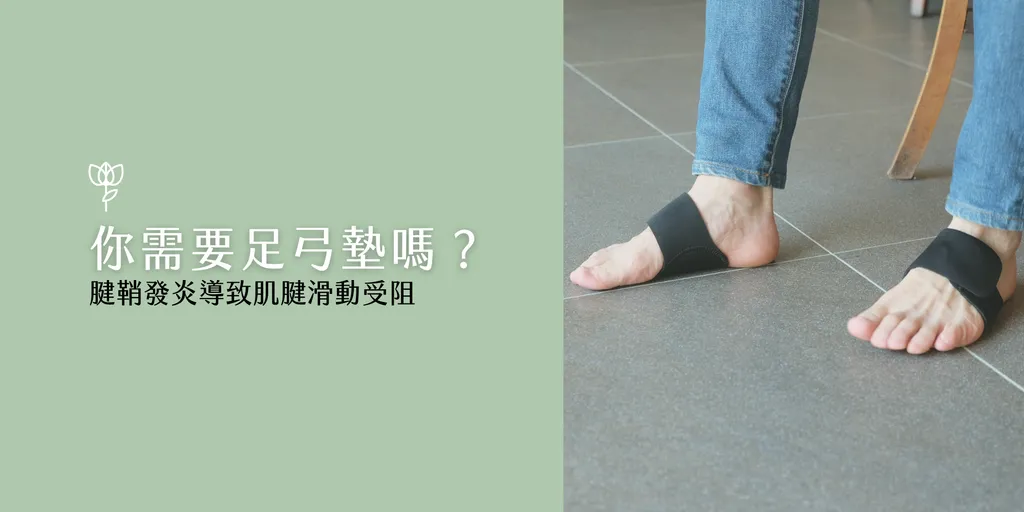
Do you need an arch support? A quick self-check
If 2 or more of the following apply to you, it's a good idea to have a doctor or physiotherapist assess your feet first; you can also consider an arch support as an aid:
✅ After walking or standing for more than 30 minutes, the soles of your feet start to ache
✅ Your heel or the inside of your arch hurts on your first step out of bed in the morning
✅ You get a stabbing feeling in the inside of the arch or the heel when running
✅ Standing on a hard floor is more uncomfortable than standing on a soft rug
✅ The inner edge of your shoe soles has always worn down especially quickly
✅ A family member or doctor has told you that you have flat feet
How to choose an arch support: 3 key points so you don't buy the wrong one
There are many kinds of arch support on the market, and the wrong one isn't just hard to get used to - sometimes it's even more uncomfortable. These are the three most important things to check before you buy:
① The support has to sit in the right place
The support point needs to sit right at the highest point of the curve on the inside of your arch. Too far forward or too far back and it can't spread the pressure properly. A good arch support has a clear raised section in this spot, and when you wear it your foot should feel "held", not uncomfortably pushed.
② The material should absorb shock
Hard plastic arch supports are firm but absorb little shock, so they don't suit people who stand for long hours or runners. Silicone or EVA foam is a better choice - it supports the arch while also cushioning each step.
③ It has to fit the shoes you usually wear
However good an arch support is, if it makes your shoes hard to wear you won't use it every day. Choose a moderate thickness, or a style you can trim, so it can sit quietly in the shoes you wear most without any hassle.
Can an arch support cure plantar fasciitis?
This is the most common misunderstanding: an arch support isn't a treatment, it's a supportive aid.
Its role is to reduce how much the plantar fascia is over-stretched with each step and to support the arch, but it can't replace treatment.
If plantar fasciitis is already seriously affecting your daily life, see an orthopaedic doctor or physiotherapist and do stretching exercises as they advise; an arch support can be used as an aid alongside.
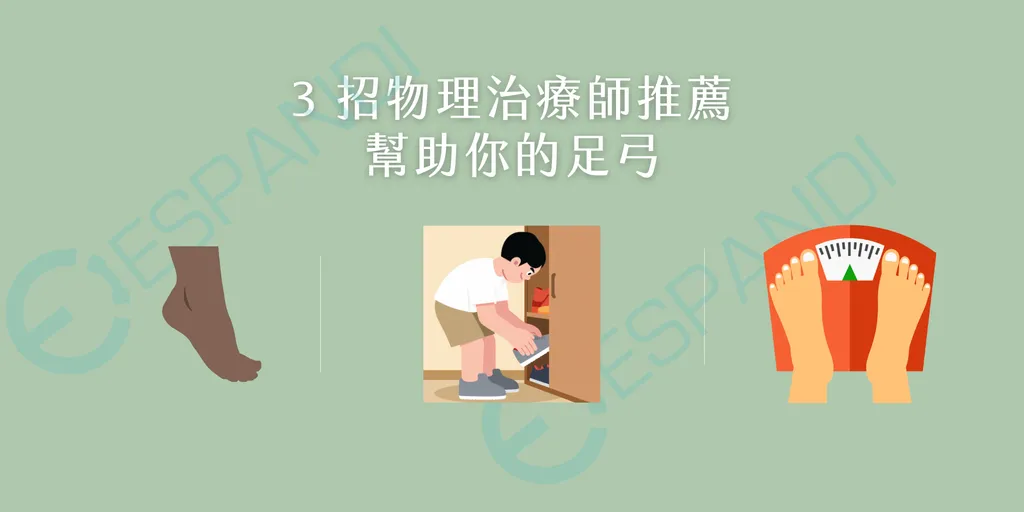
Beyond an arch support, here's how else you can help your arches
A 5-minute arch stretch every day
Sitting down, circle your ankle 10 times, then pull your toes back with your hand until you feel a stretch along the sole, and hold for 15 seconds. This lets the plantar fascia lengthen again after tightening during the day, and can reduce pain first thing the next morning.
Choose the right shoes
Avoid wearing completely flat shoes (such as flip-flops and ballet flats) for long periods - they give the arch almost no support. A modest heel (1–2 cm) is actually kinder to flat feet.
Manage your weight
Every extra kilogram of body weight adds roughly 3 kilograms of pressure on the soles of the feet. For people with plantar fasciitis, weight management is one of the most direct and effective supportive measures.
Espandi™ arch support sleeves - support with every step
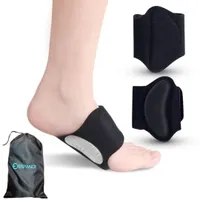
Espandi™ arch support sleeves are made of silicone with a raised support under the arch, so your foot feels held when you wear them.
- Arch support design - a raised silicone section fills the space under the arch and gives support as you walk
- Cushioning design - soft silicone absorbs impact from the ground, so long periods of standing feel more comfortable
- Works with any shoe - slip them into trainers, leather shoes or casual shoes, no need to change your footwear
- Skin-friendly material - soft to the touch and comfortable all day
Typical arch supports vs Espandi
- Ordinary arch supports: the support isn't placed precisely → pressure can end up more concentrated
- Hard plastic: firm but uncomfortable → hard to wear for long
- Thick insoles: won't fit everyday shoes
Frequently asked questions
Q: I have flat feet but they don't hurt now. Do I need an arch support? A: You can use one as needed. Even if flat feet don't hurt now, over the long term they put extra load on the knees, lower back and ankles. An arch support can be used as everyday support, but it's best to have a doctor assess what you actually need.
Q: Should I wear arch supports all the time, or only when it hurts? A: It's best to use them whenever you wear shoes, rather than waiting until it hurts. An arch support gives support while you walk, so it only helps when you're wearing it; if the pain persists, see a doctor.
Q: My arches are different heights on each foot. Do I need different ones? A: Many people's arches genuinely differ between left and right, and that's normal. Espandi™ arch supports use a mouldable silicone that naturally follows the shape of each arch, so the same style is usually fine for both feet. If the difference between your feet is very large, consult an orthopaedic doctor or podiatrist first.
Q: Can children use them? A: The arches of children under 12 are still developing, so consult a paediatrician or orthopaedic doctor before use, to avoid interfering with the arch's natural development.
Q: How long does it take to get used to them? A: Everyone adapts at a different pace; start by wearing them for short periods and build up gradually. An arch support is a supportive aid, not a treatment; if plantar fasciitis pain persists, see a doctor and keep up your stretching exercises.
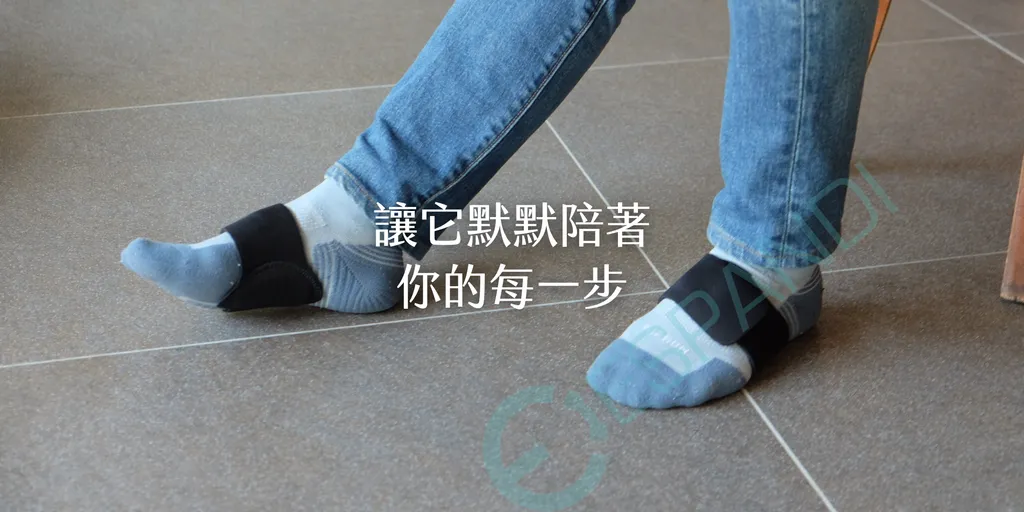
Pain in the soles of your feet isn't something to just put up with. Your arches are the foundation of every step you take, and when something goes wrong it affects not only your feet but your whole lower limbs and even your lower back.
Choosing a suitable pair of arch supports and slipping them into the shoes you wear every day, so they quietly go with you on every step, is one of the simplest and easiest forms of everyday foot care.
Braces mentioned in this article
This article is general health information. Braces give support and a posture reminder and do not treat any condition. See a doctor if you have symptoms.
What customers say about the Arch Support Sleeves | Everyday Arch Support
Reviews are customers' personal experiences and do not represent product performance.
- ★★★★★
質地:良 緩衝:良 平衡:良 出貨速度快,價格優惠,商品品質好,物超所值,很滿意的一次購物,cp值高
q*****8 · 2026-08-26 - ★★★★★
平衡:這款足弓護腳墊可提供支撐。 質地:質地舒適,穿起來不會不舒服。 緩衝:可提供支撐。 商品包裝完整,附有小袋子可裝護具。
p*****. · 2026-03-17
- 30-day trial, returns accepted
- Ships from Taiwan in 1–3 days
- Sizing help on LINE
Keep reading
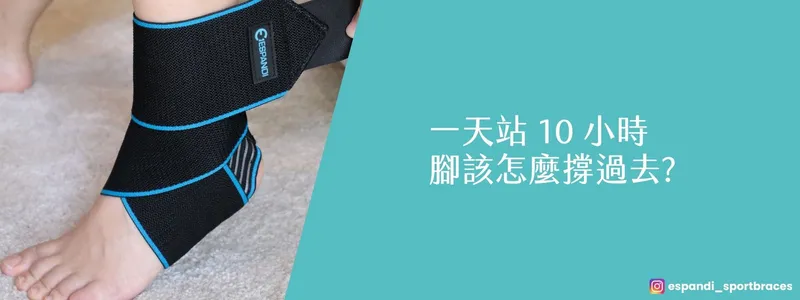
For Shop Staff, Nurses and Hospitality Workers: How to Get Your Feet Through a 10-Hour Day Standing
Sore feet from standing, aching soles after a full day on your feet, ankles so swollen by evening that your shoes feel tight - yet most advice only works once...
What Exercises Can You Do for a Bunion at Home? 6 Gentle Stretches, a Daily Routine and When to Stop
Big toe drifting further out of line, and wondering what you can do at home? Here are 6 bunion stretches that need no special equipment, each with reps and cautions,...
Stiff, Creaky Knees That Hurt on the Stairs - Is It "Wear and Tear"? Knee Osteoarthritis Explained
Knees that feel stiff and creaky, hurt on the stairs, or complain when you stand up from a squat - does that mean they're wearing out? Learn the common symptoms...