What Exercises Can You Do for a Bunion at Home? 6 Gentle Stretches, a Daily Routine and When to Stop
The short answer: you can do stretches and small foot-muscle exercises at home for a bunion as part of everyday foot care. They get your toes and the sole of your foot moving, so walking in shoes feels less stiff. But to be clear from the start: stretching won't move a bone that has already shifted back into place. Start with 5–10 minutes a day, staying within a gentle, pain-free range. If the joint is red, swollen and warm, it hurts even without shoes on, or you have diabetes or numb feet, see an orthopaedic or rehabilitation specialist first before deciding whether to do them.
This article is general health information. Braces give support and a posture reminder and do not treat any condition. See a doctor if you have symptoms.
When people search for "bunion exercises", "bunion rehab" or "what can I do for a bunion myself", they are usually asking the same thing:
"I don't want surgery, and it isn't bad enough for surgery yet. So what can I do on my own?"
That's a very practical question.
You've changed your shoes and maybe bought a support, but it feels like one piece is still missing: getting the foot itself moving.
This article is about that piece: which movements suit doing at home, how many to do, what to watch out for, and when you should stop.
If you haven't read our two earlier articles, they go well alongside this one:
- What a support can do: What a bunion support can and can't do, and how long to wear one
- Getting your shoes right first: What trainers suit bunions? 6 keys to choosing shoes, plus stretches
What can stretching do? Setting expectations first
This is the part most often exaggerated, so we'll cover it first.
A bunion (the medical term is hallux valgus) is when the big toe joint gradually drifts out of line. The angle of the bones has already changed.
Health information from the UK's NHS and the American Academy of Orthopaedic Surgeons (AAOS) makes the same point: non-surgical approaches can't reverse a bunion. Changing shoes, pads, toe spacers, night splints and stretches all fall under everyday care. The aim is to make walking and wearing shoes more comfortable, not to change the bone.
So why stretch at all?
- To get your toes moving: after years of being squeezed in narrow shoes, toes often barely move. Actively spreading, lifting and curling them puts them back to work.
- To practise control of the small muscles in your sole: the sole has many small muscles that help steady the arch and toes, and everyday walking in shoes rarely uses them deliberately.
- To get into the habit of checking your feet: spending a few minutes a day looking at and touching your feet makes it easier to spot redness, rubbing or changes early.
There isn't much research yet on exercises for bunions, and experiences vary from person to person. So think of this as "looking after my feet every day", not "if I do this, the toe will straighten".
👉 Any claim that "doing this move every day will straighten your bunion" deserves a big question mark.
Before you start: don't do these on your own if…
In the following situations, have a doctor check first and confirm whether, and how, you should do these exercises:
- The big toe joint is suddenly red, swollen, hot and painful: this isn't necessarily the bunion itself. It could be gout, an infection or another kind of inflammation, and the cause needs checking first.
- You have diabetes, poor circulation in your feet, or your feet often go numb: foot problems need extra care in these groups, and wounds are harder to notice.
- You have a wound, blister or broken corn on your foot: let the skin heal before doing movements that rub or press.
- You've recently had surgery or are being treated by a doctor: follow the plan from your surgeon or physiotherapist exactly, and don't add exercises of your own.
- Children and teenagers: their feet are still developing, so have them assessed by a rehabilitation or orthopaedic specialist first.
If none of these apply, and you simply feel "my toe is a bit crooked, my shoes catch, and the ball of my foot aches after walking for a while", you can start gradually with the movements below.
3 ground rules for stretching
Before the movements themselves, keep these three things in mind. They matter more than the exercises:
- Tight is fine, pain is not. A stretch should feel "a bit tight, a bit achy". If you feel a sharp pain, or the pain lingers afterwards, you've overdone it, so stop.
- Little and often beats one long session. 5–10 minutes every day is more realistic than 30 minutes once at the weekend.
- Don't force the joint. Especially with movements where you use your hand on the big toe, take it only as far as you can feel it. Don't pull hard to "straighten" it.
6 home stretches for bunions
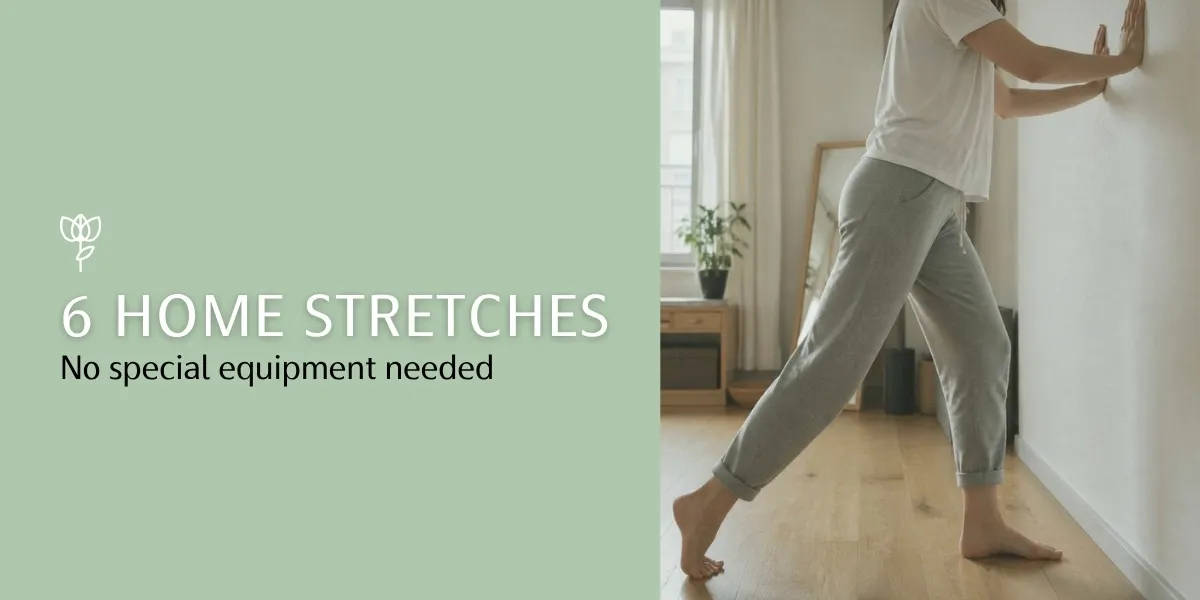
All 6 movements can be done barefoot, sitting on a chair, with no special equipment (at most a towel and a tennis ball).
Do both feet. Even if only one foot has a bunion, doing both makes the habit easier to keep.
Exercise 1: Toe spread
This is the most basic and most commonly recommended movement. The point is to practise opening the toes yourself.
- Movement: sit with both feet flat, heels and the balls of your feet on the floor. Lift all five toes and spread them as wide as you can. Then lower your little toe outwards and down to the floor first, followed by your big toe down towards the inner side of the foot.
- Reps/hold: hold the spread for 5 seconds, relax, and repeat 10 times for 1 set. 1–2 sets a day.
- Caution: at first your toes may barely spread, or may cramp. That's normal; do what you can. If you cramp, stop, rub the sole of your foot and then carry on.
Exercise 2: Big toe lift
People with bunions often find the big toe struggles to move on its own and always lifts with the others.
- Movement: sit with both feet flat. Press the other four toes lightly into the floor and lift only the big toe, then lower it slowly. Then swap: press the big toe down and lift the other four.
- Reps/hold: 10 times each way, holding each lift for 2–3 seconds. 1–2 sets a day.
- Caution: if you can't do it, gently hold the other four toes down with your fingers. What matters is going slowly and deliberately, not how high you lift.
Exercise 3: Gentle big toe stretch
Here you use your hand to move the big toe gently, so the joint doesn't stay at the same angle all day.
- Movement: sit and rest one foot on the opposite thigh. Hold the big toe lightly. Slowly move it up (towards the top of the foot) and hold; slowly move it down (towards the sole) and hold; finally ease it slightly outwards, away from the second toe, and hold.
- Reps/hold: hold each direction for 10–15 seconds, 3 times each, 1–2 times a day.
- Caution: go only as far as "slightly tight", and don't pull hard to straighten it. If the joint itself is painful or swollen, or the bony bump hurts to touch, skip this one for now.
Exercise 4: Towel scrunch
This works the small muscles in the sole and lets the toes practise curling and gripping.
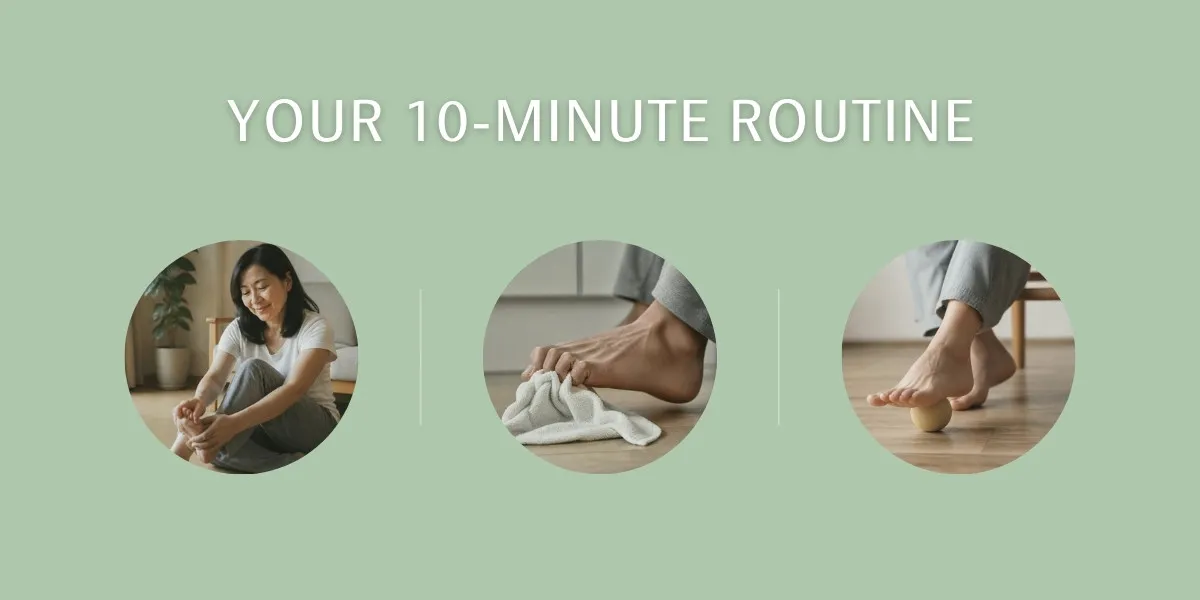
- Movement: sit with a towel laid flat under your foot. Use your toes to pull the towel towards you bit by bit; when you reach the end, push it back out with your toes.
- Reps/hold: pulling the whole towel in counts as 1; do 3–5 rounds once a day. Once it's easy, you can switch to picking up a small towel with your toes, holding for 5 seconds and putting it down, 10 times.
- Caution: make sure the floor isn't slippery and the chair won't slide. If your sole cramps, rest; there's no need to push through.
Exercise 5: Ball roll under the foot
After long spells of standing or walking, many people's soles feel tight. This one helps the sole relax.
- Movement: sit with a tennis ball (or massage ball) under your foot and slowly roll it back and forth from heel to the ball of the foot. Where it feels tight, you can pause and press gently.
- Reps/hold: 1–2 minutes per foot, once a day. It feels best in the evening after a shower.
- Caution: aim for "achy but pleasant". Don't press the ball directly on the bony bump beside the big toe; that area already gets rubbed by shoes and doesn't need more pressure. If you have diabetes or reduced sensation in your feet, ask your doctor first.
Exercise 6: Calf stretch
Many foot stretching routines include a calf stretch, because the calf, arch and forefoot all work together when you walk. When the calves are tight, the feet often feel tight too.
- Movement: stand facing a wall with both hands on it. Step one foot back, keeping that heel firmly on the floor and the knee straight; bend the front knee slightly and lean forward until you feel a stretch in the back calf.
- Reps/hold: hold for 20–30 seconds, 3 times each side, 1–2 times a day.
- Caution: keep the back heel down and your toes pointing straight ahead. If you're unsteady or your knees are uncomfortable, do it seated instead: straighten your leg, loop a towel or stretching strap around the ball of your foot and draw it gently towards you.
How to fit it into your day: a 10-minute sample routine
The movements aren't hard; remembering to do them is. Here's a version you can realistically follow:
| When | Suggested movements | Roughly |
|---|---|---|
| After getting up, before putting shoes on | Exercise 1 toe spread + Exercise 2 big toe lift | 3 minutes |
| A break at work (seated) | Exercise 2 big toe lift (shoes off) | 1–2 minutes |
| In the evening after a shower | Exercise 5 ball roll + Exercise 3 gentle stretch + Exercise 4 towel scrunch + Exercise 6 calf stretch | 5–7 minutes |
A few tips:
- You don't have to do every movement. If you're short on time, picking 2 or 3 is fine.
- After a shower is more comfortable. When you're warm, stretching feels less stiff.
- Note how it feels. Jot down "which movement felt tight today, and where it hurt" in your phone. It's useful to show your doctor or physiotherapist at your appointment, and makes changes easier to spot.
5 common stretching mistakes
Mistake 1: Pulling hard to "straighten" the big toe
This is the most common one. Wanting the toe to be straight, people pull harder and harder. The area around the joint ends up more uncomfortable, and the next day they don't want to do it again. Stretching is about moving the toe, not forcing it straight.
Mistake 2: Stretching but not changing your shoes
If you spend 10 minutes stretching and then stand for 8 hours in narrow, pointed shoes, your toes are still squeezed most of the time. For the details of choosing shoes, see: What trainers suit bunions? 6 keys to choosing shoes, plus stretches.
Mistake 3: Carrying on through pain
"The more it hurts, the more it helps" doesn't apply here. A sharp pain, pain that lingers afterwards, or a joint that starts to swell are all signs to stop.
Mistake 4: Starting strong and then stopping
Doing a lot, very hard, and then nothing for a week. For your feet, regular, gentle movement is what makes sense.
Mistake 5: Using stretching as a reason not to see a doctor
Stretching is everyday care, not a replacement for an assessment. How far the bunion has progressed, and whether you need anything else, is for a doctor to judge.
Beyond stretching: how shoes and supports fit in
Stretching, shoes and supports play different roles. They can work together, but one can't replace another:
- Shoes: decide how your toes are treated for most of the day. A wide fit, a rounded toe and room at the front are the basics.
- Stretching: a few minutes a day to get your toes and sole moving.
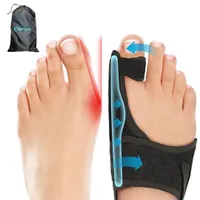
- Toe separator supports: used while resting, before bed or at home, they create space between the big toe and second toe and reduce the toes squeezing each other.
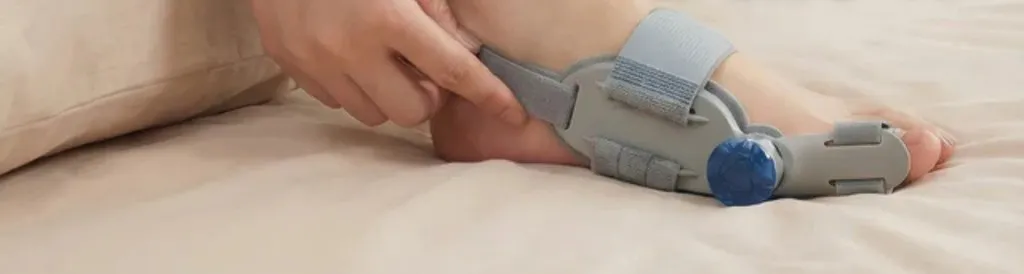
If you'd like some extra support while resting at home, take a look at the Espandi big toe separator. Its soft separator keeps space between the big toe and second toe, and the hook-and-loop strap adjusts to your foot shape.
If you'd prefer to control the tension yourself, the dial-adjustable big toe brace lets you fine-tune it with a dial, so you can start loose and get used to it gradually.
Two other small tools people often ask about:
- For "Exercise 1 toe spread", if your toes just won't spread, some people use a toe stretching trainer during yoga or stretching to hold the toes in a spread position while doing other movements.
- For the seated version of "Exercise 6 calf stretch", the multiple loops on a foot stretching strap let you adjust the length to your flexibility, and it's easier to hold than a towel.
One more reminder: supports and these tools provide spacing, support and help with stretching. They don't change the angle of the bones. Their purpose is to make everyday life a bit more comfortable and stretching a bit easier.
For how and how long to wear them, see the fitting instructions. We generally suggest starting with short periods, and taking it off straight away if you notice numbness, tenderness, red skin or a change in toe colour.
✅ Want to compare styles? See the Espandi bunion and foot support range, with a 30-day trial
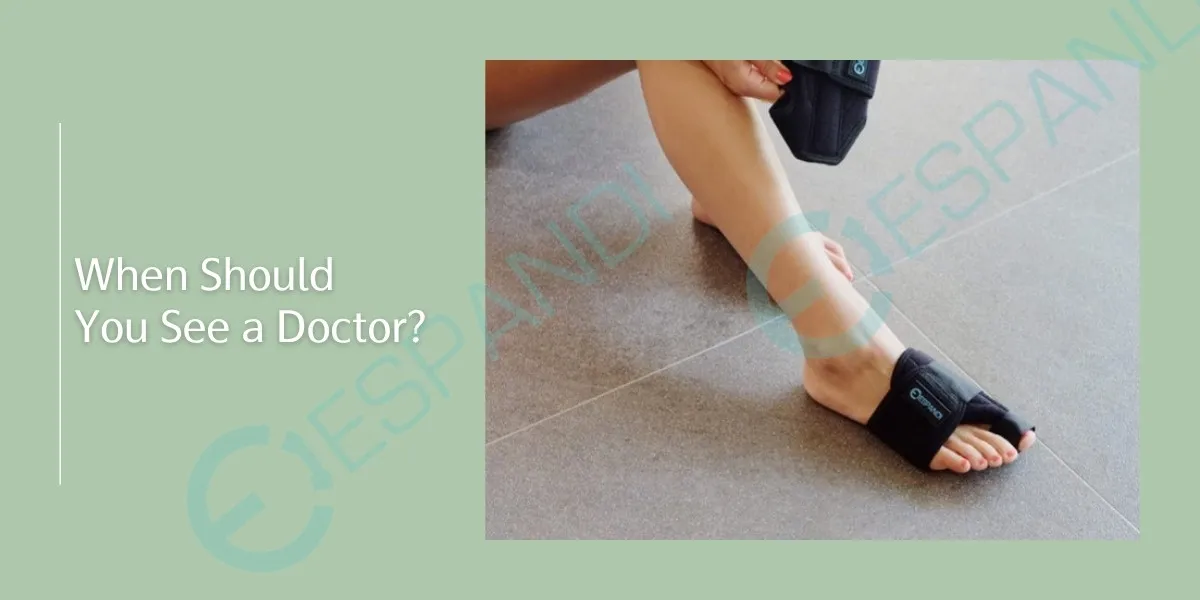
When should you see a doctor?
After a while of stretching at home, changing shoes and using a support, if any of the following apply, we suggest getting assessed by an orthopaedic or rehabilitation specialist (some hospitals have a dedicated foot and ankle clinic):
- Pain hasn't eased after a few weeks of looking after it at home, or it's getting worse
- Pain is already affecting your walking, work or daily life
- The toe has visibly changed in a short time, or the big toe is starting to press on or cross over the second toe
- The joint is red, swollen and warm, or you have sudden severe pain
- It hurts even when you aren't walking or wearing shoes
- Your toes are numb or change colour, or rubbed skin keeps breaking down and is slow to heal
- You have diabetes as well as a bunion
These situations need a professional's judgement; a few more stretches won't sort them out. At your appointment, tell your doctor or physiotherapist which movements you've been doing and which ones hurt, so they can adjust things to suit you.
Braces mentioned in this article
This article is general health information. Braces give support and a posture reminder and do not treat any condition. See a doctor if you have symptoms.
What customers say about the Espandi Big Toe Separator | Comfortable Toe Spacer Support Strap
Reviews are customers' personal experiences and do not represent product performance.
- ★★★★★
非常棒的商品!推推!包裝得很小心 寄出貨超快! CP值很高!!推薦購入 !💯💯💯💯💯💯💯💯
b*****9 · 2026-01-27 - ★★★★★
這次的網購經歷真是讓我心花怒放!我對這款商品的質量和性能感到無比滿意。它的外觀看起來看起來設計極具時尚感,無論是顏色搭配還是細節處理都展現出高雅與品味。質感上佳,觸感舒適,讓我使用…
x*****2 · 2025-12-22
- 30-day trial, returns accepted
- Ships from Taiwan in 1–3 days
- Sizing help on LINE
FAQ
Q: Will stretching straighten my bunion?
A: No. Stretching, shoes and supports can't return bones that have already shifted to their original angle. Stretching is about keeping your toes and sole moving and making everyday walking feel less stiff. It's part of everyday foot care.
Q: How long should I do it each day?
A: We suggest starting with 5–10 minutes a day. Regularity matters, not doing it for a long time or very hard. If pain lingers afterwards, or you feel worse the next day, cut down, and if needed stop and ask your doctor.
Q: It hurts when I do the movements. Should I carry on?
A: No. A stretch should feel "tight", not "painful". Pain means you're going too far, or the joint is inflamed, so stop. If it still hurts after resting, get it checked by a doctor.
Q: Can I do these movements after surgery?
A: Which movements to do after surgery, and when to start, should follow your surgeon's and physiotherapist's instructions exactly. Don't apply exercises from the internet yourself, including these.
Q: Can I stretch and wear a support as well?
A: Yes; they play different roles. Stretching is about moving the toes actively; a toe separator provides spacing and support while you rest. A common routine is to stretch in the evening, then wear the support while resting or before bed.
Q: Do I have to go to a hospital for bunion rehab?
A: If the bunion is already causing significant pain or affecting your walking, we suggest seeing a rehabilitation or orthopaedic specialist, so a doctor and physiotherapist can plan things for your situation. The stretches here are general home exercises for people with milder symptoms who want to look after their feet. They can't replace a professional assessment.
Q: Only one foot has a bunion. Should I do both?
A: We suggest doing both. It's easier to build the habit, and you can compare how each foot feels. If you notice a difference, write it down and share it with your doctor.
※ This article is general health information for reference only and is not a substitute for professional diagnosis. Stop straight away if pain increases during any movement. If you have persistent pain, swelling or difficulty walking, please see a doctor promptly.
Keep reading
Do Bunion Correctors Work? Can a Bunion Get Better Without Surgery, Is Wearing One Overnight Worthwhile, and What to Look For
Can a bunion get better without surgery? Is it worth wearing a support overnight? This article explains the common causes of bunions, what a support can and can't realistically do,...
Bunions and Shoes: How to Choose Trainers and Walking Shoes, Plus 5 Simple Stretches
Still sore even with a toe support? The problem may be the shoes you wear every day. 6 keys to choosing shoes, how to pick for different occasions, and 5...
Fingers Sore and Stiff From Typing? Finger Care for Office Workers: Desk Setup, 6 Stretches and When to See a Doctor
After a full day of typing, are your fingers achy, tight and stiff when you make a fist in the morning? Don't rely on stretching alone. From desk setup and...