Stiff, Creaky Knees That Hurt on the Stairs - Is It "Wear and Tear"? Knee Osteoarthritis Explained
The short answer: knees that feel stiff and creaky or hurt on the stairs aren't necessarily "wearing out". Common symptoms of knee osteoarthritis include stiffness in the morning or after sitting that eases once you move, difficulty with stairs or getting up from a squat, and knees that swell repeatedly; noise on its own doesn't mean the cartilage is worn. Suitable exercise and weight management matter; if the pain persists, the knee keeps swelling, is red and warm, or locks and won't straighten, see a doctor.
This article is general health information. Braces give support and a posture reminder and do not treat any condition. See a doctor if you have symptoms.
Do your knees start to catch and ache on the way downstairs?
Squatting down is fine, but you need something to hold on to when you stand up?
First thing in the morning your knees feel tight and stiff, and only "warm up" after a few steps?
If any of this sounds familiar, you may already be thinking:
"Are my knees wearing out?"
Don't scare yourself just yet.
What people call "knee wear and tear" usually means, medically, knee osteoarthritis. It is linked to age, but it doesn't only happen to older people.
Which symptoms are worth paying attention to? Can you still exercise with knee pain? Do squats, running and hiking all have to stop? And how should you look after your knees day to day?
This article explains it all.
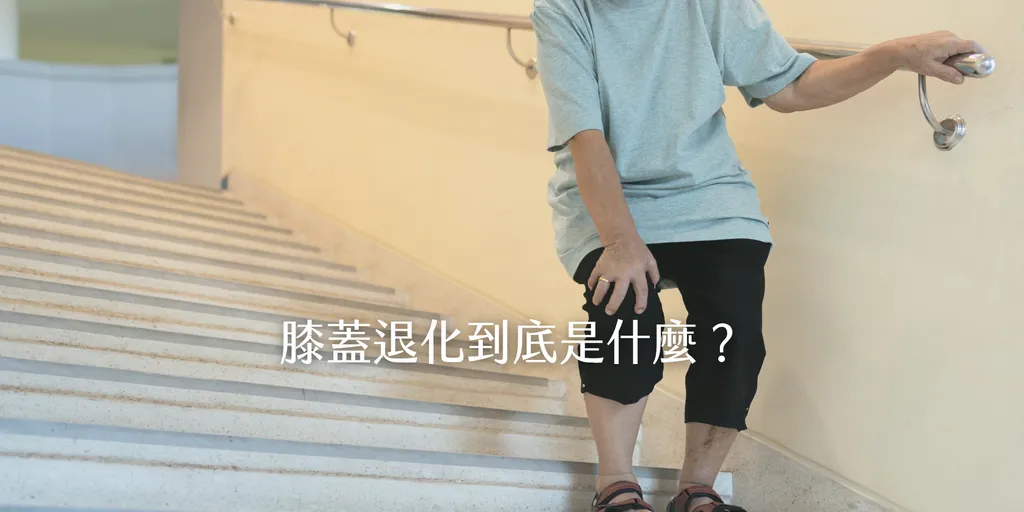
If your knees hurt and creak, does that mean they're wearing out?
Not necessarily.
The knee is a complex joint containing cartilage, menisci, ligaments, tendons and other tissues. Knee osteoarthritis isn't simply a matter of "cartilage wearing away"; it's a series of changes in different tissues inside the joint over time.
With age, or when the knee carries heavy loads for a long time, changes can gradually develop in the joint cartilage and other tissues, leading to pain, stiffness and movement that doesn't feel smooth.
Common risk factors include:
- getting older
- being overweight
- a previous knee injury or operation
- long-term activities involving a lot of squatting, kneeling or carrying loads
- weak muscles or problems with how the legs function
- certain congenital or structural factors
So "knee pain" doesn't necessarily mean wear and tear, and "noisy knees" don't mean the cartilage has worn away.
The real cause still needs to be judged from your symptoms together with a professional examination.
What are the common symptoms of knee osteoarthritis?
If you've noticed lately that your knees aren't as supple as they used to be, look out for the following.
① Particularly stiff knees when you get up or after sitting
When you first get out of bed, or stand up after sitting for a while, your knees feel tight and catch.
But after a few steps and a bit of movement, they gradually loosen up again.
This pattern of "stiff at first, better once you get moving" is very common in knee osteoarthritis.
However, if morning stiffness lasts a very long time, or other joints are clearly stiff too, it may not just be osteoarthritis, and other joint conditions may need to be ruled out.
② Knees that hurt most on the stairs
Walking on the flat is fine, but as soon as you meet a staircase your knees start to protest.
Pain at the front of the knee when going up or down stairs in particular may be linked to the increased load on the knee joint.
But note that "it hurts on the stairs" isn't a symptom unique to knee osteoarthritis.
Patellofemoral pain syndrome, weak muscles and other knee problems can cause similar symptoms.
So don't decide your knees are wearing out just because stairs hurt.
③ Squatting and standing up start to feel hard
You used to squat down to pick things up without thinking, but now you find:
"Getting down is fine - it's getting up that's the problem."
You may even need to hold on to a table or chair to stand up.
If this keeps happening and is already affecting daily life, it's worth having a doctor or physiotherapist assess it.
④ Knees that swell repeatedly
If your knee tends to swell after activity, or you notice your two knees look clearly different, it may mean inflammation or fluid inside the joint.
If the knee is also clearly red, hot, swollen and very painful, don't just put it down to "normal wear and tear".
Besides osteoarthritis, other causes can lead to acute inflammation or swelling in the knee, and a doctor needs to assess it.
⑤ What if your knees "click"?
There's no need to hear a "click" from your knee and immediately think:
"That's it - has my cartilage worn away?"
In fact, noises when the knee moves are very common, and noise on its own doesn't mean the knee is wearing out or the cartilage is damaged.
But if the noise comes with:
- pain
- swelling
- locking
- a smaller range of movement
- being unable to fully straighten or bend it
it's more worth getting checked.
How bad does knee pain have to be before you see a doctor?
If it's just an occasional ache after walking more or standing longer than usual, and it goes away with rest, you can keep an eye on it for now.
But if any of the following appear, don't just keep "putting up with it to see":
- the pain has lasted a while without improving
- the pain is affecting your walking
- stairs have become clearly difficult
- the knee keeps swelling
- the knee is clearly red and warm
- sudden, severe knee pain
- the knee locks, won't straighten or won't bend
- it's already affecting your sleep or daily life
In particular, if severe pain comes on suddenly, the knee swells noticeably, or you can't put weight on it, see a doctor as soon as possible.
Knee osteoarthritis also can't be diagnosed from an online "symptom self-check".
A doctor will usually first ask about where it hurts, when it started, your activity levels and your medical history, and then examine you.
Only if needed will they arrange imaging such as an X-ray.
Not everyone with knee pain needs an X-ray straight away.
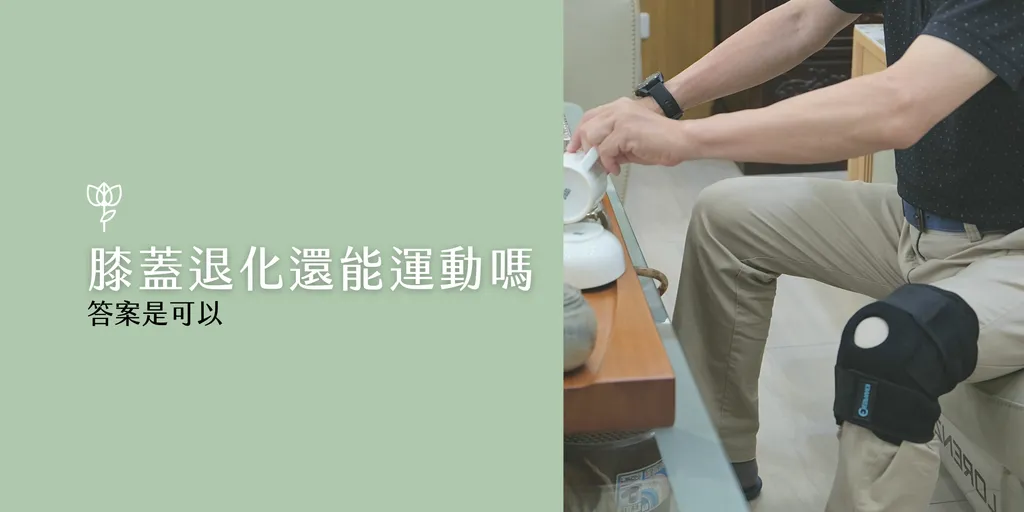
Can you still exercise with knee osteoarthritis?
When many people hear "knee osteoarthritis", their first reaction is:
"So shouldn't I just keep still?"
In fact, it's the opposite.
For most people with knee osteoarthritis, suitable and regular exercise is a very important part of treatment and everyday care.
Strength training can help improve leg strength and everyday function, while aerobic exercise helps maintain overall fitness.
So what really matters isn't:
"My knee hurts, so I won't move at all."
but rather:
"Find the kind of exercise that suits me, and keep the intensity and load under control."
3 types of exercise that tend to suit the knees
① Strength training
You can train the muscles of the thighs, hips and legs.
For example, quadriceps exercises, seated leg raises and hip strengthening can all be adjusted to your ability.
If you don't exercise at all at the moment, start with simple, low-load movements and build up gradually.
If the pain gets clearly worse after exercise, or swelling persists, your current amount of training may need adjusting.
② Water-based exercise
Swimming, water walking and similar exercise use the buoyancy of water to reduce the load your body weight puts on your legs.
If walking or exercising on land tends to be uncomfortable, exercise in water can be another option.
③ Low-impact aerobic exercise
For example:
an exercise bike
spinning
a cross-trainer
swimming
These usually put less impact on the joints than running and jumping.
But everyone's knees are different, and "low impact" doesn't mean it suits everyone - adjust according to your own pain and ability.
Are squats, running and hiking off limits?
Not necessarily.
This is one of the biggest misunderstandings about knee wear and tear.
Having knee osteoarthritis doesn't mean you can never squat, run or hike again.
What really matters is:
how much load your knees can currently take.
If an activity makes the pain clearly worse and the discomfort continues after rest, the amount or type of exercise may need adjusting.
You can start by adjusting in this order:
lower the weight → do fewer repetitions → shorten the time → reduce the impact
rather than putting every kind of exercise straight onto a "banned list".
If you already have clear pain, swelling or restricted movement, have a doctor or physiotherapist assess you first before deciding what kind of exercise suits you.
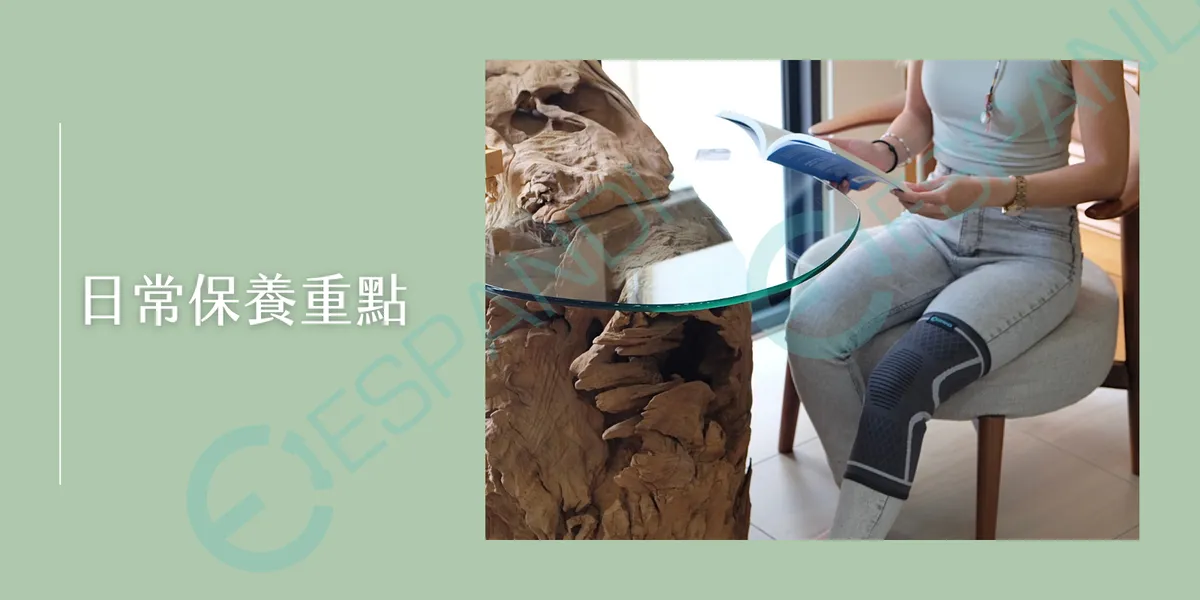
How to look after knees with osteoarthritis day to day
Besides exercise, some small everyday habits matter too.
Weight management
If you're overweight or obese, losing weight can reduce the load on the knee joints and also help with pain and function.
So for people who are overweight, weight management is an important part of treating knee osteoarthritis.
But if your weight is already normal, there's no need to lose weight specifically to "protect your knees".
Don't stay squatting or kneeling for long periods
If your work or daily life involves long periods of squatting or kneeling, change position from time to time and get up and move about.
The point isn't that "a moment of squatting will ruin your knees", but to avoid keeping them in a high-load position for a long time.
Shoes: comfort and stability first
If you walk a lot every day, choose shoes that fit well, feel comfortable and keep you stable when walking.
There's no need to put your faith in any "miracle knee shoe" or special insole.
For most people, shoes that are comfortable and stable to walk in matter more than shoes that claim to "treat your knees".
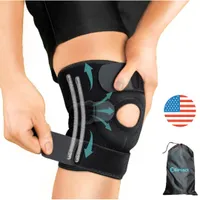
Do you need to wear a knee support?
Not everyone with knee pain needs a knee support.
Some people with an unstable knee or particular biomechanical problems may be suited to a support after a professional assessment.
But it isn't advisable to treat a knee support as "standard kit" for everyone with knee osteoarthritis.
If you already need to wear a knee support long term just to walk or exercise, it's all the more worth having a professional find out what the real problem is.
Do glucosamine, UC-II and PRP really work?
Search for "knee wear and tear" and you'll quickly come across glucosamine, UC-II, PRP and the like.
But these can't all be lumped together.
Can glucosamine treat knee osteoarthritis?
There isn't currently enough consistent evidence that glucosamine effectively improves knee osteoarthritis, so some clinical guidelines don't recommend it as a routine treatment for osteoarthritis.
More importantly:
glucosamine isn't something that lets you "eat back" worn cartilage.
If you're thinking of taking it, first find out what's in the product and check it against any medication you take, then discuss it with a healthcare professional.
Does UC-II work?
UC-II (undenatured type II collagen) is another common joint supplement.
Research so far is limited, and there isn't enough consistent evidence to draw conclusions about its real effect on knee osteoarthritis.
So it isn't advisable to rely on UC-II as the main way of treating knee wear and tear.
Can PRP treat knee osteoarthritis?
PRP stands for "platelet-rich plasma": plasma with a higher concentration of platelets is separated from your own blood and injected near or into the joint.
Some studies currently suggest PRP may help some people with knee osteoarthritis improve pain and function, but the results aren't entirely consistent.
So PRP isn't a case of:
"one injection and the cartilage grows back."
If you're considering PRP, a doctor should assess whether it suits you based on how advanced the osteoarthritis is, your symptoms and the other treatment options - not a decision to make straight after seeing an advert.
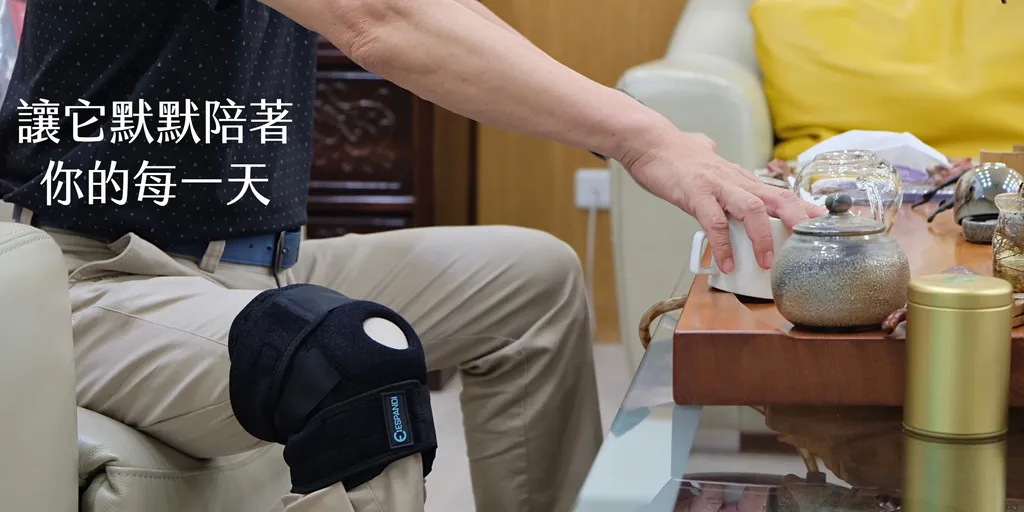
Knee pain isn't necessarily wear and tear - don't rush to diagnose yourself
Knees that feel stiff, ache or click don't necessarily mean they're wearing out.
Knee pain has many possible causes: besides osteoarthritis, it may be linked to weak muscles, kneecap-related problems, ligaments, the menisci or other joint conditions.
So what really matters isn't labelling yourself with "knee wear and tear" first, but:
finding the cause first, then deciding what to do.
If it's only occasional discomfort, you can keep an eye on it and adjust your activity.
If the pain persists, the knee keeps swelling, or it's already affecting your walking or stairs, stop "putting up with it to see".
Having a doctor or physiotherapist assess it, find out where the problem is and then decide on suitable exercise and treatment is usually far more practical than buying supplements on a whim.
Finally, remember:
knees don't last longer the less you use them.
Real care means finding the kind of activity that suits you, keeping your muscles strong enough, and dealing with ongoing problems early.
So your knees aren't something you're "afraid to use", but something you can use well, for a long time to come.
Braces mentioned in this article
This article is general health information. Braces give support and a posture reminder and do not treat any condition. See a doctor if you have symptoms.
What customers say about the Adjustable Sports Knee Brace | Knee Support for Stairs and Hiking
Reviews are customers' personal experiences and do not represent product performance.
- ★★★★★
商品到貨的包裝品質非常OK, 到貨的速度也非常迅速, 非常值得 推薦給各位 好買家參考
d*****8 · 2026-06-16 - ★★★★★
品質不錯,配送速度快,與圖片相符。有機會會再回購。
b*****8 · 2026-01-06
- 30-day trial, returns accepted
- Ships from Taiwan in 1–3 days
- Sizing help on LINE
Keep reading
How to Look After Your Knees When Hiking, Climbing Stairs and Brisk Walking: 4 Knee Care Tips Plus Training Advice
For middle-aged and older adults and anyone who loves the outdoors: this article shares 4 knee care tips for hiking, brisk walking and climbing stairs, together with strength training and...

What Exercises Can You Do for a Bunion at Home? 6 Gentle Stretches, a Daily Routine and When to Stop
Big toe drifting further out of line, and wondering what you can do at home? Here are 6 bunion stretches that need no special equipment, each with reps and cautions,...
For Shop Staff, Nurses and Hospitality Workers: How to Get Your Feet Through a 10-Hour Day Standing
Sore feet from standing, aching soles after a full day on your feet, ankles so swollen by evening that your shoes feel tight - yet most advice only works once...