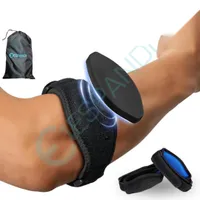
Pain on the Outside of Your Elbow When You Grip? Tennis Elbow vs Golfer's Elbow, and How to Choose an Elbow Support
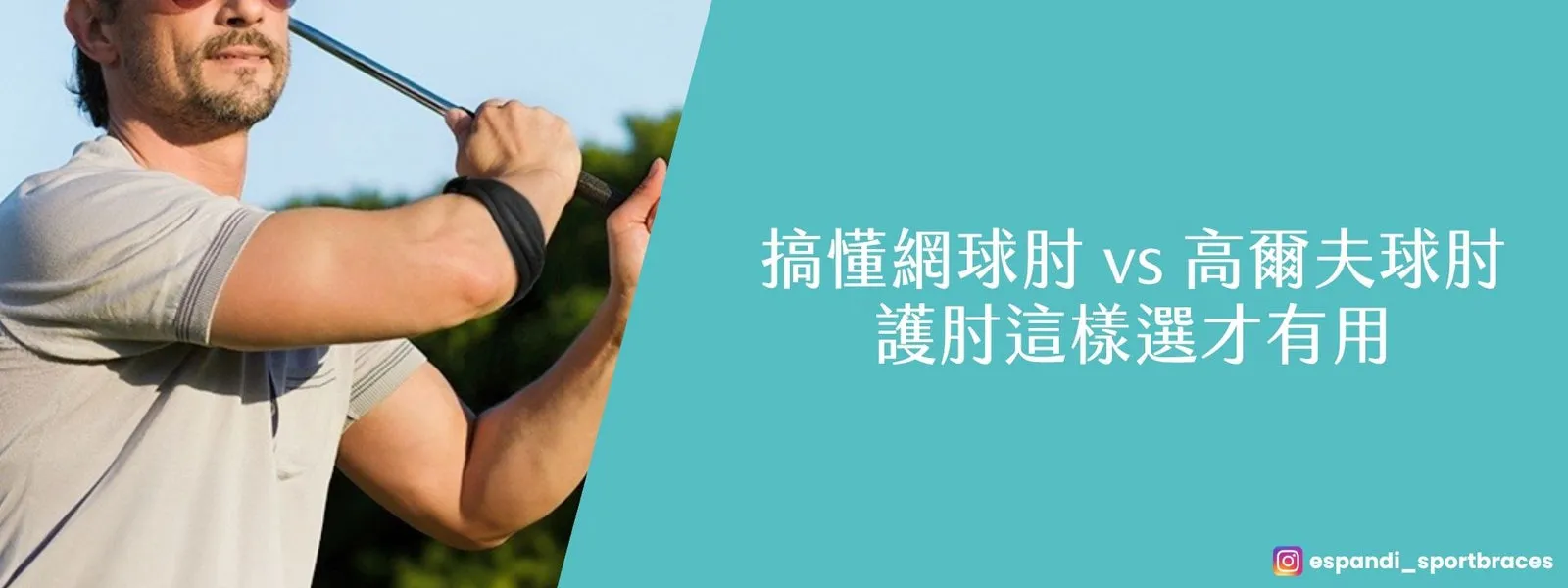
The short answer: an elbow support can be used as an aid, as long as you choose the right type and wear it in the right place. Pain on the outside of the elbow is usually tennis elbow, and a compression strap should sit about 2–3 finger-widths below the bony point; elbow pain together with a numb little finger may be cubital tunnel syndrome, which needs something different. The key is still to change repetitive movements and stretch the forearm; if symptoms persist or get worse, see a doctor or physiotherapist.
This article is general health information. Braces give support and a posture reminder and do not treat any condition. See a doctor if you have symptoms.

Does this sound familiar? You're pouring water and your elbow suddenly twinges, or wringing out a towel hurts enough to make you wince - yet you don't play tennis and haven't done anything unusual.
"Tennis elbow" is a common but widely misunderstood name. You don't have to play tennis to get it - many people who type at a computer every day, chefs, hairdressers, removal workers and even homemakers can have the same problem.
This article aims to help you work out which kind of elbow pain you have, how to choose an elbow support, and what else you should know beyond the support itself.
Outside vs inside of the elbow: first check where it hurts
Many people can't tell "tennis elbow" from "golfer's elbow". The main difference is where it hurts:
- Pain on the "outside" of the elbow → tennis elbow (lateral epicondylitis)
- Pain on the "inside" of the elbow → golfer's elbow (medial epicondylitis)
Their causes are similar - both are inflammation from repetitive use and chronic fatigue of the arm tendons - but because the location differs, the design of the support and how to choose it differ too.
In Taiwan, tennis elbow is by far the more common, roughly six to seven times as common as golfer's elbow, and it's in no way limited to athletes - any job that involves long periods of "gripping + twisting the wrist" can lead to it.

Why do people get tennis elbow? It's linked to your working posture
On the outside of the elbow there's a bony point (the lateral epicondyle) where the muscles that extend the wrist and fingers attach. When those muscles are overused or repeatedly loaded over a long period, tiny tears and chronic inflammation develop at the attachment - that's tennis elbow.
The most common high-risk groups:
- Office workers: long hours of typing, with the wrist making small repetitive movements - the fastest-growing group with tennis elbow in recent years
- Chefs / catering staff: chopping, stir-frying, holding a knife for long periods
- Hairdressers / nail technicians: long hours using scissors or tools
- Removals and manufacturing: repeatedly gripping heavy objects
- Homemakers: the build-up of housework such as wringing towels, mopping and cooking
There's a very simple self-check: hold your arm straight out in front of you, palm down, then try to turn your wrist (back of the hand up) - if you feel a sharp pain on the outside of the elbow during this movement, it's quite likely tennis elbow.
How is tennis elbow different from cubital tunnel syndrome?
The two are often confused, but they're fundamentally different:
Tennis elbow (lateral epicondylitis)
- A tendon inflammation problem
- Hurts most when gripping hard or twisting the wrist
- A clear tender spot when you press the bony point on the outside of the elbow
- No numbness in the fingers
Cubital tunnel syndrome (ulnar nerve compression)
- A nerve compression problem
- The ulnar nerve on the inside of the elbow is compressed
- Numbness or tingling in the little and ring fingers
- Worse with the elbow bent for long periods (such as on the phone or sleeping on your arm)
- In severe cases, grip strength decreases
If you have "elbow pain + numb fingers", it's more likely cubital tunnel syndrome than plain tennis elbow. The two are managed differently and call for differently designed supports - so identifying which you have matters.
👉 Further reading: Trigger finger self-care: 5 home exercises and when to wear a splint
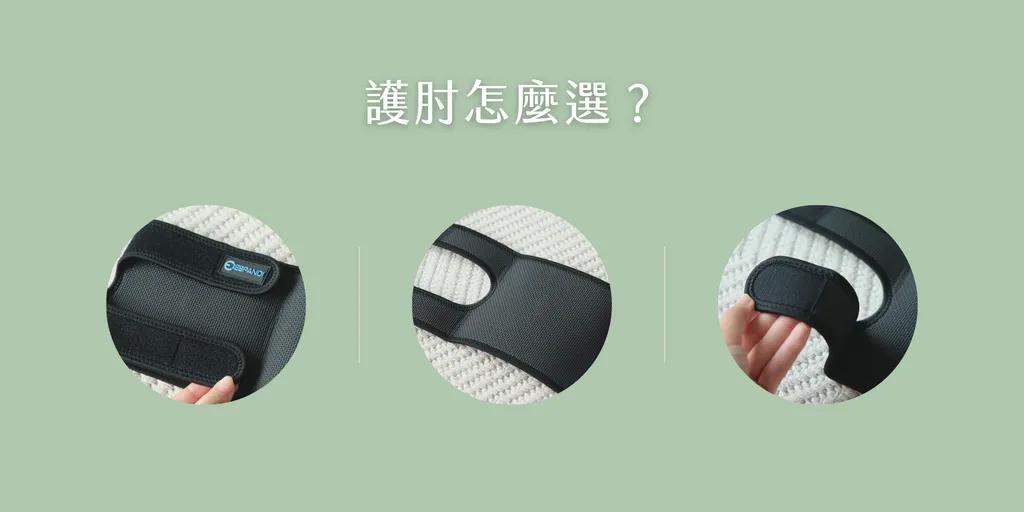
How to choose an elbow support: the thickest, stiffest one isn't the answer
Many people assume the more an elbow support covers the better, and buy the thickest one. But different elbow problems actually need completely different things from a support.
Tennis elbow support (strap type)
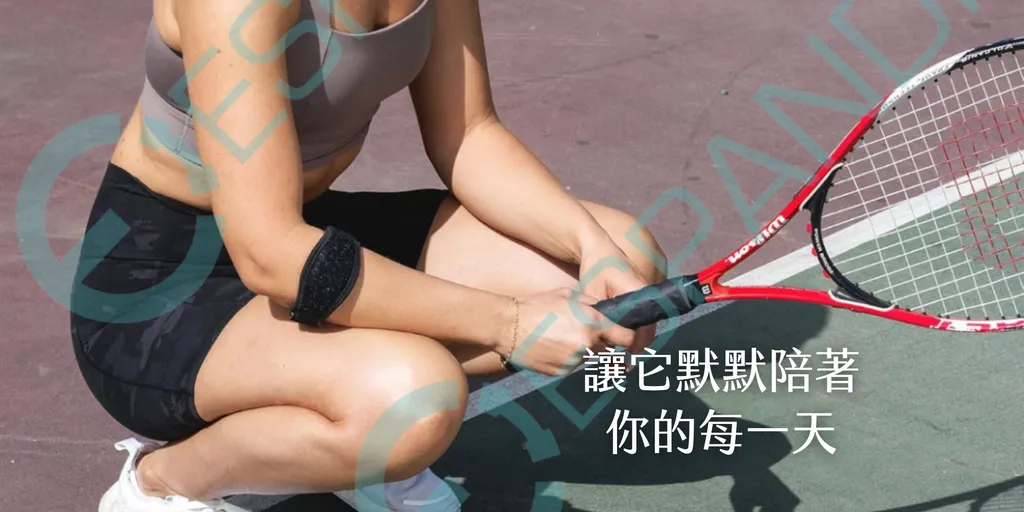
This is the kind you'll most often see in sports shops - a narrow band that goes once around just below the elbow (the top of the forearm). It doesn't look like an elbow support; it's more like a "strap".
There's a reason for the design: by applying pressure to the forearm muscles, it spreads the load on the tendon attachment, so the lateral epicondyle doesn't take the full pull directly.
When wearing it: it should sit about 2–3 finger-widths below the bony point of the elbow, not over the elbow joint itself. Many people wear it in the wrong place, and then it doesn't sit where it should.
Full sleeve elbow support (general elbow protection)
If your problem is cubital tunnel syndrome (nerve compression), or the elbow has been injured before and needs protecting, this full-coverage design is the one you want. It holds the elbow at a set angle and keeps the joint warm.
Rigid elbow brace (for the acute phase)
In the acute inflammatory phase or after a knock, you may need firmer support. These braces usually contain rigid stays that hold the elbow at a fixed angle and reduce movement of the affected area. They're generally used on a doctor's advice and aren't suitable for long-term everyday wear.
5 practical rules for choosing an elbow support
1. First identify the type of problem As above, tennis elbow and cubital tunnel syndrome call for different designs. Don't rush to buy - first confirm where the pain is and what your symptoms are.
2. Choose a breathable material In Taiwan's climate, wearing a hot, stuffy support for long periods quickly irritates the skin. Choose a design with ventilation holes, or a mixed material.
3. For a strap-type support, choose one with adjustable tension Everyone's forearm is a different size, and a fixed strap can't guarantee the right pressure. An adjustable hook-and-loop design lets you find the most comfortable pressure point yourself.
4. Don't over-tighten because "tighter feels more protective" Too much pressure affects circulation and may make the elbow more uncomfortable, or even worsen symptoms. The right amount: a feeling of pressure, but no numbness in the arm.
5. Buy from a reputable brand with clear labelling Choose reputable brands that clearly show the materials, sizing, manufacturer and customer service details on the packaging, so you have more assurance about material safety and design.
Espandi Sport elbow supports have a compression strap shaped to follow the curve of the forearm, and are suitable for everyday wear by office workers and anyone who uses their arms for long periods at work.
👉 Further reading: Wrist pain and mouse wrist: when to wear a wrist brace and how to choose one
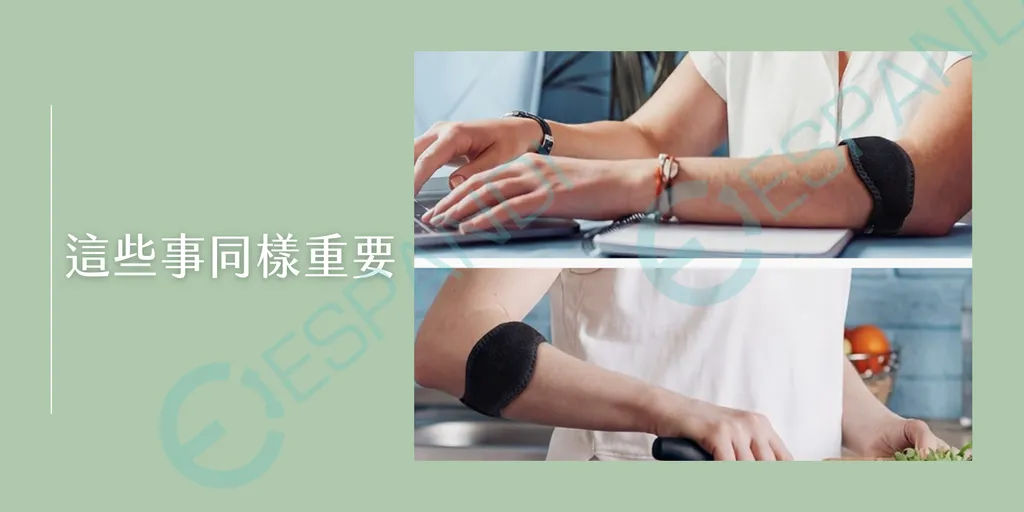
An elbow support isn't enough on its own - these things matter just as much
An elbow support can give support and make work a little more comfortable, but if the underlying cause doesn't change, the symptoms will just keep coming back.
Change how you do repetitive movements If typing is the cause, try a vertical mouse or change how you grip the mouse. Setting your desk so your elbow bends naturally at 90 degrees also reduces the load on the forearm muscles.
Stretch your forearm A simple method: hold your arm straight out in front, use the other hand to press the wrist down (fingers pointing towards the floor), and hold for 30 seconds. This stretches the wrist extensors and is one of the everyday exercises physiotherapists recommend most.
Ice in the acute inflammatory phase, heat in the chronic phase Many people get this the wrong way round - acute inflammation (within 48 hours of an injury, or sudden intense pain) calls for ice to help reduce swelling and pain. The chronic phase (a dull ache, stiffness) calls for heat to encourage circulation and relax the muscles. Get it the wrong way round and it can have the opposite effect.
For severe symptoms, physiotherapy works well There's a physiotherapy approach for tennis elbow called "eccentric exercise", currently one of the best-evidenced non-surgical treatments. If your symptoms last more than six weeks, it's strongly advised to see a physiotherapist for a proper assessment and treatment, rather than relying on an elbow support to get by.
Frequently asked questions
Q: If I don't see a doctor, will tennis elbow get better if I just wear a support? A: Mild, early symptoms may improve with rest and stretching, and an elbow support can be used as an aid. But if symptoms last more than two weeks, or the pain doesn't clearly ease with rest, see an orthopaedic or rehabilitation doctor for a proper assessment. If tennis elbow drags on and becomes chronic, it's much harder to deal with than in the early stages.
Q: How tight should an elbow support be? Is it right if it feels like it's pressing? A: Yes - a compression support should feel like it's pressing, but it shouldn't make your arm go numb or feel like the blood isn't flowing. A simple self-test: with the support on, squeeze a fingertip and let go; if the nail takes more than two seconds to go from white back to its normal colour, it may be too tight.
Q: Can I wear an elbow support to the gym? A: Yes, but adjust according to your symptoms. In the acute inflammatory phase, pause movements that load the elbow heavily (such as bench presses and pull-ups). In the chronic phase, it's fine to wear the support for exercise that doesn't directly irritate the area, but keep a close eye on how the pain responds.
Q: Do I need to wear an elbow support while I sleep? A: Usually not for tennis elbow. But with cubital tunnel syndrome (with numb fingers), bending the elbow while you sleep increases the nerve compression, so a doctor may suggest a special "night elbow splint" to keep the elbow straight.
Q: Once tennis elbow is better, do I need to keep wearing a support? A: Once symptoms have completely gone, if you're still doing the same high-risk work, it's a good idea to keep wearing it during work or exercise as supportive help.
Q: A friend said one steroid injection sorted theirs out. Does it work? A: Steroid injections can indeed reduce inflammation and pain quickly, but research shows their long-term results are actually worse than physiotherapy, and repeated injections can weaken the tendon tissue. The current mainstream advice is to try conservative treatment first (rest, an elbow support, physiotherapy) and only consider an injection if that isn't enough, rather than as a first choice.
Elbow problems are easy to dismiss, because they don't seem as serious as back problems or as "visible" as knee problems. But once they become chronic, many simple everyday movements start to be affected - pouring water, carrying a bag, opening a door all become things you have to grit your teeth through. Rather than waiting until then to do something, paying a little more attention now really doesn't take much of your time.
Braces mentioned in this article
This article is general health information. Braces give support and a posture reminder and do not treat any condition. See a doctor if you have symptoms.
- 30-day trial, returns accepted
- Ships from Taiwan in 1–3 days
- Sizing help on LINE
Keep reading
What Exercises Can You Do for a Bunion at Home? 6 Gentle Stretches, a Daily Routine and When to Stop
Big toe drifting further out of line, and wondering what you can do at home? Here are 6 bunion stretches that need no special equipment, each with reps and cautions,...
For Shop Staff, Nurses and Hospitality Workers: How to Get Your Feet Through a 10-Hour Day Standing
Sore feet from standing, aching soles after a full day on your feet, ankles so swollen by evening that your shoes feel tight - yet most advice only works once...
Stiff, Creaky Knees That Hurt on the Stairs - Is It "Wear and Tear"? Knee Osteoarthritis Explained
Knees that feel stiff and creaky, hurt on the stairs, or complain when you stand up from a squat - does that mean they're wearing out? Learn the common symptoms...