
Best Sports Knee Braces 2027: How to Choose by Sport, Coverage and Structure
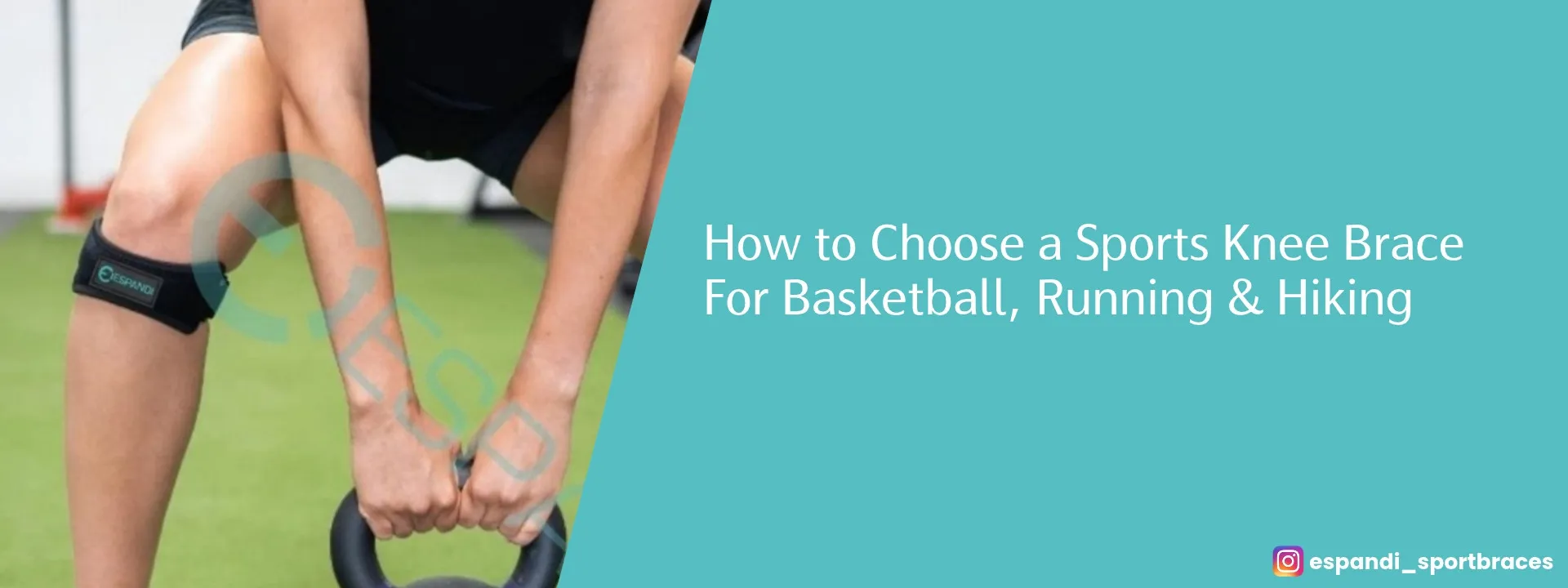
In short: to choose a sports knee brace, start with your sport. For basketball, volleyball and badminton, with lots of running and jumping, pick a light knit sleeve or a patella strap that won't get in the way. For hiking, stairs and long walks, where you want more coverage, pick an adjustable brace with side stays. For running, where heat is the issue, a patella strap is the lightest.
Whatever you choose, wear it for about 30 minutes the first time and build up from there. It should feel secure but not tight, and your knee should still bend naturally.
| Type | What it looks like | Coverage | Weight / breathability | Best for |
|---|---|---|---|---|
| Knit sleeve | Pulls on like a sleeve | Medium, even all round | Light and breathable | Basketball, volleyball, badminton, gym, yoga |
| Adjustable brace (Velcro + stays) | Wraps around the knee and fastens with Velcro | High, with side stays | Thicker | Hiking, stairs, long walks, long hours on your feet |
| Patella strap | A strap worn just below the kneecap | Targeted compression | Lightest, coolest | Running, basketball, badminton, cycling |
The items below are general goods, not medical devices. If you have ongoing pain, numbness or an injury, please see a doctor.
How to choose: the three main types of sports knee brace
1. Knit sleeves: light and easy on
A tube of stretchy knit fabric that you pull up over your foot to the knee.
- Pros: thin and breathable, barely visible under sports trousers; even coverage all round that doesn't catch when you run or jump
- Cons: fixed tension; too big and it slides down, too small and it digs in
- What to look for: measure around the knee against the size chart and choose one with non-slip strips inside
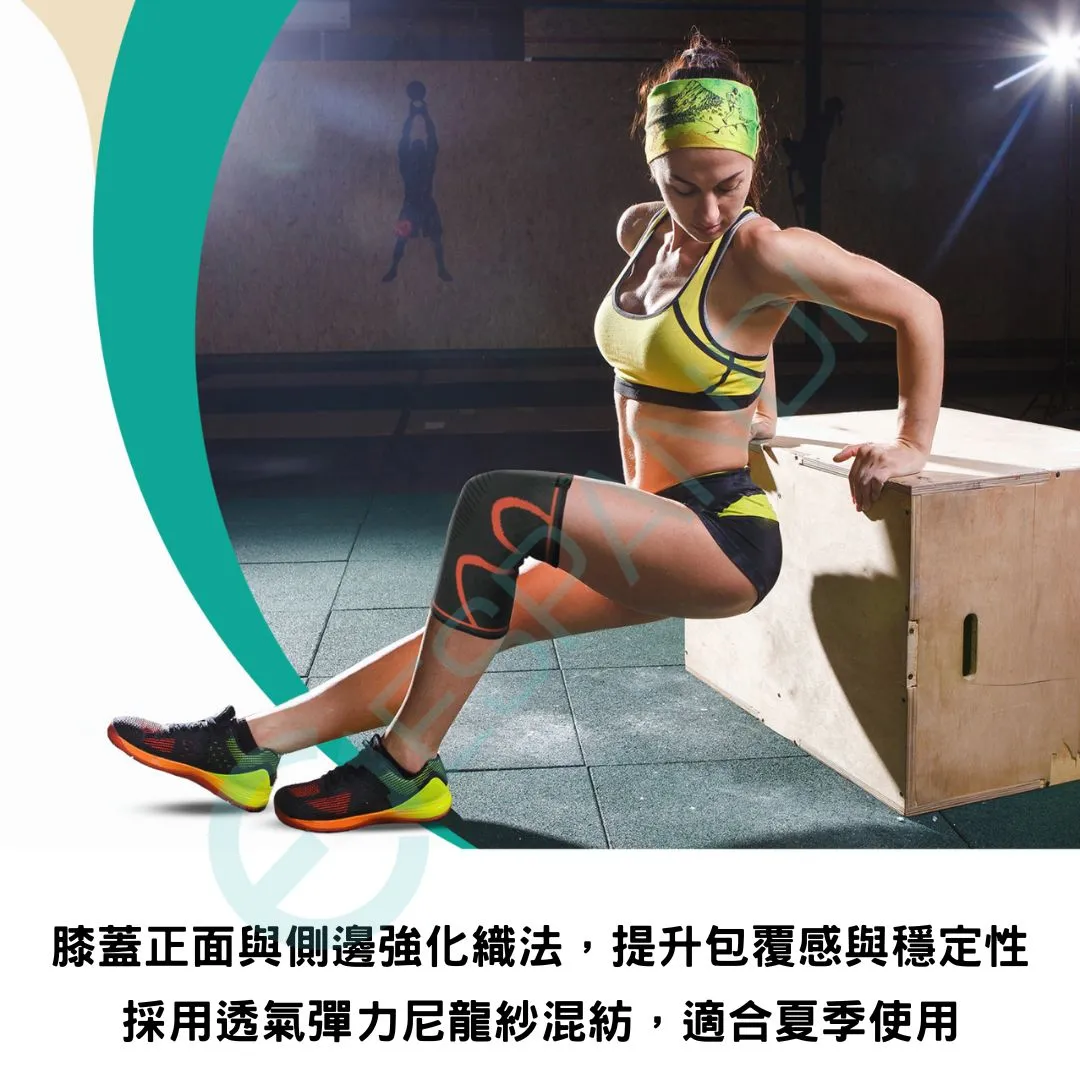
Espandi Knit Knee Sleeve: stretchy knit with non-slip strips inside, sold as a pair, fits either knee.
2. Adjustable braces: the most coverage
Wraps around the front and back of the knee and fastens with Velcro. Most have side stays and a round opening at the front.
- Pros: adjustable tension; the side stays give a more noticeable feeling of coverage, good for long walks and slopes
- Cons: thicker and warmer than a sleeve; less suited to sports with lots of running and jumping
- What to look for: the opening should line up with your kneecap; silicone grip strips at the top and bottom help it stay put
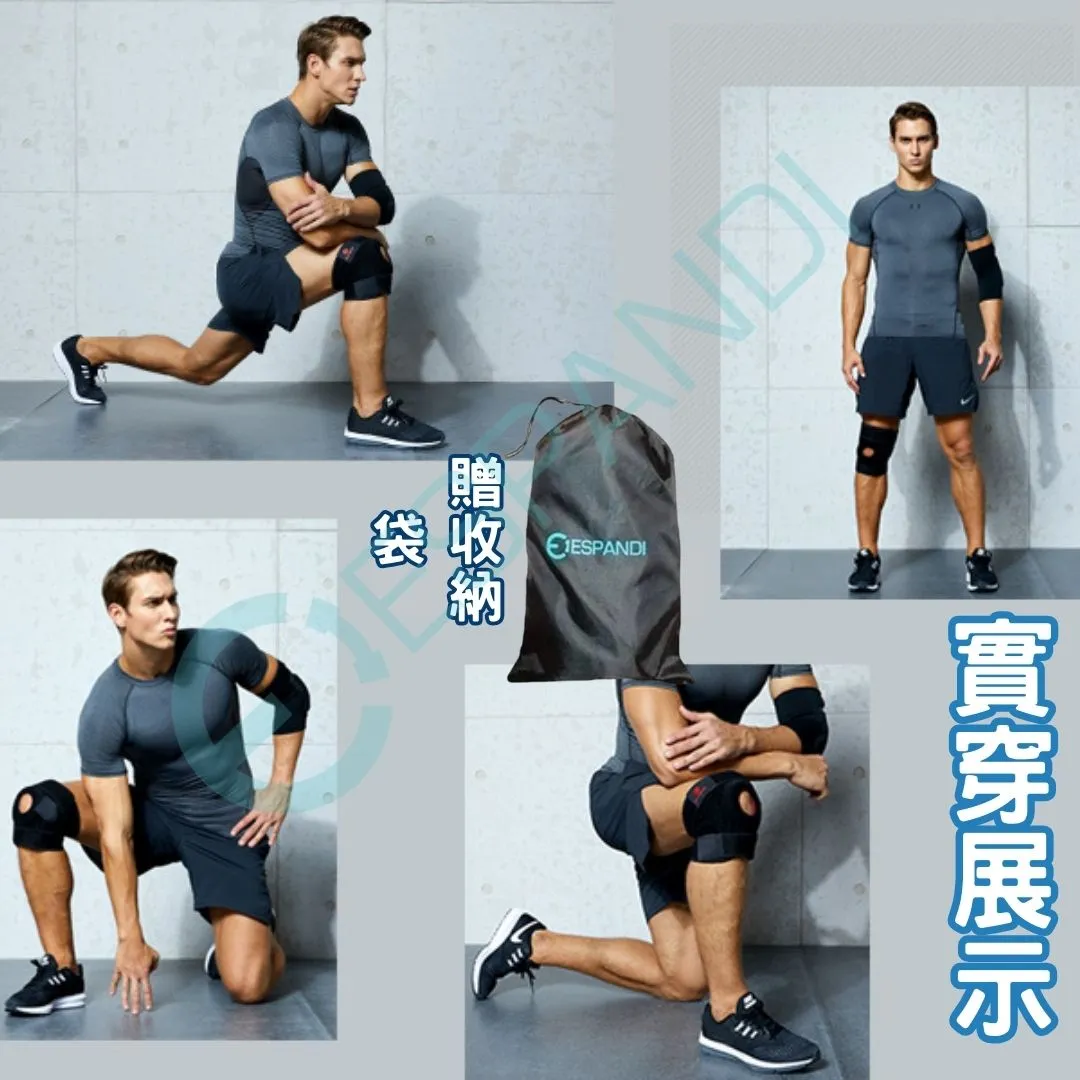
Espandi Adjustable Sports Knee Brace: side stays, adjustable Velcro and breathable vents; left knee, right knee or a pair.
3. Patella straps: lightest, worn below the knee
Instead of covering the whole knee, it wraps once around the leg just below the kneecap for targeted compression.
- Pros: the lightest and coolest option; you barely notice it when running or playing
- Cons: covers a small area, so it may not feel like enough if you want the whole knee covered
- What to look for: an adjustable Velcro strap; a silicone gel pad fits more closely
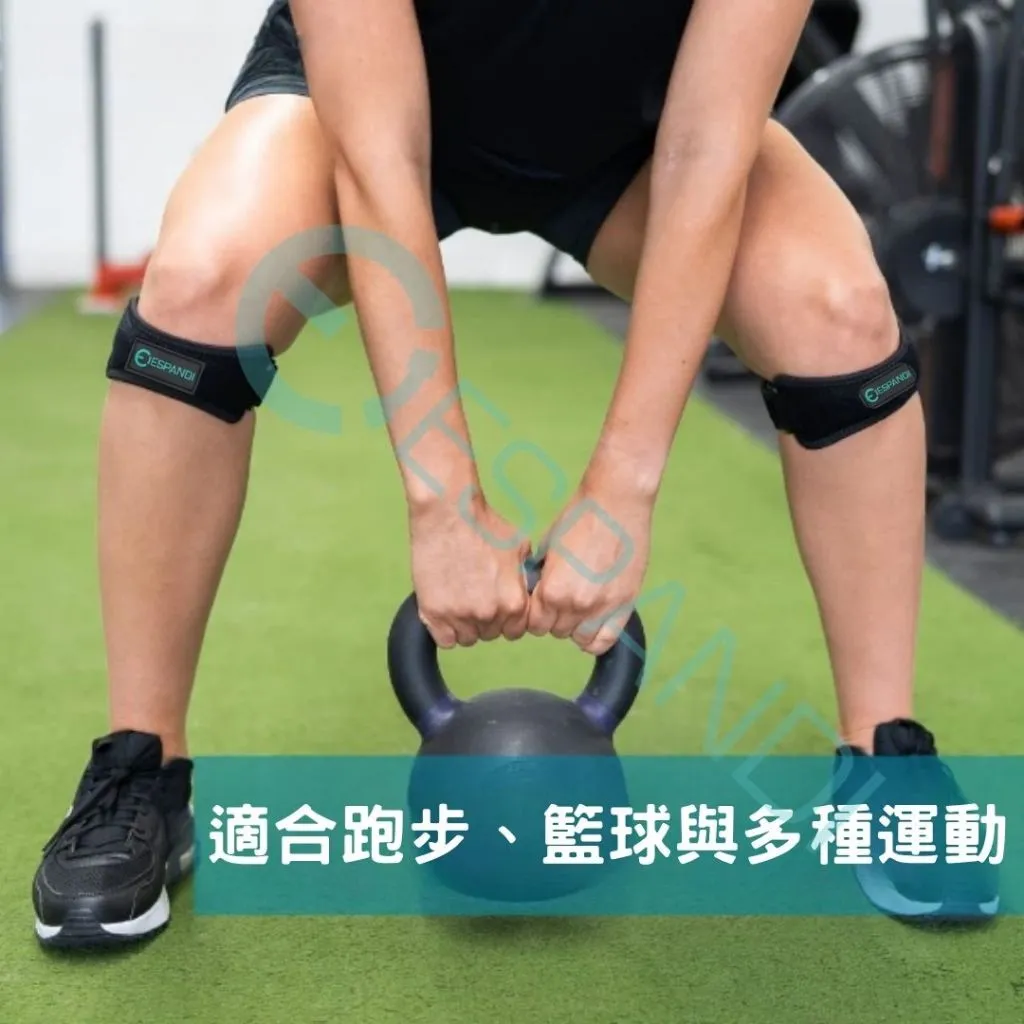
Espandi Patella Strap: neoprene with Velcro, 1 or 2 per pack, with carry bag. Espandi Silicone Gel Patella Strap: 8 mm silicone gel pad, 96 mm wide, single or pair (made to order, ships in about 10 days).
One more type: hinged knee braces
Braces with metal or plastic hinges on each side are stiffer and heavier, and rarely needed for everyday running and jumping sports. If you are considering one, ask a doctor or physiotherapist first; we don't compare them here.
Do sleeve-style braces give less coverage?
Not necessarily. How much coverage you feel depends a lot on fit and fabric stretch. A knit sleeve in the right size covers the knee evenly; an adjustable brace that is too big can feel loose. So choose by sport first, then by structure, and always measure.
Best sports knee brace by sport: basketball, volleyball, badminton, running, hiking
| Sport | Movement | Suggested type | Why |
|---|---|---|---|
| Basketball | Sudden stops, jumps, turns | Knit sleeve, patella strap | Light and doesn't get in the way of running and jumping |
| Volleyball | Low stances, diving, jumping | Knit sleeve | Even coverage and easy on; if you dive often, add a padded volleyball knee pad |
| Badminton | Lunges, fast side-to-side moves | Knit sleeve, patella strap | The lighter, the less it affects your footwork |
| Running | Long, repetitive, sweaty | Patella strap, knit sleeve | Lightest and coolest |
| Hiking, long walks | Up and down slopes, long hours | Adjustable brace | Side stays, the most coverage, adjustable on the go |
| Gym (squats) | Heavy loads, deep knee bends | Knit sleeve | Even coverage, adds warmth and a stable feel |
| Stairs, long hours on your feet | Everyday, long hours | Adjustable brace, patella strap | Depends how much coverage you want |
How to measure for a knee brace
- Stand up straight with your knee slightly bent (about 10–20 degrees)
- Use a soft tape to measure around the middle of the kneecap
- For some knit sleeves, also measure around the thigh about 10 cm above the knee
- Compare with the size chart on the product page; if you're between sizes, size down for a snugger fit or up for easier on and off
Adjustable braces and patella straps are mostly one adjustable size that fits most adults, so measuring is simpler.
How to put on a knee brace so it doesn't slip
Knit sleeve:
- Pull it up over your foot to the knee
- Centre your kneecap in the sleeve
- Smooth out any creases and make sure the edges aren't rolled
Adjustable brace:
- Line the opening up with your kneecap
- Fasten the lower Velcro first, then the upper
- Adjust until it's secure but not tight and your knee bends naturally
Patella strap:
- Place the pad just below the kneecap
- Wrap the strap round the back of the knee and fasten the Velcro
- Don't over-tighten; your lower leg should not feel numb or cold
How long should you wear a knee brace?
- First time: about 30 minutes, to get used to it
- After that: throughout exercise, or 2–4 hours as needed
- After exercise: take it off and let your skin breathe
- At night: no need to wear it
A knee brace adds a feeling of coverage while you're active. It doesn't replace a warm-up or regular strength training. You can build leg strength at home with resistance bands: squats, glute bridges and side steps all work well.
How to wash a knee brace
- Hand-wash in water below 30 °C with a little mild detergent
- Rub gently; don't pull hard or it may lose its shape
- Air-dry in the shade; don't machine-wash, spin, tumble-dry or leave it in the sun
- Close the Velcro before washing so it doesn't snag other items
If you train often and sweat a lot, keeping two to rotate helps.
Products mentioned in this article
The items below are general goods, not medical devices. If you have ongoing pain, numbness or an injury, please see a doctor.
What customers say about the Sports Knee Brace | Breathable, Skin-Friendly Knee Support for Running and Fitness
Reviews are customers' personal experiences and do not represent product performance.
- ★★★★★
超乎原來的想像,質量很好,穿戴也很方便,舒適度我給滿分,價格也非常的合理,如果下次有需要的話,一定還會再回購
h*****3 · 2025-07-14 - ★★★★★
寄貨迅速的好賣家,商品已領取,看起來質感很好,希望先生可以合用,謝謝您~
s*****8 · 2021-09-16
- 30-day trial, returns accepted
- Ships from Taiwan in 1–3 days
- Sizing help on LINE
FAQ: sports knee braces
Q1: What does a knee brace do?
A1: A sports knee brace mainly adds coverage, a stable feel and warmth while you're active. Different types cover different areas: knit sleeves cover all round, adjustable braces add side stays, and patella straps give targeted compression below the kneecap.
Q2: What if a knee brace feels too tight?
A2: The right fit is "secure and doesn't slip, but the knee still bends naturally". If your lower leg goes numb, your foot feels cold or the brace leaves deep marks, it's too tight: loosen the Velcro on an adjustable brace, or try a size up for a sleeve.
Q3: Should I buy one or a pair?
A3: It depends. If you only want coverage on one side, one is enough; if you want both, or want to rotate for washing, buy a pair.
Q4: What knee brace is best for basketball?
A4: Basketball involves lots of sudden stops and jumps, so a light knit sleeve or a patella strap is best, as they don't get in the way.
Q5: What knee brace is best for hiking?
A5: Hikes are long with plenty of slopes, so an adjustable brace with side stays is a good choice: it gives the most coverage and you can adjust it as you go.
Q6: Can I wear a knee brace all the time? Will I come to rely on it?
A6: A knee brace is an aid for exercise or long periods of activity. Wear it for those, keep up your warm-ups and leg strength training, and don't wear it all day.
Q7: Where can I buy a knee brace?
A7: Sports shops, pharmacies and online stores all sell them. When buying online, measure your knee first, check the size chart and see whether there's a trial or size exchange. All Espandi knee supports come with a 30-day trial; you can compare them in our knee support range.
General exercise and buying advice only. If you are seeing a doctor, have just been injured, or have ongoing knee pain, swelling or numbness, please see a doctor first.
Keep reading
Do I Need an Ankle Brace? Why Looking After Your Ankles Matters More With Age
Ankle braces aren't just for athletes. They are also used by active people, office workers who stand for long hours and older adults. This article explains how to choose and...
Best Resistance Bands 2027: How to Choose One, What Resistance to Pick, and 7 Moves With a Weekly Plan
Want to train your glutes and legs at home, but not sure which band to buy? Here is how the three kinds compare, how to read resistance and size, and...
Feet Can't Reach the Floor on Long Flights? How to Choose an Airplane Footrest
Economy seats leave many shorter travellers with their feet dangling. Here is how the three kinds of airplane footrest compare, what airlines allow, and when to stow them.